February 13, 2026
Fika in Tokyo: How a Swedish Coffee Ritual Is Helping Professionals Feel Less Alone
Intentional slowness to replace transactional networking.
Tokyo is home to nearly 14 million people, yet many long-term residents describe it as one of the loneliest cities they have lived in. That paradox sits at the center of Mark Jerrick’s story.
After traveling to Japan for more than 25 years, Jerrick thought settling in Tokyo in 2025 would feel familiar. Instead, the move brought an unexpected sense of isolation. He came to support his wife’s family, yet struggled to find genuine connections in a city that increasingly felt transactional.
A stranger in one of the most populous cities on the planet, he found that navigating Tokyo’s social landscape was a cold and distant challenge. Despite decades spent traveling the globe as an entrepreneur, Tokyo’s complex social norms weighed heavily on him.
First, he was not fluent in the language, and his interactions, to him, felt hollow. “It’s not easy to connect here—I felt isolated,” Jerrick explains, describing social encounters that left him feeling drained. This deep sense of invisibility eventually pushed him to revisit a ritual he learned years earlier while living in Sweden.
The Fika Intervention
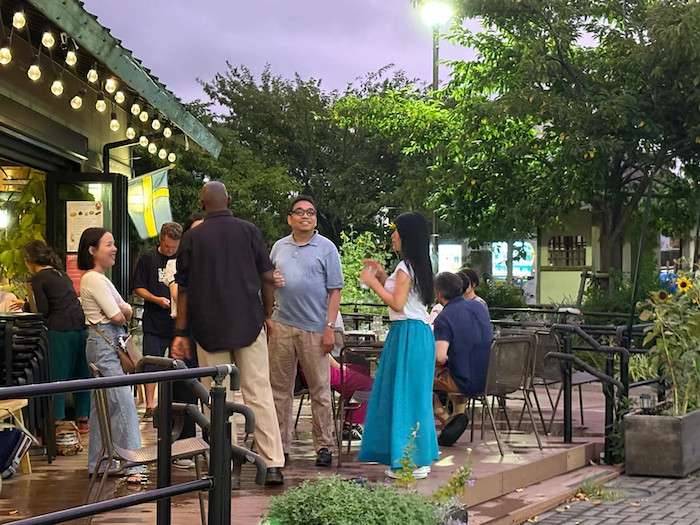
The ritual began with a single invitation for coffee. After meeting another international resident at a social event shaped by hidden agendas and unspoken rules, Jerrick opted out of the expected business-oriented follow-up. Instead of suggesting future collaboration or a business chat, he invited his new acquaintance to a simple cup of coffee.
What he introduced was the Swedish concept of fika (coffee break). Fika is not about caffeine or productivity. It is a commitment to slowing down, being fully present, and creating a sacred social space for natural conversation to emerge without focusing on direction or outcome.
That pause proved stabilizing. A simple coffee became a container for real conversation, free from performance. Ordinary moments began to feel meaningful again, echoing what Jerrick describes as the ability to “transform ordinary moments into meaningful encounters,” something that felt quietly radical in Tokyo.
Jerrick’s struggle reflects a broader loneliness epidemic that is particularly acute in Tokyo. Many social gatherings in the city are structured around professional advancement rather than personal connection, leaving little room for conversations that aren’t tied to work, status, or future opportunity. As Jerrick puts it, the atmosphere often comes with “hidden agendas.”
Building a Community Without Agendas
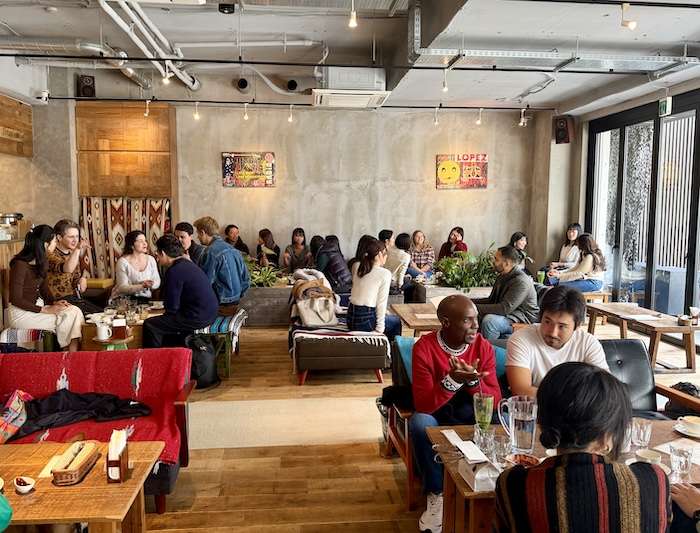
In response, Jerrick founded Connect & Co. in 2025 as a community centered on friendship. The premise was simple: remove networking entirely. The guidelines are non-negotiable: no business cards, no networking pitches, no hidden agendas. Just old-fashioned, intentional conversations.
In just eight months, over 450 members joined. What started locally in Tokyo has since expanded to cities from Osaka to Lisbon.
The initiative is rooted in fika’s social philosophy. “Fika, fundamentally, is always social,” Jerrick explains. “It’s not about coffee. It’s about sitting down, and really creating that space for whatever emerges in natural conversation.” By trading performative status updates for genuine thoughts, fika fosters what he calls “casual vulnerability.”
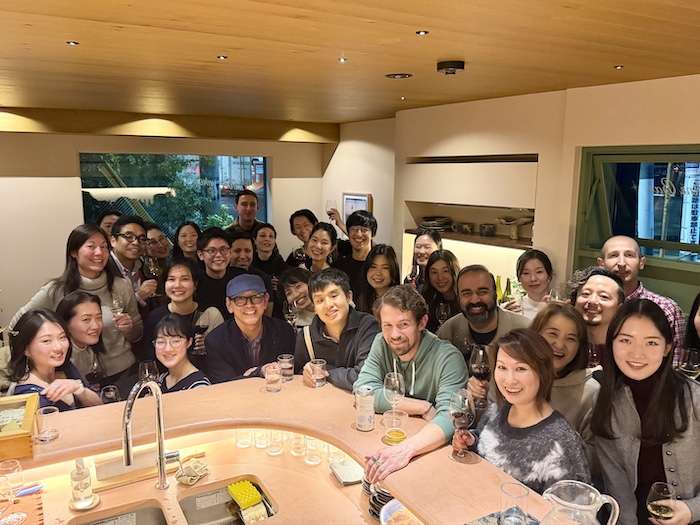
Demand has been immediate. Events frequently reach capacity, with waitlists of up to 60 people. Jerrick manages this influx by scaling the community through diverse formats that prioritize different levels of intimacy. He offers both larger monthly gatherings and maintains smaller, consistent weekly meetups to serve as steady anchors, allowing trust to develop over time.
Instead of standard icebreakers, participants are asked open-ended questions such as “What’s a hidden spot in Tokyo that actually makes you feel at peace?” The result is a conversation that skips professional posturing and lands somewhere more human.
Ironically, technology plays a quiet supporting role. Jerrick uses an AI system to coordinate small fika groups of three to four people based on shared interests and location, helping keep social interaction intimate and intentional even in a city as vast as Tokyo. He built the platform from scratch, teaching himself to code and integrating AI to manage the complex logistics of member matching.
A Sustainable Path Towards Addressing the Worldwide Epidemic of Loneliness
Despite the initiative’s scale, Connect & Co remains a solo endeavor. “Right now, it’s just me,” Jerrick admits, reflecting on the challenge of maintaining a people-centered community as a solo founder in an emotionally complex city. As the community enters 2026, it is transitioning from a social experiment to a sustainable, paid membership model.
This shift is a deliberate move to ensure the community remains a “safe space”—one that is financially viable yet strictly protected from the professional networking and hidden agendas that the ritual was designed to escape
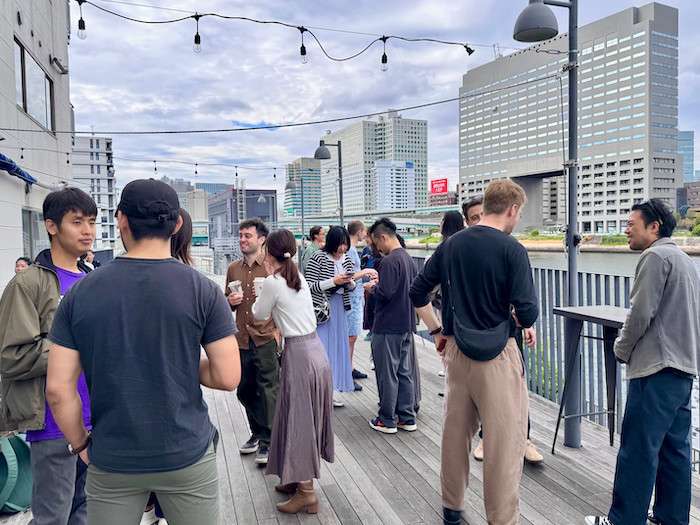
The success of Connect & Co highlights a broader desire for spaces where people can drop the performative mask. For those searching for career leverage, the message is clear: look elsewhere. Here, the shared objective is to be accepted as a human being first.
The quiet success of the community shows up in what Jerrick calls the “micro-joys” of its members. Members describe the relief of no longer feeling like “outsiders” in their own neighborhoods. Some are escaping “toxic” work cultures. Others are visitors finding people to travel with. The payoff is a sense of belonging that Tokyo rarely grants quickly.
For those feeling isolated in Japan, the path to involvement starts with curiosity rather than a resume. Newcomers register and subscribe as members to attend events while confirming that they are aligned with the “no agenda” community guidelines. Most start with a Monthly fika, where they can scan a QR code to join and receive a personal introduction to the concept of “intentional slowness” from Jerrick himself
As the community transitions into a membership-based model in 2026, it remains a dedicated counterpoint to the worldwide loneliness many cities quietly produce. Watching new friendships form over coffee, Jerrick sums it up plainly: “You come to make friends. That’s it, simple as that.”