January 23, 2026
Teshima: Not Just Another Island
From overgrowth to island icon, a restored 1943 residence becomes a beacon for community revival
By Trevor Kew
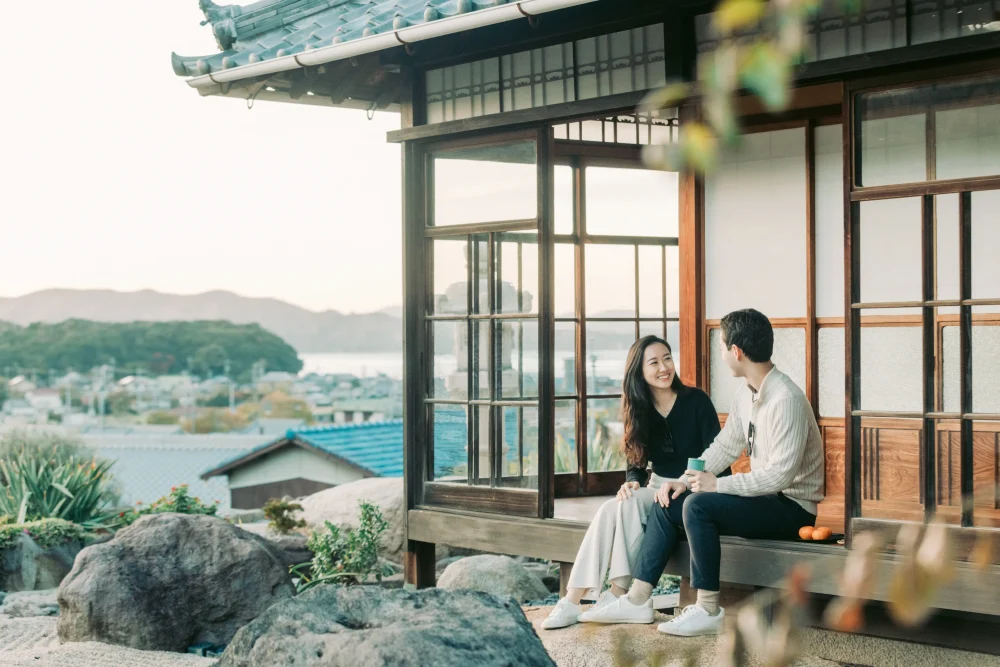
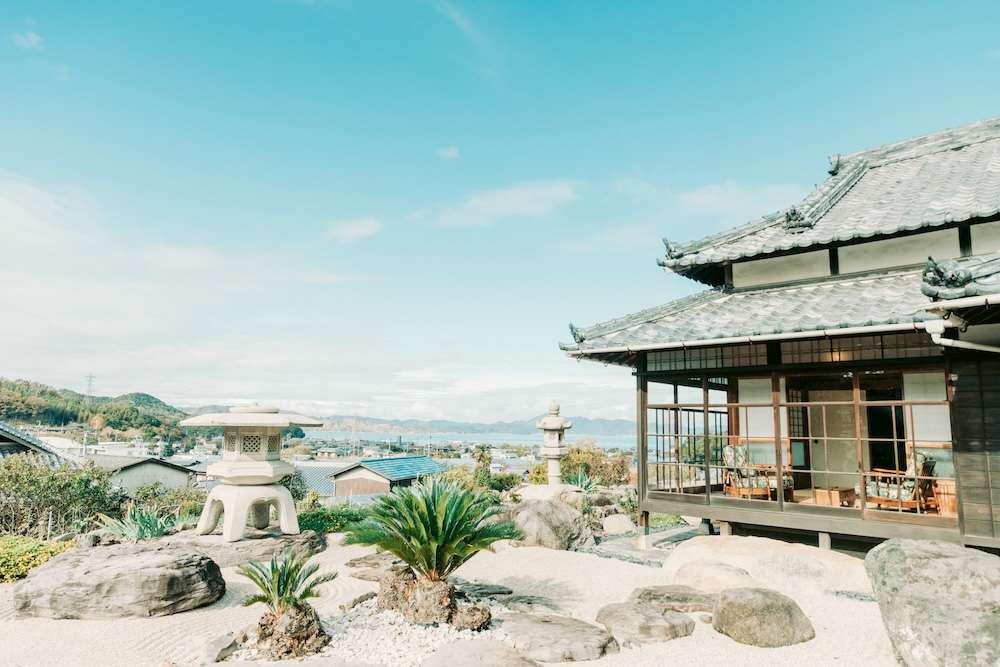
The house stands alone on a hill, gazing across the Seto Inland Sea. When clouds roll in, it seems almost forlorn. But when the sun breaks through, its kawara roof tiles warm from grey to burnished silver and the house stands proud, watching over the small island of Teshima.
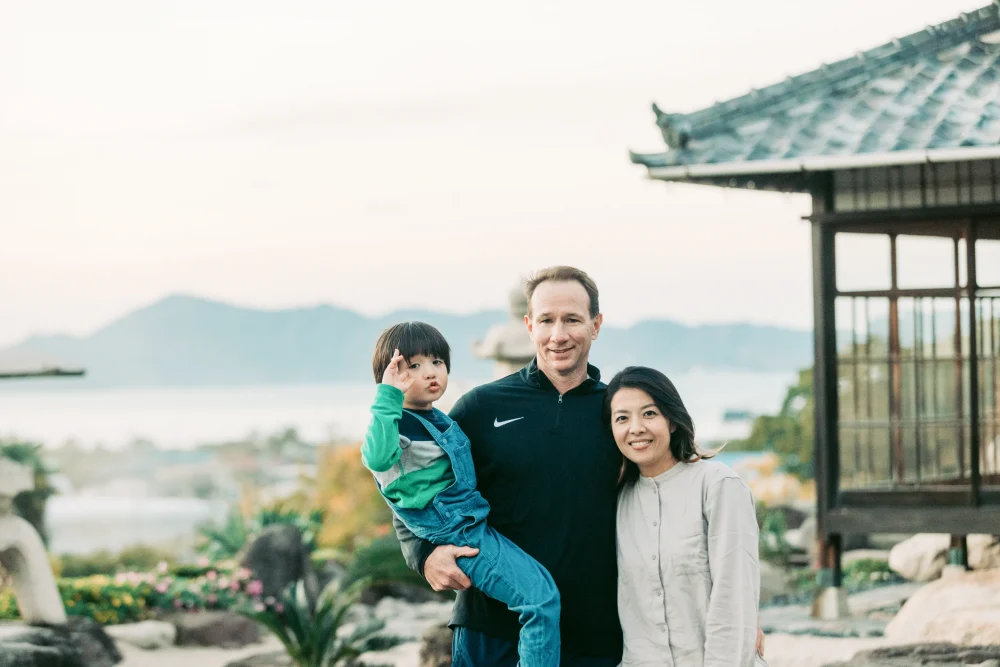
“When we bought this place, it was completely overgrown,” explains Reiko Hamanaka. We are standing on a path that leads through an immaculately manicured rock garden to the front door of the house.
“I mean it,” she laughs. “Alan and I had to crawl on our hands and knees through here.”
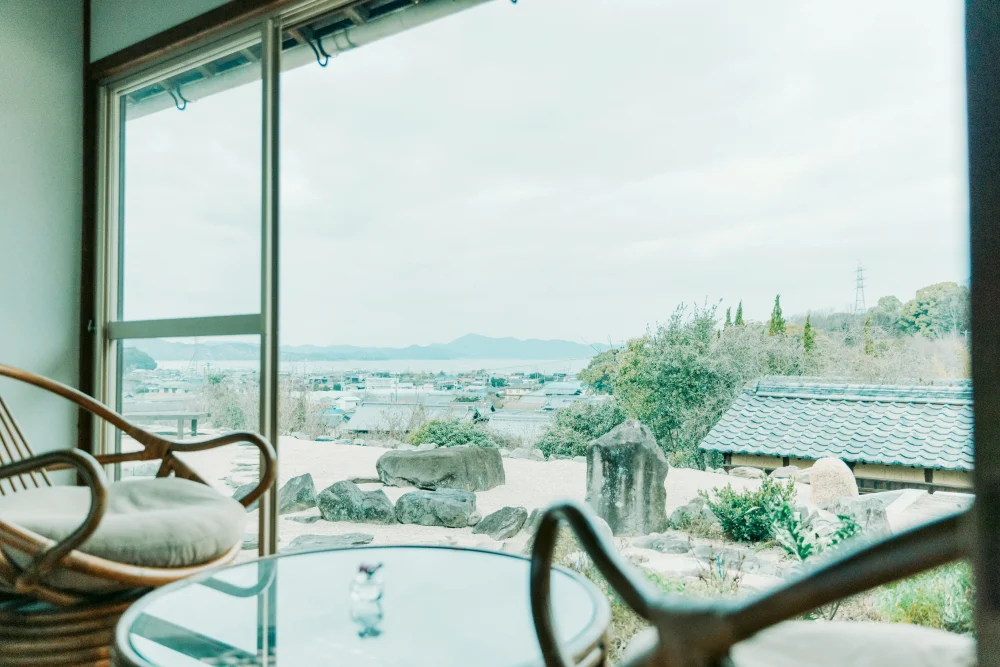
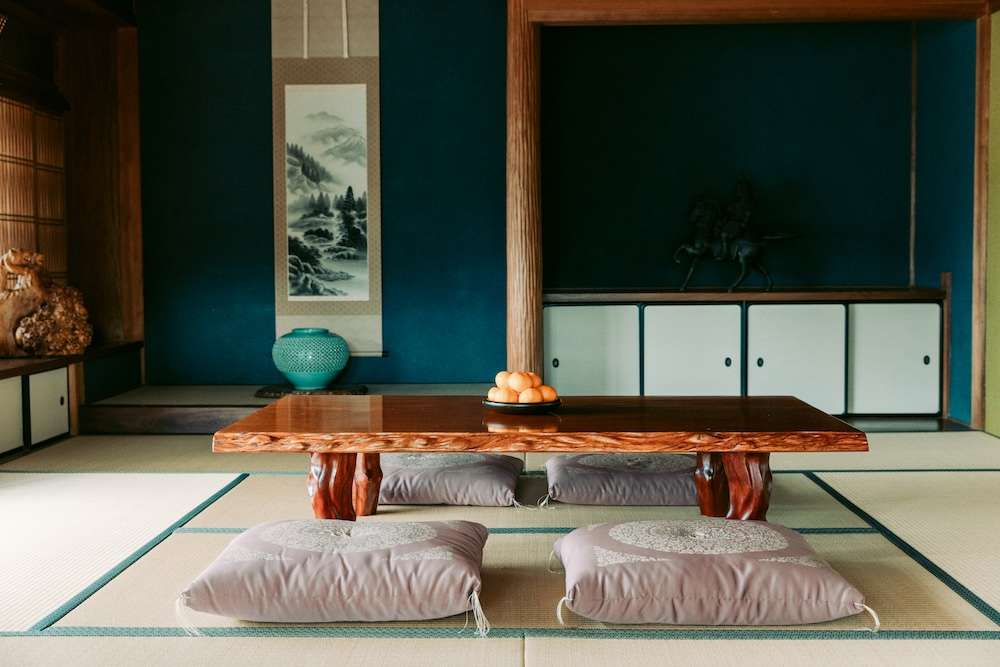
The richest man on the island originally built the house in 1943. Passing through the wooden lattice doors of the entrance, it soon becomes clear to me that he had spared no expense. The interior is characterized by the golden-brown glow of natural wood. Detailing in the woodwork is exquisite, yet tastefully understated, with corridors of long, polished planks.
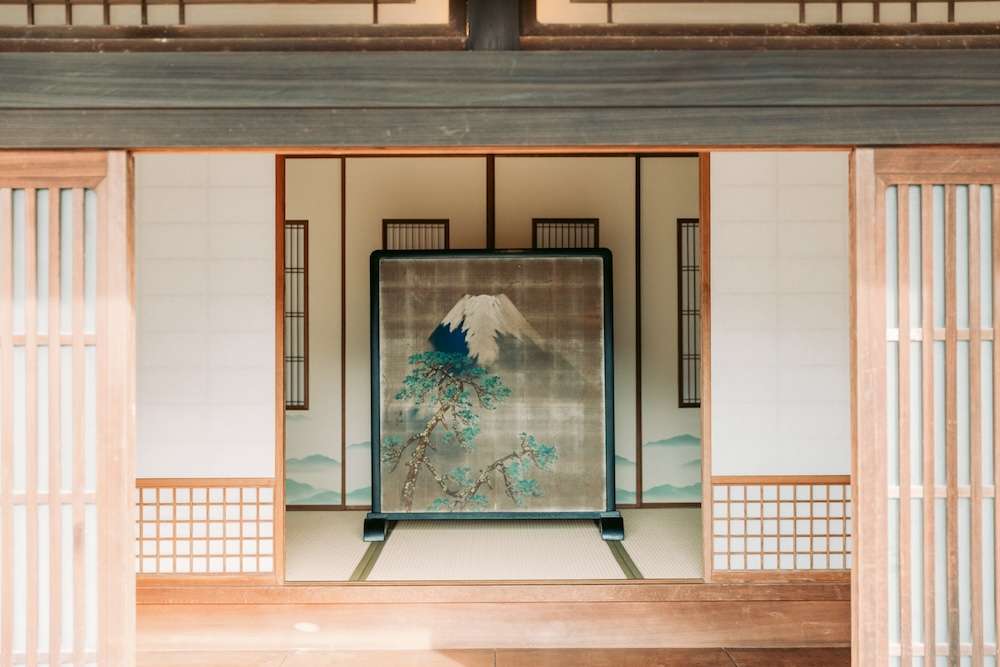
The centerpiece of the building is an expanse of tatami mats enclosed by sliding fusuma panels, which can be removed to reveal a row of wooden-framed glass doors facing the sea. These provide spectacular views over the small port town of Ieura towards the southern coast of Honshu. Light bends as it passes through the antique glass, creating a scene more akin to a painting than a photograph.
Find out more about Japanese island life. Here’s our quick travel guide around Enoshima.
Reiko and her husband Alan rescued the place from the wrecking ball in 2017. Restoration work involved much more than cutting back aggressive local vegetation. While acknowledging the need for some modern comforts, they wanted to retain the building’s original structure and character. This required resourcefulness and help from the local community.
“For things that were broken or decayed, I managed to find quite a few replacements in sheds and storage buildings,” says Alan. “Our neighbors were also very generous—happy to share what they could.”
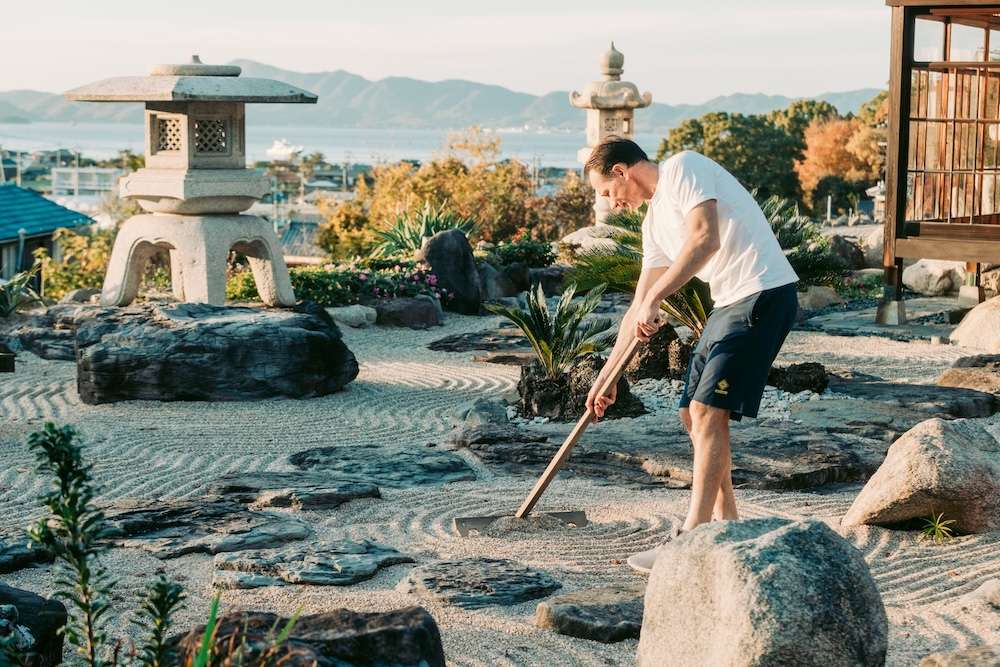
Reiko also researched traditional Japanese construction techniques online and through conversations with elderly local people. Alan implemented these techniques, which often required quite a bit of trial and error.
“For our other property nearby, I had to use traditional Japanese plaster called shikkui to rebuild a wall,” he explains. “To make it, you need just the right mix of slaked lime, seaweed glue and natural fibers—not an easy thing to accomplish. Took quite a while.”
The couple welcomed their first visitors to the main house in the spring of 2021, naming their new enterprise Tokuto. In the years since, they have restored and opened the former servants’ quarters, along with the other property that involved Alan’s close encounter with seaweed glue. They are also part of a local association that promotes farm stays on Teshima.
The decision to start Tokuto was a deeply personal one for Reiko, who was born and raised on Teshima. During many years spent living abroad in Australia, she began to notice major changes each time she returned home to visit her parents. Like many of the islands in the Seto Inland Sea, Teshima’s population is rapidly aging and declining. There are now fewer students at the local elementary school than in most classrooms in Tokyo.
“It’s easy to despair when you see these things,” she says. “The challenge just seems so overwhelming. But I thought maybe my many years of experience in the tourism industry could help. When I saw that wonderful old house on the hill about to be demolished, something just clicked. Saving that house felt like a step in the right direction.”
From Tokuto, a short bicycle ride takes you to the popular outdoor installations of the Setouchi Triennale and Teshima Art Museum. The central peak, Danyama, provides panoramic island views, and the renowned Okazaki Park fills with cherry blossoms in spring.
Reiko also encourages travelers to use their time on Teshima to slow down and enjoy the pace of island life. “We invite our guests at Tokuto to wander out back and get a warm egg for breakfast from the chickens. Pick some limes or persimmons off the trees. Take a walk around town or head down to the beach. Have a chat with someone along the way.”
Ultimately, she hopes that some visitors will consider a longer stay. “If we can provide more opportunities on Teshima, maybe more young people will come to work here. Maybe some will start families. It’s a wonderful place to live—my home. It’s not just another island.”
You might also want to read our article on the peaceful coastal town of Mikuni Minato.