April 13, 2026
Godzilla: The Kaiju That Remembers
A Creature of Fallout and Postwar Memory
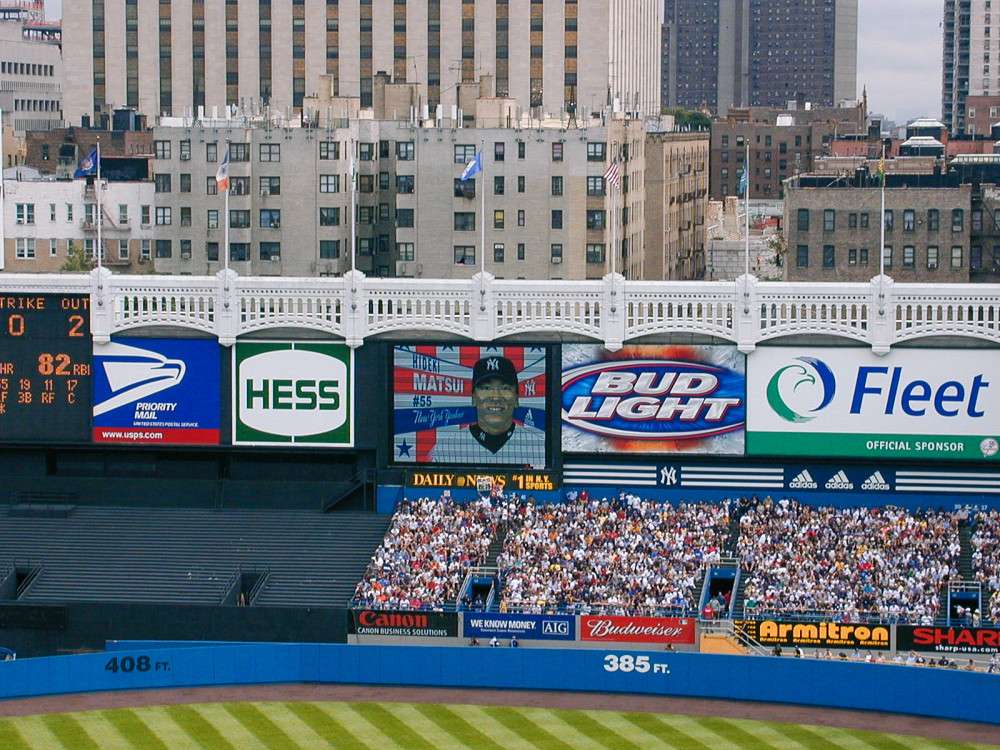
Before Shohei Ohtani, there was Godzilla. I’m talking about Hideki Matsui, a power hitter for the New York Yankees, who was nicknamed after the kaiju. If you were nicknamed Godzilla, is that a compliment? It is not the prettiest creature to be compared to, but at least it implies that you are major, sensational and causing a scene somewhere. Matsui was a two-time MLB All-Star, the 2009 World Series MVP and the first Asian player to win that award in league history. A Japanese giant arriving in the U.S. and causing a scene, fitting. Except that he got this nickname as a teenager for his textured skin, according to the Japanese media outlets (brutal, I know).
Godzilla has always had layered meanings. The word has embedded itself into English with remarkable ease: bridezilla, snowzilla, any noun with “-zilla” added signals something ungovernable and outsized. Godzilla is basically a common noun in English now, except TOHO’s legal department does not quite see it that way, of course. And with Hollywood having built its own franchise, Godzilla has officially become part of American pop culture. Which is, when you think about it, a little ironic. Because Godzilla is a political creature. It is, at its core, about nuclear weapons, and in no small part, about the United States. Perhaps, as a casual nickname, it is somewhat on the heavier side if you think about it properly, like calling your friend Che because he’s cool and wears a hat.
Bravo! Godzilla
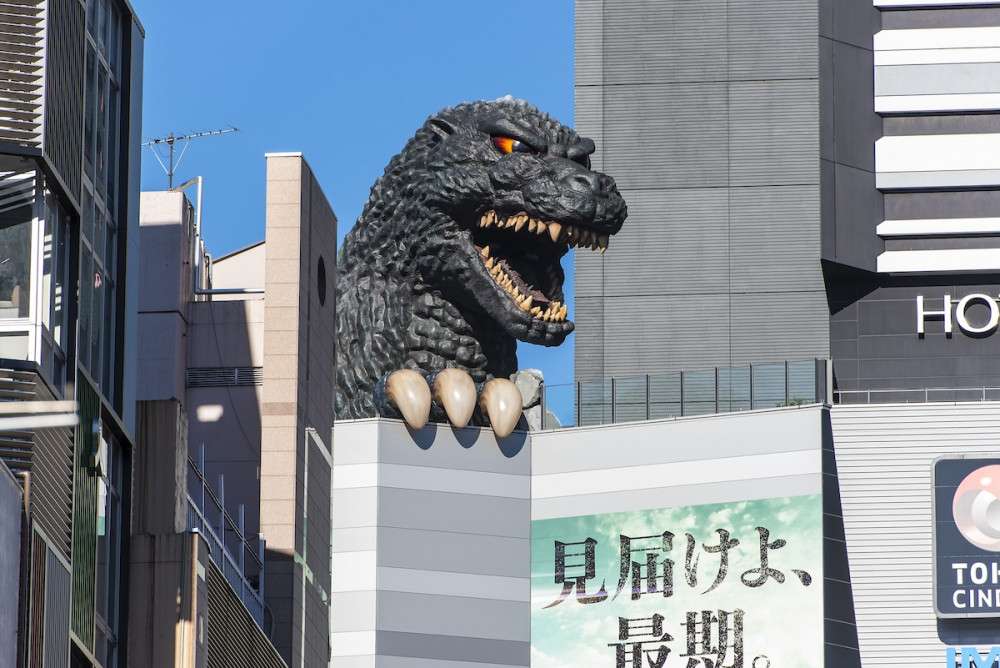
Godzilla was introduced in the eponymous film released in 1954. A TOHO tokusatsu production, directed by Ishiro Honda, the film features a prehistoric creature from the Pacific, awakened and mutated by nuclear weapons testing. The radioactive monster arrives in Tokyo and destroys it. The film does not ask you to read between the lines.
The nuclear testing in question was a very real and timely subject. Since 1946, the United States had been testing nuclear weapons in the Marshall Islands, as if to continue the momentum of the atomic bombs dropped on Hiroshima and Nagasaki just a year prior. The U.S. exploded 67 nuclear bombs there until 1958. Amidst this state of affairs, Godzilla was not the first to conjure the image of a radioactive monster; The Beast from 20,000 Fathoms and Them! had already arrived. However, Godzilla stood out. Not only for its camp tokusatsu spectacle, but for the emotion, message and desperation that it conveyed.


March 1, 1954, was the day of the test codenamed “Bravo” as part of Operation Castle. A hydrogen bomb, approximately 1,000 times more powerful than the one dropped on Hiroshima, exploded over Bikini Atoll. Its fallout drifted over the Daigo Fukuryu Maru (Lucky Dragon No. 5), a Japanese fishing vessel whose 23 crew members all suffered acute radiation sickness.
Aikichi Kuboyama died that September. His reported last words: “I pray that I am the last victim of the nuclear bomb.” Later research suggested that over 1,000 fishing boats could have been exposed to radiation from the same test. As Greg Dvorak, scholar of Pacific Islands history and culture, has pointed out, the people of the Marshall Islands, which used to be part of the Japanese empire, were the first and foremost affected, but Godzilla was not positioned to tell their story, nor did it contribute to awareness of their situation in Japan.
*Nuclear Savage (2012), Adam Jonas Horowitz’s documentary, fills in what this article cannot, particularly the perspective of the people of the Marshall Islands.
The nation was shocked. It felt like the horror of Hiroshima and Nagasaki happening all over again, within a decade. The Eisenhower administration tried to downplay the incident; some U.S. officials even suggested the ship could have been a communist spy vessel. And because of the U.S.’s dominance in postwar diplomacy, Japan had no real recourse. The Cold War order had made Japan dependent on the U.S., and accountability was simply not on the table. Nuclear testing in the Marshall Islands would continue, in pursuit of something even more powerful. Less than a decade on from the atomic bombs, the memory was still raw, the hibakusha still suffering, and rather than an ending approaching, the thing was accelerating.
This is the world in which Godzilla was made. By May 1954, the story of the kaiju was taking shape. Honda was not working from pure imagination; he was a veteran who had seen the ruins of Hiroshima himself.
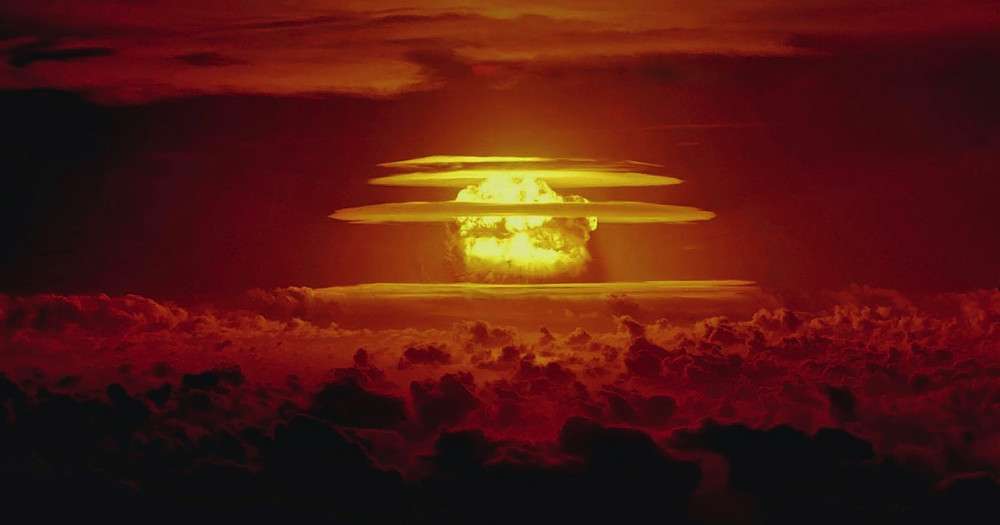
(Public Domain via National Oceanic and Atmospheric Administration)
Godzilla is not simply a metaphor for radioactive damage. It is a metaphor for imperialism, of which nuclear weapons are both a product and an instrument. There is also the older tension between nature and human greed: the idea that the destructive technology of mankind awakens and angers something ancient. But perhaps most importantly, Godzilla is about fear. The powerlessness on screen, the scrambling institutions, the inadequate response by their government, the sense that the worst is coming and no one in charge can stop it, was not difficult for Japanese audiences to recognize. Despite this heavy political theming, the film was enormously entertaining and successful.
The Window Opens
Perhaps the political intensity of that first film was also very much of its time. Until 1952, Japan had been under U.S.-led Allied occupation, during much of which the occupying forces imposed strict censorship across all media. Prohibited from public expression were criticism of the Allied forces, information about the atomic bombs and coverage of wartime Allied atrocities, while Japanese wartime atrocities were simultaneously required to be reported. The occupation, and all censorship, including on atomic bomb content, ended in April 1952.
The Lucky Dragon No. 5 incident happened two years later. Godzilla then arrived in cinemas, and it was a braver and more impactful film to release in the climate of 1950s Japan than it might appear today. Godzilla was a sharp critique of current affairs that also triggered the memory of the atomic bombs, and the recognition that the end of the war had been the beginning of just another imperialism.
Godzilla (1954) is an internationally acclaimed classic today, though its success outside Japan did not come immediately. The film arrived in the U.S. market two years later in 1956, heavily edited and censored, with new scenes added to reframe the story through the perspective of a white man named… Steve. More importantly, references to Hiroshima, Nagasaki, the testing at Bikini Atoll, as well as the hydrogen or atomic bombs were cut, and the original version was not released in the U.S. until 2004. It was not critically acclaimed in America either; the New York Times dismissed the tokusatsu style as cheap and childish. It was, however, commercially successful. The censorship and editing, viewed from today, did Godzilla no justice; but commercially, it was the right call.
Much later, in 1998, Hollywood produced its own Godzilla. This was long-awaited, as Godzilla’s name had been spreading through the world for half a century. Emmerich’s film followed the broad premise of the 1954 original: nuclear testing awakens a prehistoric creature, while changing the setting and the design of the kaiju (which proved controversial). In this version, Godzilla is not a product of U.S. testing at Bikini Atoll; but of France’s nuclear testing in French Polynesia. This was not, however, simply a case of deflecting blame: France had refused to sign the 1963 Partial Nuclear Test Ban Treaty, continued atmospheric testing in the Pacific until 1974, and underground tests until 1996—making it a genuinely legitimate target of critique at the time.
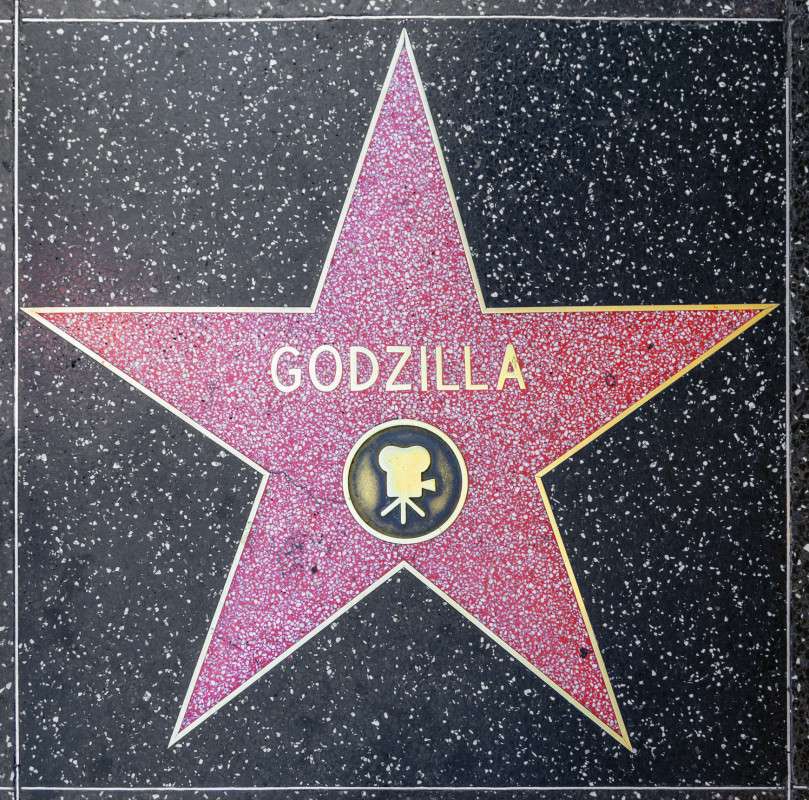
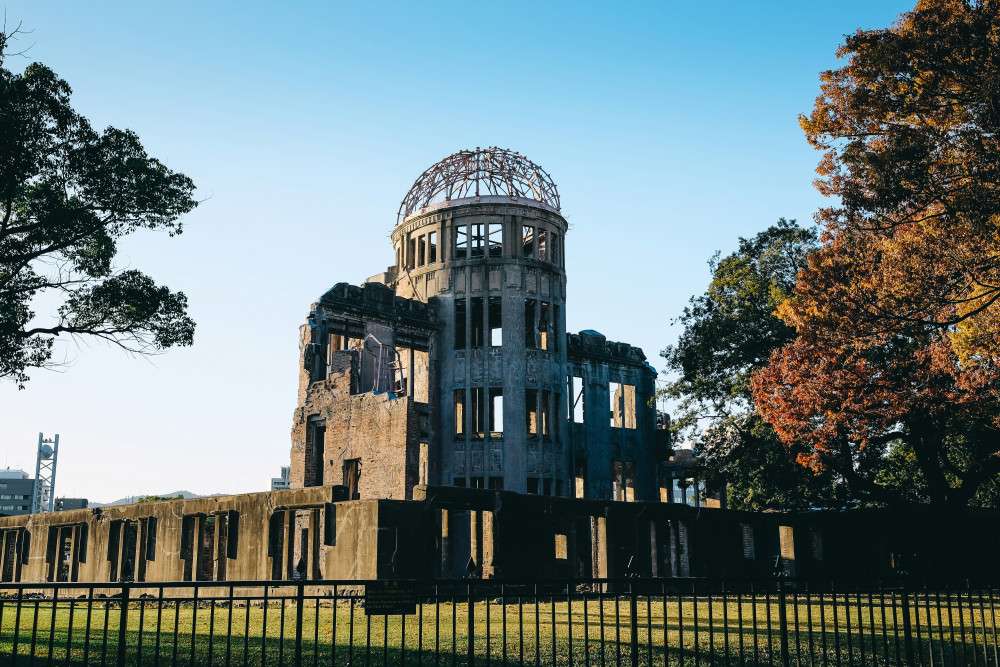
But the Japanese producer of multiple Godzilla films, Shogo Tomiyama, identified something else: In the 1954 film, he said, Godzilla is conceived as something greater than mankind; while in the American version, it becomes a common challenge and something for humans to overcome, a more optimistic take.
Godzilla’s Journey
Takako Kishima, professor of U.S.-Japan politics at Waseda University, once told me that there is a difference between “Gojira” and “Godzilla,” although it would be too simple to say that the Japanese versions are political and more serious in nature. In fact, TOHO’s own productions drifted steadily toward spectacle. The 1955 sequel, Godzilla Raids Again, had already pulled back from the anti-nuclear message; another kaiju appeared and the two fought. By 1962, King Kong vs. Godzilla, having an iconic American character as the guest, had shifted toward the humor of watching two enormous things destroy things together. Over the following decade, Godzilla became something closer to an anti-hero, a creature the audience cheered for. By the 1970s, it was essentially a summer blockbuster for children, though even then the franchise occasionally snapped back: Godzilla vs. Hedorah (1971) turned the monster into a metaphor for Japan’s worsening pollution crisis.
Cultural production does not have one correct mode. There is nothing wrong with a film that wants to be fun. And the political legacy was never erased so much as carried quietly underneath. Godzilla became a kind of Trojan horse: big and cool and entertaining, and then, for those who looked closer or were told where to look, there was what had always been inside it.
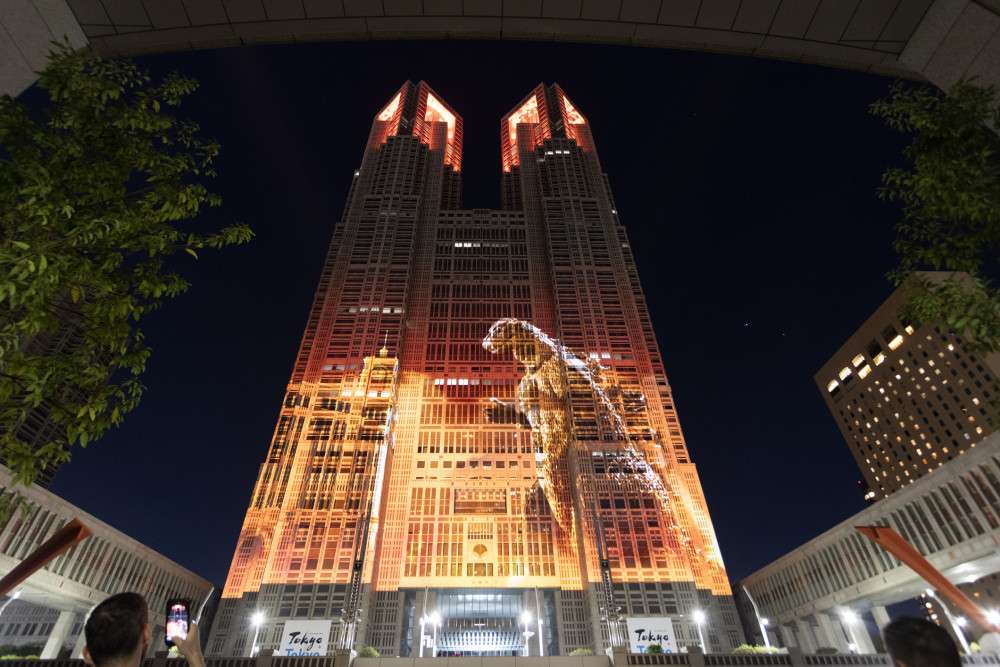
The Godzilla series went through cycles of decline and revival. The current renaissance owes much to the 2014 Hollywood reboot, the second Hollywood production, and the first new Godzilla film in Japan in a decade. Its success inspired Japan to reboot the franchise. Shin Godzilla (2016) is set in an alternate timeline where the creature appears for the first time in the 2010s. It became a metaphor for the 2011 Great East Japan Earthquake, including the Fukushima nuclear disaster, and more specifically, for the Japanese government’s inadequate response to both: the bureaucratic paralysis, the deep reliance on the U.S. in matters of defense, the precariousness of the security treaty between the two nations. It was as sharp a critique as anything in the 1954 original.
Godzilla Minus One (2023) returned the creature to the immediate postwar period. Its emotional center is a former kamikaze pilot who survived when he was not supposed to. The film is a much-needed critique of the Japanese government’s mobilization of civilian lives during the war; a perspective the 1954 film did not fully incorporate. It won the Academy Award for visual effects, the first Japanese film to do so, on a relatively small budget.
This year sees the release of Godzilla Minus Zero in November, marking the first time a Japanese Godzilla film will debut simultaneously in the U.S. and Japan.
What Was Always Inside It
Godzilla’s influence traveled further than the original Japanese film itself did in the 1950s, with Spielberg citing it as an inspiration for both Jaws (1975) and Jurassic Park (1993). The tokusatsu techniques developed by Toho were cited as an influence on 2001: A Space Odyssey (1968), and the hero tokusatsu genre it helped establish was directly adapted into Power Rangers and other Western franchises. Godzilla did cause a scene abroad: It was one of the biggest Japanese cultural exports of the postwar era, and in some periods, more an everyday word in America than in Japan.
That ubiquity was never separate from the meaning. What does a strong message achieve if it is never delivered? Godzilla traveled light, as spectacle, as franchise, and the meaning came along inside it, for whoever wanted to find it. Those who came for the monster, if they stayed long enough, eventually found the rest.
Those mean kids who gave Matsui the nickname probably were not thinking about Bikini Atoll or the GHQ censorship. It was his skin, allegedly. Then, the name kept becoming more fitting—a Japanese player who crossed the Pacific like the film franchise itself, and caused a scene in New York, like the kaiju itself. The name traveled first, and what it carried came later.
—
Image credit: iStock / @AlxeyPnferov