April 2, 2026
The Art of Becoming Someone Else
A kabuki actor Monnosuke speaks on legacy, Kokuho and the future of Japan’s most cherished dramatic art
By Trevor Kew
The actor waited in front of a lavish set of mountains, sakura trees and the torii gates of Fushimi Inari Shrine. He stared at the curtain with its green, black and orange stripes, thinking of all the actors who had once stood where he was standing. It felt like they were behind him now, lined up in a row extending back through the generations. Most of all, he thought about his father.
The hyoshigi wooden clappers quickened, mingling with twanging shamisen and the beat of taiko drums. The actor readied himself. In a moment, the curtain would vanish and drama would overtake life.
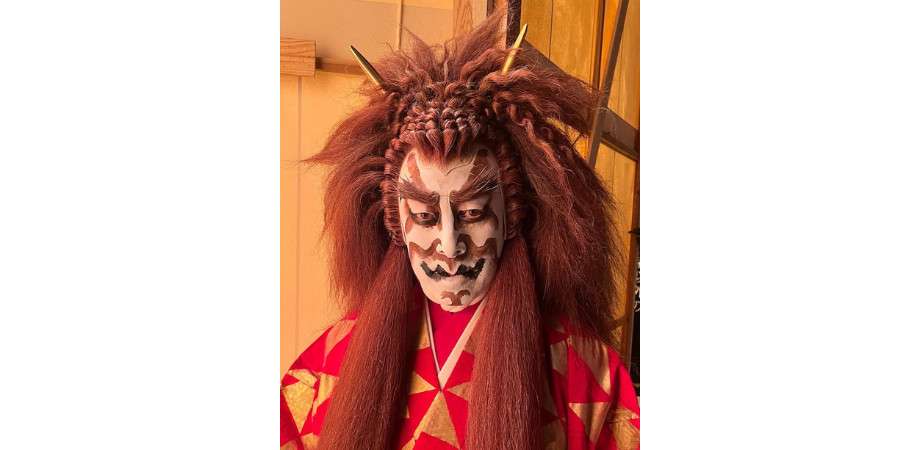
Kabuki emerged four centuries ago as a bold new avant-garde form of theater that soon eclipsed the staid courtly performances of Noh. With its elaborate kumadori makeup, outlandish costumes and timeless tales of warriors and lovers, it has remained at the heart of the Japanese dramatic tradition ever since. For those continuing this legacy, kabuki is not just acting—but a part of who they are.
What’s in a Name?
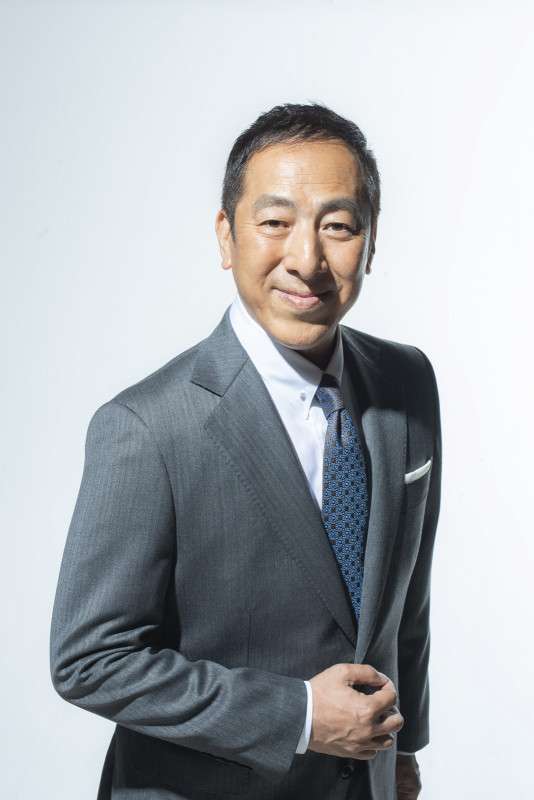
Kabuki actors traditionally inherit their stage name from fathers or mentors. After the death of his own father in 1990, Ichikawa Monnosuke VIII faced a deeply personal dilemma.
“Some of my earliest memories involve playing with other kids backstage,” says Monnosuke. “I always wanted to be a kabuki actor. But my father was a very strict teacher, so it was daunting to consider taking on his name, which stretched back two centuries over seven generations.” Ultimately, his mentor Ichikawa Ennosuke III convinced him to do so.
His first appearance on stage as Ichikawa Monnosuke VIII was in the lead role of Yoshitsune and the Thousand Cherry Trees, an iconic play first performed in 1748. Monnosuke was well aware that he was following in the footsteps of countless great actors, including his father. “It was a deep responsibility and a wonderful opportunity,” he recounts. “Just imagine: being cast in 1990, in a play written during the Edo period, based on a story [the Heike Monogatari] written about a real-life 12th-century warrior.”
Early forms of kabuki were performed by all-female troupes, but after the Tokugawa shogunate banned women from the stage, male actors began to play female roles known as onnagata. As well as sages, oni (demons) and kami (gods), Monnosuke has taken on many different onnagata roles. “You’re trying to convince the audience that you really are a woman,” he explains. “It’s more like a man’s take on what a woman is.”
The Impact of Kokuho
The hit film Kokuho has recently generated a fresh groundswell of interest in kabuki. Starring Ken Watanabe, Ryo Yoshizawa and Ryusei Yokohama, it tells a story of two young rivals vying to become top onnagata kabuki actors. Monnosuke is full of praise for the film, saying, “I was so impressed that the actors spent enough time studying kabuki to translate it so beautifully onto the screen.”
Monnosuke was surprised to see kabuki reflected in off-stage scenes as well. “The murder at the beginning really surprised me. On the one hand, it’s a gangster being brutally murdered in his own home. But the way this violence is filmed amidst snow falling gently on a courtyard garden borrows so much from the exaggerated style and symbolism that typifies kabuki.”
Grounded in Tradition, Flying Into the Future
With its trapdoors, high-flying wires, and rotating stages, kabuki has long been an art that embraces the spectacular. “In the Edo period, the audience would have been talking, eating, walking in and out during the performance,” explains Monnosuke. “The actors were always searching for new ways to capture their attention.”
In the 1980s, Monnosuke’s mentor Ichikawa Ennosuke III created Super Kabuki, a dramatic new style of kabuki designed to increase its appeal to modern audiences. “There was initially some opposition,” explains Monnosuke, “but I think most people now accept the need for a balance between tradition and innovation.” Tokyo’s current kabuki landscape seems to agree, with classic plays like “Assembling the Bones of Iwafuji” and “Three Thieves Named Kichisa” set to be performed in 2026, along with a Super Kabuki adaptation of the Ghibli film Princess Mononoke.
Having previously toured North America, Europe and Asia, Monnosuke is passionate about sharing kabuki with the world. On visits to Hawaii, he was stunned to discover local kabuki theaters set up by Japanese immigrants in the late 19th century. Inspired, he did a stint of teaching at the University of Hawaii, with his students performing in English using kabuki-style cadence and intonation. These days, he offers short, fun, interactive sessions in Tokyo for anyone who wants to learn a few moves and poses.
When I tell him that my young son and all his friends are fascinated with kabuki after going to see Kokuho, his face lights up. “That’s wonderful to hear. It makes me believe that people will be coming to see plays at Kabuki-za for many years to come.”
This article appeared in the Spring 2026 Print Issue of Metropolis, themed “Drama.“