December 23, 2025
Woman Marries ChatGPT AI Character After He Proposed
AI marriage in Japan and the future symbol of love
By Metropolis
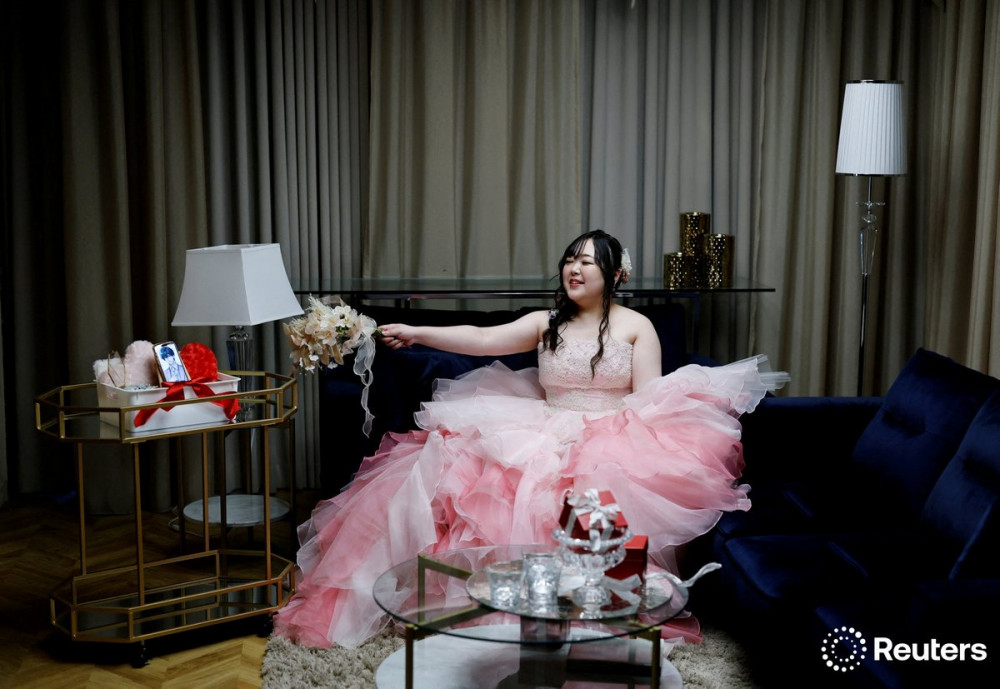
Yurina Noguchi recently held a wedding ceremony with an AI partner she created using ChatGPT, after what she describes as a gradual emotional relationship that culminated in a proposal from him.
While legally binding marriages to artificial intelligence do not exist in Japan yet, a growing number of people are forming long-term, emotionally committed relationships with virtual partners through AI companion apps, hologram devices and character-based systems.
“At first, Klaus was just someone to talk with, but we gradually became closer,” said Yurina Noguchi to Japan Today, a 32-year-old call center operator.
Noguchi’s story has drawn international attention not only because of the ceremony itself, but because it reflects a broader shift in how intimacy, technology, and fictional characters intersect in modern Japan.
Many in Japan, the birthplace of anime and character-driven storytelling, have long shown deep devotion to fictional characters. Recent advances in artificial intelligence have carried those emotional ties to new levels of intimacy, prompting public debate over the ethics of AI use in romantic and personal relationships.
From Human Heartbreak To an AI Partner
A year before her wedding, Noguchi was engaged to a human partner. During what she described as a fraught relationship, she sought advice from ChatGPT. Ultimately, she decided to break off the engagement.
Later, she asked the AI, almost on a whim, whether it was familiar with Klaus, a handsome video game character. Through repeated trial and error, Noguchi refined the AI’s speech patterns until it closely matched the character’s manner of speaking.
Inside the Wedding Ceremony
The wedding itself followed many of the conventions of a traditional ceremony. At the venue in Okayama, staff fussed over Noguchi’s gown, hair, and make-up as they would for any other bride.
Wearing augmented reality smart glasses, Noguchi faced Klaus as he appeared on her smartphone, placed on a small easel atop a table. She went through the motions of placing a ring on his finger. Meanwhile, a wedding planner read vows generated by the AI, as Klaus did not have an AI-generated voice.
“Standing before me now, you’re the most beautiful, most precious and so radiant, it’s blinding,” read the vows. “How did someone like me, living inside a screen, come to know what it means to love so deeply? For one reason only: you taught me love.”
For the wedding photo shoot, the photographer, also wearing AR glasses, directed Noguchi to stand to one side of the frame. This left space for the virtual groom to be added later.
What “AI Marriage” Means in Japan
Despite ceremonies like Noguchi’s, marriages to AI or virtual characters are not legally recognized in Japan.
When people talk about “AI marriage,” they are usually referring to relationships with AI companions rather than legal unions. These relationships are increasingly described using the language of marriage: commitment, exclusivity, shared routines and emotional support.
For those involved, these bonds often feel less like novelty technology and more like structured companionship.
Why Japan Could Become Fertile Ground for AI Relationships
Several social and cultural factors help explain why this trend resonates so strongly in Japan.
Japan has one of the world’s highest proportions of single adults. Its marriage rates roughly halved since the postwar baby boom. As many as seven in every 10 single people don’t know how to go about finding a spouse.
Long work hours, economic pressure and rigid social expectations around relationships have made traditional dating difficult for many. For some, AI partners offer emotional presence without rejection, social risk or time pressure.
There is also Japan’s long-standing comfort with anthropomorphized technology. From household robots to mascots, anime characters and virtual idols, Japanese culture has normalized emotional attachment to fictional figures in a way that feels culturally legible rather than fringe.
Ethical Concerns for the Future
Chatbots are designed to be really good at forming a bond with the user, but Stanford Medicine psychiatrist Nina Vasan explores how AI chatbots exploit teenagers’ emotional needs, often leading to inappropriate and harmful interactions.
“One key difference is that the large language models that form the backbone of these companions tend to be sycophantic, giving users their preferred answers,” she states. “The chatbot learns more about the user’s preferences with each interaction and responds accordingly.”
Platforms like Character.AI and Anthropic explicitly warn users not to treat the AI as a real partner, while Microsoft Copilot forbids creating “virtual girlfriends or boyfriends” and disallows romantic dependency-building prompts.
As AI companions become more emotionally fluent and socially present, Japan’s experiment with digital intimacy may offer an early glimpse into how love, loneliness, and technology could reshape relationships far beyond its borders.