Japan’s Top 6 Premium Wagyu Beef
A guide to wagyu, Japan's premium beef, from the rarest cuts to everyday luxury
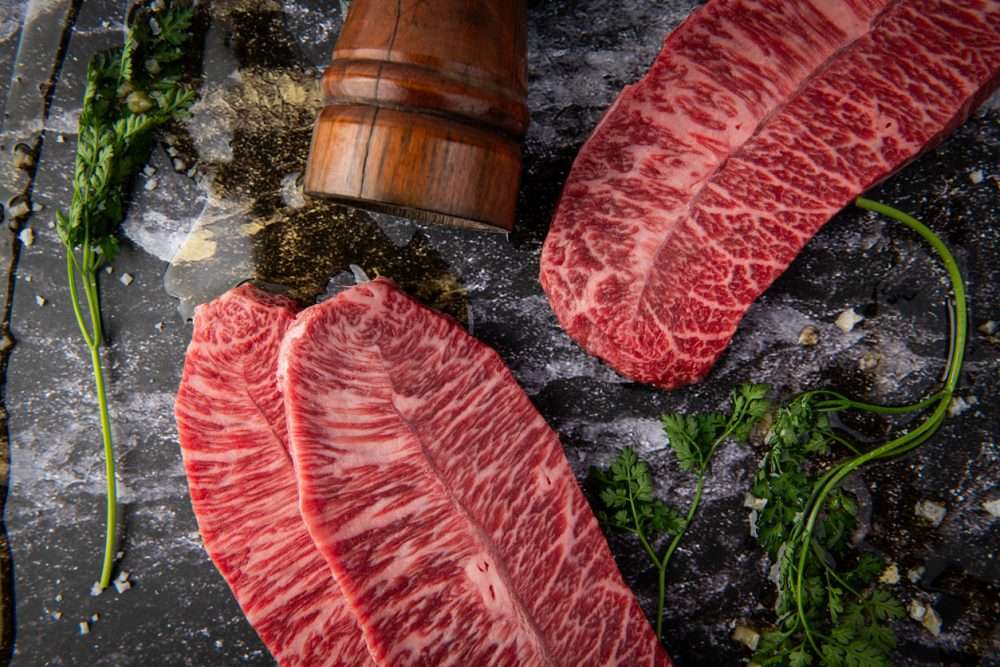
Japan is known for producing some of the world’s most premium beef, often referred to as wagyu. Wagyu is a general term for four specific native cattle breeds, most commonly Japanese Black. These breeds are prized for a genetic tendency to marble fat evenly through the muscle.
There are more than 200 registered wagyu brand names across the country, each tied to a region and its own feeding standards. Below is a guide to six of the most recognized wagyu in Japan.
How the grading works
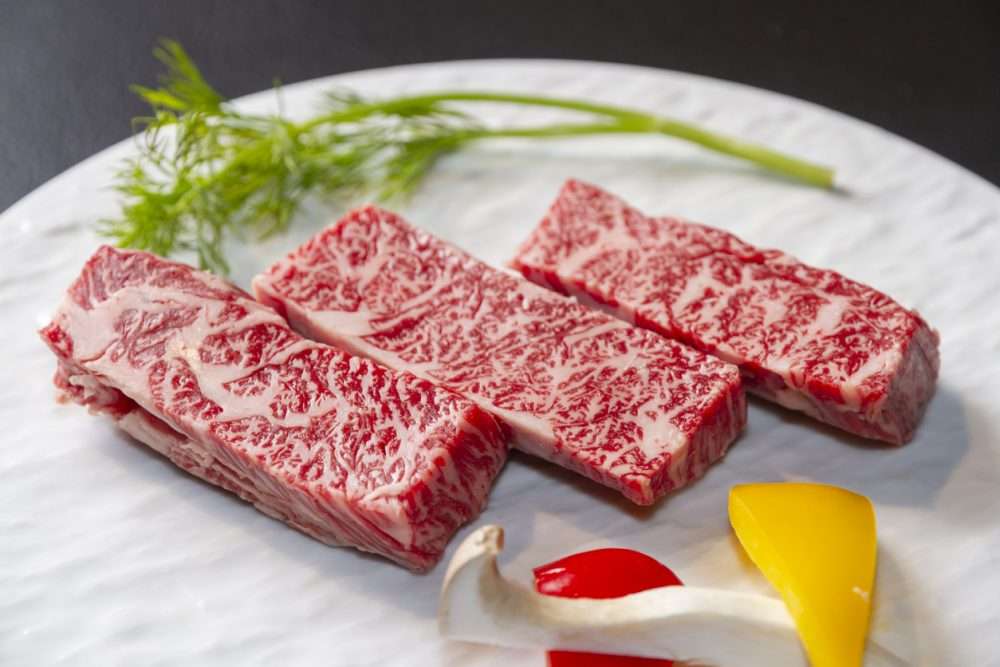
Japan’s Meat Grading Association scores beef on two factors: yield grade, from A to C, and quality grade, from 1 to 5.
Yield grade measures how much usable meat a carcass produces relative to its size. A means high yield, B is average, and C is below average.
Quality grade weighs marbling, color, fat and texture, with 5 being the highest and 1 being the lowest.
A5 wagyu makes up only 3% to 5% of total Japanese beef production, so even the “common” version of it stays rare.
Kobe beef
Grading: A4 to A5
Price: ¥8,000 to ¥15,000 per 100g
Kobe beef comes only from Tajima-gyu cattle born, raised and slaughtered in Hyogo Prefecture. Fewer than 5,000 cattle qualify each year, and the meat rarely leaves Japan in large volumes. It makes up less than 0.1% of all beef produced in Japan. What sets it apart is the fine, even marbling from Tajima genetics, which lets the fat melt at a lower temperature than most beef. That gives it a smooth texture and a deep, sweet flavor rather than a heavy or greasy one.
The price reflects both that quality and the scarcity, plus a strict certification process that tracks every animal from birth to plate.
Matsusaka beef
Grading: A4 to A5
Price: ¥5,000 to ¥10,800 per 100g
Raised in Mie Prefecture, Matsusaka beef comes exclusively from virgin female cattle, fed for up to three years. That is longer than most wagyu. Only about 2,500 head are slaughtered each year, and the long feeding period adds heavily to the cost.
Matsusaka, Kobe and Omi are often called Japan’s three great wagyu, or sandai wagyu. It produces marbling some chefs rank above Kobe’s.
Despite that, Matsusaka sells for less than Kobe. Kobe’s stricter, single-region certification and decades of global brand building keep its price higher, even when quality runs comparable.
Omi beef
Grading: A4 to A5
Price: ¥5,000 to ¥9,000 per 100g
Produced in Shiga Prefecture, Omi beef is Japan’s oldest recorded wagyu brand, with a history dating back more than 400 years.
Its marbling is lighter than Kobe’s, giving it a cleaner, less fatty bite. Its price sits below Kobe’s mainly because it carries less international brand recognition, not because the quality is lower.
Hida beef
Grading: A3 to A5
Price: ¥4,000 to ¥8,000 per 100g
Hida beef comes from Japanese Black cattle raised in Gifu Prefecture for at least 14 months. It is often named as one of Japan’s top three or four wagyu. The cool mountain climate and clean water in the Hida region are credited with producing especially fine, even marbling.
It costs less than Kobe or Matsusaka partly because Hida’s brand recognition, while strong within Japan, is more recent and less established abroad.
Miyazaki and Kagoshima wagyu
Grading: A5
Price: ¥3,000 to ¥6,000 per 100g
These two Kyushu prefectures produce most of Japan’s A5 wagyu by volume. Miyazaki cattle have won Japan’s national wagyu competition, called the Wagyu Olympics, three times in a row. Kagoshima offers similar quality at a lower price, making it the easiest true A5 to find on restaurant menus.
Larger production volumes than Kobe or Matsusaka keep prices lower, even at the same top quality grade.
Standard wagyu
Grading: A4
Price: ¥2,000 to ¥4,000 per 100g
A4 sits one tier below A5, with slightly less marbling but still well above standard beef. It costs less than A5 but, for many diners, offers a better balance of fat and flavor.
Articles you may also like: