
Day 1
In a lush clearing, mere steps apart, lie Kiso Valley’s Odaki and Medaki: male and female waterfalls, so named because of a love-struck couple who passed them while traveling on the Nakasendo Way in ancient times. Betrothed to others, the pair tried to cool their ardor for each other by standing under their respective waterfall, which both continue to be a point of interest today.
One of only two routes that connected modern-day Tokyo to Kyoto during the Edo Period, the Nakasendo is popular for the pristine nature and historic sites through which it passes.
Though much of the route has become the roads that link Japan’s major cities, in the heart of the Kiso area the route remains untouched. At our entrance to the trail, a winding cobbled path leads up into a beautiful forest. Morning light streams through the trees and birdsong fills the air. As the trees thin out, open ground and mountains in the distance form the backdrop.
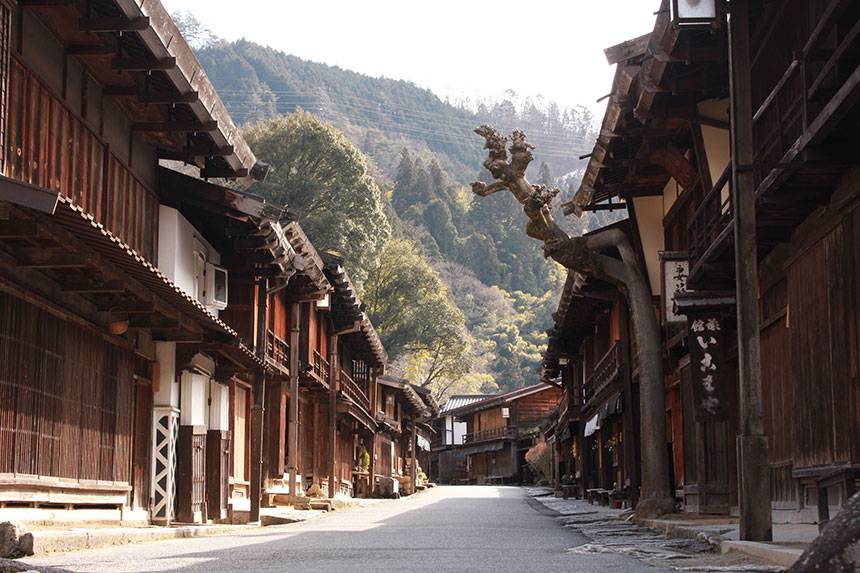
On arrival in Tsumago-juku, one of the best preserved former post towns in Japan, we are struck by its authenticity. Edo-style wooden houses, restaurants and ryokans line the narrow streets, prompting visitors to slow down to examine the traditional structures, inviting wares, and warm atmosphere.
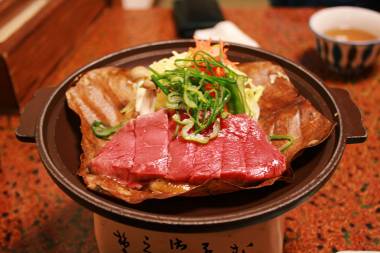
For lunch, we choose Fujioto Ryokan, another beautifully preserved building set back from the main street, complete with gardens and a pond filled with carp. We enjoy the recommended lunch—beef on a bed of miso cooked on a magnolia leaf—while our host regales us with details of the inn, which his family has owned and managed for 100 years. After a period in Europe, he is delighted to be back at the helm, using his language skills to welcome international tourists.
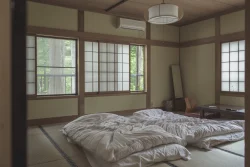
Another business extending a warm reception to visitors from abroad is Daikichi. With cosy and comfortable tatami rooms overlooking fields and mountains, as well as a family-style bath, this ryokan is often fully booked up to one year in advance.
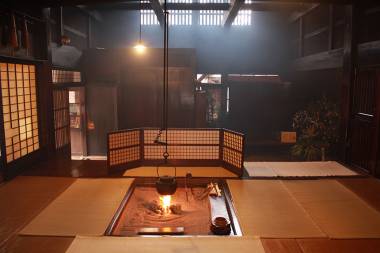
Even today, Tsumago-juku is a popular place to spend the night, just as it was in the Edo Period. We visit Wakihonjin-Okuya, an inn used by feudal lords and important members of their parties on their Nakasendo journey. Now open as a folk museum, the Okuya was built in 1877 using only cypress—a precious wood in Japan—and was designated as an Important Cultural Property of Japan in 2001. Its exhibits include a tatami-floored Japanese-style toilet and a barrel-shaped bath used by and made for Emperor Meiji and Princess Kazunomiya, who once visited the inn.
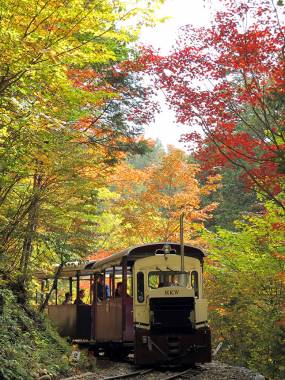
We enjoyed another healthy activity: forest bathing in Akasawa Recreational Forest. With 300-year-old cypress trees, it is one of the three most beautiful forests in Japan, and is renowned as being the birthplace of forest therapy. Studies have shown that experiencing time in forests results in improved physical and mental health, as well as boosted immunity. Aside from offering eight walking tours suitable for a wide range of abilities, the facilities include a railway and a museum.
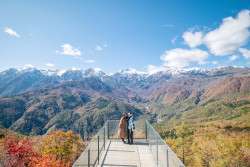
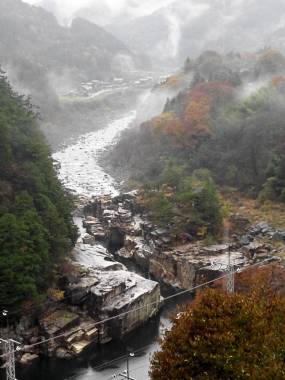
In nearby Agematsu, a viewpoint overlooking Nezame-no-toko Gorge has been a popular place to rest among travelers for centuries. Its rock formations, emerald green river, and colorful leaves in fall have earned it the title of nationally designated scenic spot.
From historical to modern, our stay at Tsutaya Tokinoyado Kazari effortlessly combined the best of Japanese tradition and the cutting edge. Having been renovated in 2015, the accommodation is airy and spacious, while the cuisine is made using local and seasonal ingredients with masterful detail. The outdoor bath, amid a tranquil forest, proved a great way to both end the day and start the next one.
Day 2
It is 11 degrees below zero and snowing, but the Kiso horses do not seem to notice. Outdoors, in groups of five or six, they munch on their breakfast, their long hair blowing, their short, stout bodies bracing against the wind. Their trainers call the shower “diamond dust” as the sight is as beautiful as it is icy.
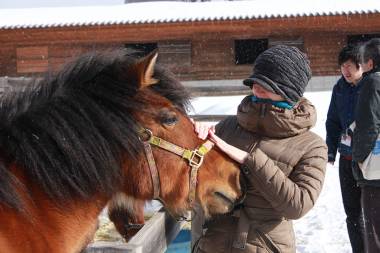
One of only eight breeds of horses indigenous to Japan, these Kiso horses were bred for the harsh winter weather of Kaida Kogen, in Nagano Prefecture’s Kiso Valley. In warmer months, visitors flock to see the horses and experience rides on either horseback or a pulled carriage, all with a spectacular view of Japan’s second-highest single peak.
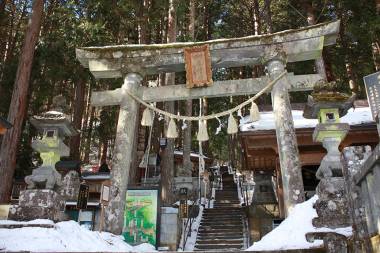
Mount Ontake has been revered as a sacred mountain from ancient times and, even today, attracts believers to its lower and upper slopes.
After passing through a pristine forest, we reach a small shrine and, directly ahead, a waterfall. It is common, we are told, for believers to don white cotton kimono and pray under the water, even in winter. Many people also gather to soak up the negative ions released when the water hits the rock, which is said to boost health.
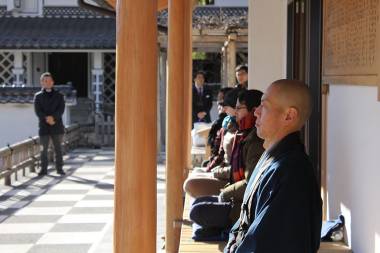
Our day of wellbeing was complete with a visit to Kozen-ji. After a demonstration on how to practice zazen meditation from one of the temple’s Zen Buddhist monks, we are given time to try it. In a serene atmosphere, overlooking a large dry rock garden with swirling sand patterns, it was not long before we were suitably relaxed to try the next task: creating a personal mini version of the garden.
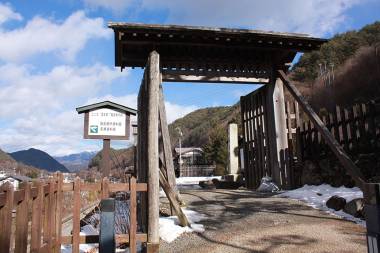
We also visited the Sekisho Border Control Gate, one of only two main points where travelers on the Nakasendo Road—between modern-day Tokyo and Kyoto—could be monitored. With mountains to one side and a river to the other, Kiso Fukushima played a crucial role, both politically and economically at that time. Travelers had no option but to pass through the gate, and stories were abound of attempts to counterfeit ancient “passports” to avoid forced marriage or capture. A museum featuring artefacts from that time includes weaponry such as arrows.
For both history and nature fans, Kiso has something to offer for exercising mind, body, and spirit.
Some activities at Kozen-ji may not be available depending on the schedule. Please contact the Kiso Town Tourism Association for more information.
Day 3
The longest former post town in Japan, Narai-juku in Nagano Prefecture was a critical point on the Nakasendo Road linking modern-day Tokyo to Kyoto during the Edo Period. Located at the foot of the Torii Pass, this section is one of the steepest and most strenuous parts of the trail and, at one time, the town provided a much-needed resting point for travellers. Local people also helped develop a thriving industry that made and sold what is believed to be the first light-weight souvenirs to travelers.
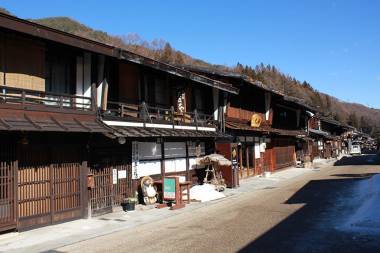
Even today, Narai-juku remains important historically and culturally because its legacy remains intact. After being designated an Important Preservation District for Groups of Traditional Buildings, the Kiso area, including Narai-juku, has received numerous awards including status as a Japan Heritage Site in 2016.
Walking along the 1 km narrow stretch, the reason for the awards becomes clear. The wooden buildings are a perfect example of Edo Period construction methods. At that time, the level of tax paid was based on rice yields, with payments collected by visiting tax inspectors. Since Narai-juku was not a rice-producing area and the locals wanted to reflect their relative poverty, homes and shops were built much in the style of an eel warren: narrow and small openings on the street with long and extensive living areas behind. Today, many visitors need to duck at the entrance to fit through the door.
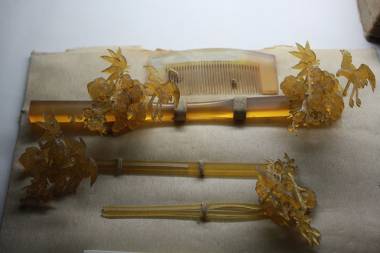
The Nakamura family residence of 1830 has been opened as a museum to allow visitors to uncover how its inhabitants once lived. Its overhanging first storeys and eaves are made from wood light enough to break under the weight of an intruder.
Slanted latticework on the first storey fronts allows optimum light to enter without residents losing privacy, but at a price. There are no shutters on the windows, only slats and paper sliding doors. Even on our midday visit it feels very cold inside. Believed to be created to compensate for this, there is a narrow passage between the slats and doors to protect against wind; a hearth is set into the tatami and there is a wooden sliding door over the staircase to prevent heat loss between the two floors.
The museum also houses a magnificent collection of lacquered combs dating back hundreds of years, as the Nakamura family were wholesale merchants.
Further along the street lies Taihoji Temple that contains a statue thought to be a headless Virgin Mary, thereby suggesting the presence of hidden Christians in the area centuries ago. Although made in the form of a Buddhist follower, scholars believe that it may have been decapitated by authorities when Christianity was outlawed in 1614.
The area’s abundant water and cypress forests were, and continue to be, important resources for local people. Six original wells and water foundations that supplied water to travelers on the route are still used today, and craft techniques using cypress have been passed down from generation to generation.
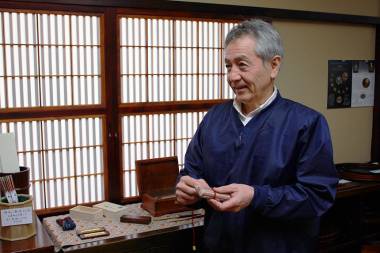
Narai-juku is famous for both its woodworking and lacquerware products, from small items such as chopsticks, lunchboxes and trays to larger items such as cabinets and tables. All made by hand using an enduring set of processes to shape, work, and coat the wood many times, the pieces reflect the skills of the local artisans. The town’s lacquerware is famous for its deep colors, while the woodwork is renowned throughout Japan for its aroma. Even the Imperial Household is said to use a bathtub made from cypress.

A visit to Narai-juku provides an opportunity not only to experience old Japan, but also to bring a piece of that history home with you.