Based in Japan: Arthell Isom on Building the First Foreign-owned Anime Studio in Japan
Storyteller, entrepreneur and artist
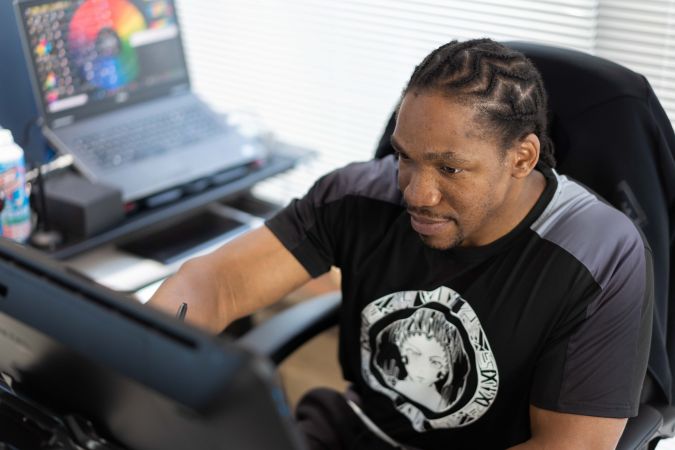
“I was up until 4 am last night for a project,” Arthell Isom casually remarks this the day we meet him at his Shinjuku studio. To an unwitting listener, the Tokyo-based artist’s comment might sound light-hearted or even wacky—but beneath his laid-back demeanor is a relentless creative drive.
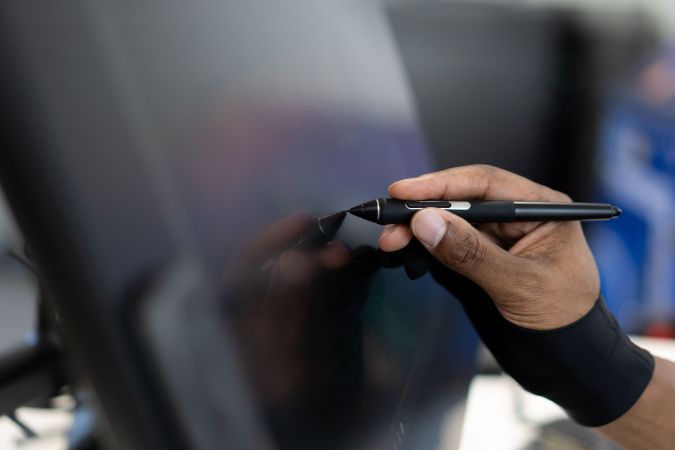
Standing among the rows of unmanned Wacom monitors — his animator team accessing them remotely from across the city — he then recalls a paranormal encounter during his all-nighter: “I thought I was hallucinating when I heard sounds in the office in the middle of the night. Turns out it was just another animator watching YouTube tutorials late at night from his home.”
In the media spotlight, Isom is an entrepreneur and CEO of D’Art Shtajio, Japan’s first Black and foreign-owned animation company. In the studio and among his well-trusted animators, he’s the creative director steering some of the most epic anime scenes: Attack on Titan, One Piece, Gintama and Fire Force to name-drop a few. Despite these titles though, Isom has been — and always will be — an artist, first and foremost. Many of these titles have helped define the current anime landscape—see our guide to modern anime worth watching for more.
“Anime is just a medium to tell stories. Right now, the world is shifting, and that shift is what’s changing the industry, too. We’re just glad we can be one of the studios to help with that.”
This broader shift reflects wider changes across the industry—explore our analysis of anime industry trends for a deeper look.
From New Jersey to Japan’s Animation Industry
His story is an ambitious one. In a fateful encounter with the Japanese cyberpunk original Ghost in the Shell, helmed by acclaimed animation director Hiromasa Ogura, the New Jersey-born artist swung his career dreams to a new orbit. A seemingly spur-of-the-moment decision plan began to hatch: he would leave San Francisco and go to an animation school in Japan. Failure would simply not be a part of it.
The life of an animator is already competitive and notoriously coveted, but Isom had set his sights firmly on one goal: to work at Ogura Kobo — the legendary Ogura’s animation studio. For him, it was a simple, sure decision, but a heedless one, too; Ogura only accepted one artist every year. “At that point, I just wanted to work for him. It’s what I always wanted to do.”
Animator at Heart, Entrepreneur by Duty
“Nothing can compare to the Japanese animation industry. You work crazy hours. On my first day, we were just working from morning to the next morning, and my senpai would sleep at their desk,” Isom reminisces. “I saw them doing it, and I just thought, ‘This is what everybody’s doing,’ so I slept at my desk too. ”
Well on his inexhaustible pursuit to fine-tune his talent, Isom needed to prove himself beyond Ogura’s mantle — he wasn’t just a token hire, after all, and he knew his transition into the company wouldn’t be seamless. He was one of the very few, if not only, foreign animators in the industry.
“I’m a Black American foreigner. Naturally, I stood out. Whenever we went to animation parties, people always thought I was the security,” he continues. “But I didn’t want to get special treatment. Most foreigners would take vacations or go back to America. I didn’t. I stayed in Japan for 10 years straight before I went back to America.”

Five years into his time at the company, Isom sat down with Ogura and anime producer Mitsuhisa Ishikawa to announce his resignation—a decision rooted in the ambition he had long shared with his brother, Darnell Isom. The idea, seeded by the brothers’ entrepreneurial dad, bloomed into a reality in 2016 under the name D’ART Shtajio.
Building a Studio in Japan
For Isom, this now means dividing his days between being a businessman and a background-art lead.
“Starting any company is difficult, but it’s definitely harder in Japan than it is in the U.S.,” Isom explains. “It’s also about becoming business-minded. I’m a creative person, so separating these two things — running a business and becoming an art director — is still something I have to figure out. You have to put the company and staff first. There might be certain projects that we want to do more, but we can’t because we have to make sure to keep the lights on.”
In a strenuous aim to maneuver and scale the business, Isom needed to foster partnerships in the anime sphere — an unenviable pressure, as he doesn’t consider himself a “social person.” The great thing, he says, is that there’s no competition in the industry.
“Of course, there are bigger studios that have been here for years, but in general, you have to make good friends and build relationships to get a good start,” he explains. “When I left, Ogura-san and Ishikawa-san gave me their blessing and advice. I was lucky that they introduced me to different people in the industry.”
Representation — or Misrepresentation — in Anime
In the early anime adaptation of shonen manga Shaman King, one of the protagonists of African descent, inaptly named ChocoLove McDonell, stood out in his afro hair, inappropriately exaggerated lips and an African wrap. This flawed portrayal stands as one of many examples of how anime has misrepresented POC and LGBTQ characters.
Since then, the industry has barely grazed outside these superficial notions. Isom is doing to the community what should have been done years ago: straying away from stereotypes and paying attention to how people actually look.
“Animation isn’t live-action — everything has to be drawn, so every element that moves or exists has to be thought of. “
“It’s our job as an artist to be observant and express characters correctly,” he says, noting that the concept is not without its complexities. “It is more difficult to incorporate transgender characters. Between cis-gendered male, female characters and transgender characters, finding out these differences to portray them correctly needs more time.”
The roots of misrepresentation
Almost inevitably, much of this insensibility among anime producers roots from what the global media provides. In Japan, foreign cultures and attributes are heavily commercialized, their accuracy dropped in favor of racial and sexual exploitation. To be Black in anime, for example, means to be either dangerous, cool or comical — or all of the three.
“One of our artists made all of the bad characters dark-skinned and good characters light-skinned for a project,” Isom tells. “I asked if it was because the client requested it. They answered, ‘No, these are the bad guys. That’s why they’re dark-skinned.’”
For Isom, the challenge is in the conscious decision to make characters appear as organic as possible. Who are they? Where are they from? What are their characteristics?
“The last thing we want is to include a random Black character just because they’re Black and tokenize them. I would rather have all the characters be light-skinned or Asian if I feel like a Black character isn’t necessary,” he states. “Our approach is to focus on the storyline — that’s how we can make a story that’s actually diverse and accurate.”
An Artist First, Always
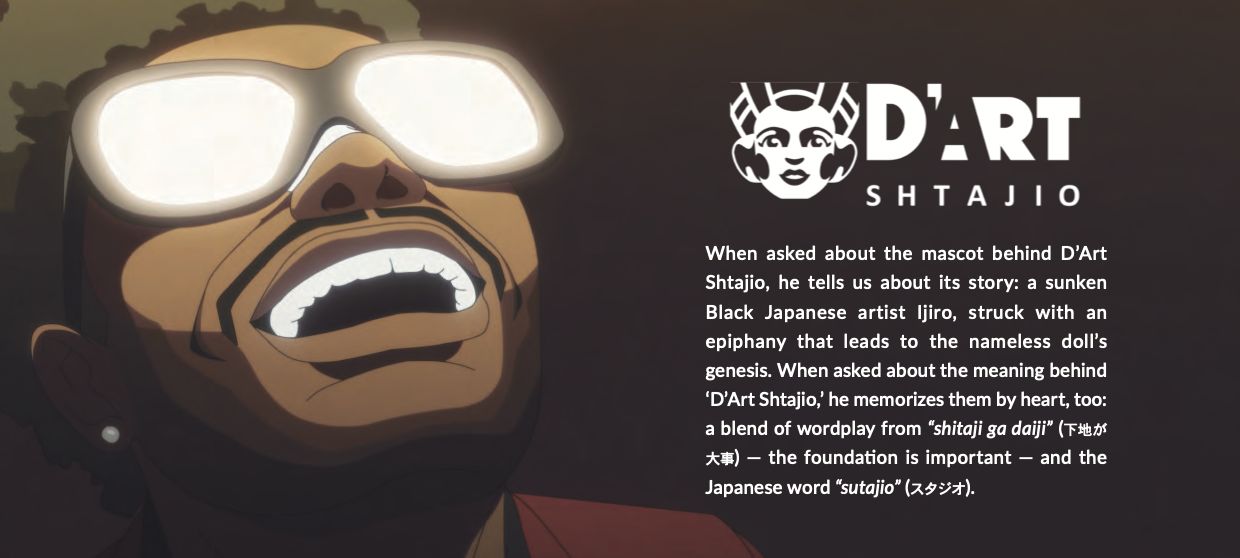
After our conversation, Isom eagerly shows us one of his favorite paintings—a watercolor of a mountainous landscape, with final touches added by Ogura himself. His enthusiasm is unmistakable, especially when he talks about his favorite series (Stand Alone Complex). It reflects how deeply connected he is to anime. That same creative energy carries into the mascot of D’ART Shtajio: a nameless doll inspired by Ijiro, a fictional Black Japanese artist whose journey mirrors Isom’s own.From creative blocks to the ceaseless pursuit of creation, Ijiro mirrors Isom’s magnetic life.
As the interview concludes and we’re entranced by a monitor as a remote-working artist adds the final touches to a Ghibli-inspired landscape, Arthell passes along a piece of advice he received from his treasured mentor Ogura and adds his iterations: “Art is just like a muscle. The more you do it, the better you’re going to get at it. Figure out what you want to do, and practice, practice, practice.”
Follow Arthell online:
Instagram: @xatacysm
Instagram: @dartshtajio
Website: D’art Shtajio
Read more from our Based in Japan series
This article was originally published in September 2021 and updated in April 2026 for accuracy and relevance.