January 5, 2026
Masabumi Hosono: The Japanese Man Who Survived the Titanic
Honor, survival and the moral cost of taking the last lifeboat seat
By Metropolis
Masabumi Hosono, the Japanese man who survived the Titanic, was condemned in Japan for choosing life. More than a century later, his story demands a closer look.
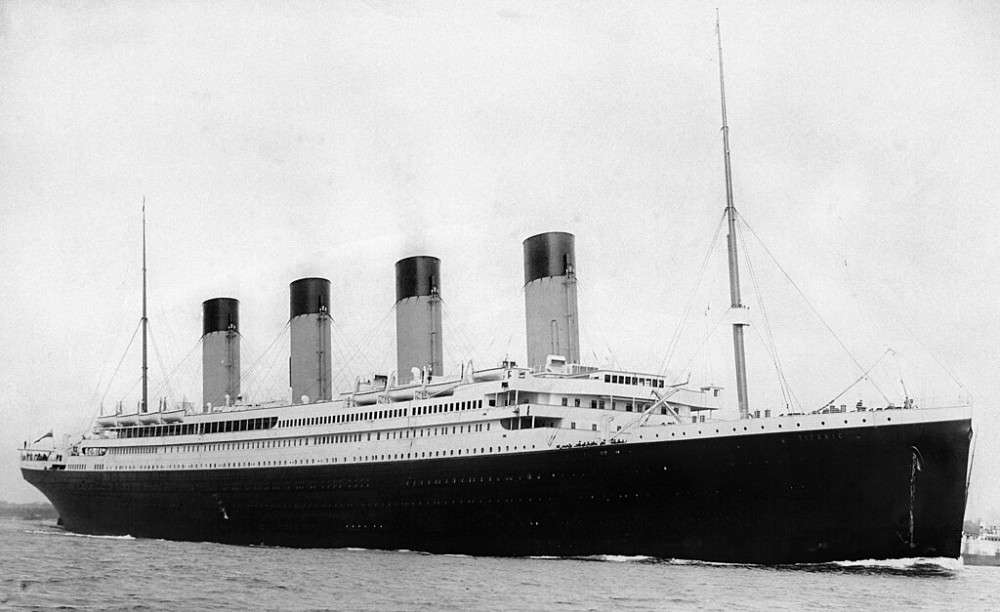
In the early hours of April 15, 1912, Masabumi Hosono woke in his cabin to alarming news: the ship he was traveling on hit an iceberg—and the situation was critical. The Titanic was sinking. As a foreigner and second-class passenger, he was ordered downstairs, away from the lifeboats. But amid the turmoil on board, he managed to sneak onto the deck.
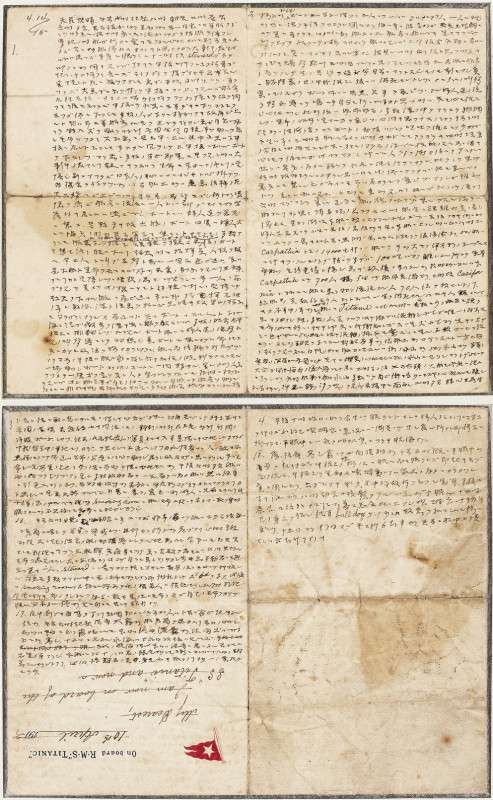
In a letter titled “On Board R.M.S. Titanic” that he frantically penned to his wife as the tragedy unfolded, he describes the sight that greeted him there. Orienting himself by the glow of flares in the air, Hosono found his way to Lifeboat 13, the only rescue boat yet to launch. Under instructions from the crew, the men present guided the women and children onto the vessel. When the order arrived to lower the craft into the sea, there were two seats left. A man leapt past Hosono and claimed one of them, leaving the Japanese man with the last empty seat—and a choice to make.
Choosing Survival—and Paying the Price
Faced with this textbook moral dilemma, Hosono chose life, and lived to regret it. Whereas Brits fortunate enough to survive returned home as heroes, he had a different fate in store.
Both the Japanese government and the general public found his survival intensely embarrassing. After all, he hadn’t done anything spectacular or noteworthy; he had simply survived—and apparently at the expense of one of the 162 women and children who died.
Early coverage in Japan focused on his emotional reunion with his family, but the tone soon shifted. Newspapers began publishing critical articles accusing him of cowardice. U.S. papers joined the chorus. His actions were contrasted with those of passengers such as Benjamin Guggenheim, who famously dressed in evening wear and chose to die rather than take a place meant for a woman or child.
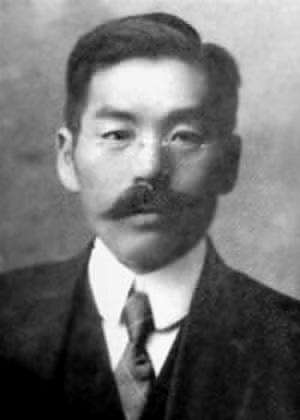
Mura Hachibu and a Hostile Homecoming
Hosono returned to a very hostile Japan. Found guilty of nonconformity to the “women and children first” principle and of evading an honorable death, he was subjected to mura hachibu [social ostracism].
He was forced out of his career as a civil servant and bombarded with hate mail. His “cowardice” was reportedly made an example of in a popular girls’ etiquette schoolbook of the time, one which his own daughter was made to study. His suicide was called for in letters to newspapers, and from other quarters. He became a recluse, and even after the public grew bored of the story, he refused to discuss it publicly.
A Quiet Reinstatement After the Kanto Earthquake
When the excitement had ebbed away, he was reinstated in the civil service, largely due to a quirk of fate. According to historian Charles Pellegrino in his book Farewell Titanic, after the 1923 Kanto earthquake devastated much of the Japanese rail network, Hosono was simply too qualified to remain unemployed.
His job was quietly returned to him, and the nation joined him in pretending that nothing had happened. He continued to live in quiet shame until his death from natural causes in 1939.
His persecution didn’t end there. Upon the sinking of the Toya Maru, a Japanese liner, in 1954, Hosono’s precedent was exhumed as an example of an ignoble death in the midst of disaster.
Samurai Spirit and Japan’s Need to “Save Face”
In short, Hosono was criticized for failing to embody the samurai spirit and choosing survival over a noble death. Japan in 1915 was still asserting itself on the world stage and eager to demonstrate a code of patriotic self-sacrifice to Western powers.
Fresh from military victories over China and Russia, the nation viewed such ideals as proof of its moral and cultural strength. By surviving, Hosono was seen as having violated this code and brought shame upon himself, leaving a fervently nationalistic society little choice but to disown him.
What Hosono’s Letters Reveal
From the body of letters and memoirs that Hosono left behind emerges an altogether more complex moral picture. “Cowardice” was the watchword in the press coverage, but in reality it was hardly the sole explanation for his behavior.
Though he was aware of the need “not to leave behind anything disgraceful as a Japanese,” it appears that his sense of patriotic duty was outweighed by sheer love for his family. In his letter to his wife, he wrote that his most “depressing thought was that he would not be able to see [his] beloved wife and children again.”
Elsewhere, he admits that “the first man’s example” was what ultimately convinced him to jump. He counters claims that he didn’t think his actions through properly, and his anguish comes through in extended passages in which he discusses his moral predicament.
A humane compassion, totally at odds with his media portrayal as a self-preserving coward, comes through in his description of the chaos on deck. He writes of his despair at watching the ship disappear, “a tangible, graceful sight… reduced to a mere void.”
The Lifeboat Capacity Problem
What’s more, the facts and testimonies that have emerged since the disaster suggest that Hosono’s actions may not have been as selfish as portrayed by the contemporaneous media. Many lifeboats, including Lifeboat 13, embarked before they had reached full capacity.
As many as two in five seats in Hosono’s vessel were unoccupied. The evidence suggests that the “women and children first” policy may have actually caused some men to hold back from boarding a lifeboat, needlessly causing their own deaths.
While 324 of the 438 female passengers survived, under a fifth of the men did. Hosono’s detractors had been quick to equate one man’s survival with the death of one woman or child, but we now know this to be an unfair conclusion.
Confusion, Racism and Mistaken Identity
Such assumptions stemmed from inaccuracies, which were rife in reports of the disaster. Additionally, certain allegations made against Hosono might have stemmed from confusion between him and other Asian pass.
In the Senate inquiry immediately opened upon return of survivors to the U.S., Quartermaster George Rowe testified that Asian people aboard his lifeboat who refused to leave were “Chinamen… or Filipinos.” Similarly, a passenger found adrift on a makeshift raft by the steward George Crowe was described as “a Japanese or Chinese young fellow.”
Another “Japanese” was picked up by Lifeboat 14, and impressed his co-passengers by taking up the oars despite suffering from exposure. Subsequent research has shown that he could not have been Japanese, as there was not one on the Titanic apart from Hosono.
Even the passengers in Lifeboat 13 were confused about Hosono’s nationality, with many testifying that he was Armenian. Matt Taylor, a noted Titanic scholar who investigated Hosono’s fate, writes that “his diary does show that certain cowardly acts committed by other Asians… had been mistakenly attributed to him.”
In light of these revelations, the Japanese government granted Hosono a posthumous pardon in 1997.
The 1997 Film Revival and Hosono’s Re-Evaluation
The release in 1997 of James Cameron’s blockbuster Titanic renewed interest in the disaster in general, and prompted a re-evaluation of Hosono’s case in particular. His letter to his wife, written on what’s believed to be the only surviving piece of Titanic stationery, was rediscovered in a drawer, and its moving description of Hosono’s moment of “disgrace” attracted much public sympathy.
His grandson, famous for his involvement with the Japanese bands Yellow Magic Orchestra and Happy End, has used this platform to retell his grandfather’s story. In an interview, Haruomi “Harry” Hosono expressed his family’s desire to show the other side of Hosono, that of a devoted family man whose only wish was to see his wife and children again.
At an exhibition that retold his grandfather’s journey, Haruomi was visibly moved. “Honor has been restored to the Hosonos,” he said to People magazine. “[My grandfather] never admitted his feelings publicly… A samurai would not do that.”
Titanic by the Numbers
£76,000
The price fetched at auction last week for a menu of the last meal served on the Titanic. Dated April 14, 1912, the night the boat sank, the menu was one of hundreds of items salvaged from the wreckage.
97
The age at which Millvina Dean, the longest-living Titanic survivor, died in 2009.
2,214
The number of passengers on board the Titanic on its last journey.
1,178
The combined passenger capacity of the lifeboats. The shortage of space was due to outdated maritime safety regulations.
19
The percentage of male passengers who survived the sinking. 72% of women made it out alive.
6
Number of nationalities on board with a 0% survival rate. The three Uruguayan and four Greek passengers were among the unlucky.
1
Number of nationalities with a 100% survival rate: Japanese.
Q&A with Masabumi Hosono’s daughter, Yuriko Hosono
Metropolis: How would you like to have Hosono remembered?
Hosono: I would like to remember him as an honest and diligent man of the Meiji Period who suffered the rest of his life for making a life-or-death decision to survive.
M: What do you want people to learn from his story?
H: To make a quick decision and act in case of emergencies.
M: What was Hosono like as a person?
H: Shy, active, loving of his family, reserved and diligent.
M: Did he talk a lot about his experience?
H: He apparently didn’t talk much about his experiences. I was born after my grandfather passed away, but one can assume that he didn’t because he was a reserved person and was abashed by the public and media.
M: Did the experience change his life?
H: He was financially troubled since he had to quit his job at the railroad and had to support his wife and six children. When he got a job again at the railroad, he worked quietly so as not to be noticed.
M: Does knowing about his experience influence your life?
H: My father, Hideo [Hosono’s second son], attended the same university and majored in the same department as his father. Out of the six children, he was the only one active in clearing his own father’s name. My father collected various sources and spoke about it whenever he could. My mother did not want to talk about it since she couldn’t stand the slander.
When I was young, my sisters and I weren’t supportive of my father’s activities. It was an issue we’d rather ignore and forget about. However, today, I feel bad that I wasn’t more understanding. My cousins weren’t interested in this topic either.
M: Are you afraid of traveling on boats?
H: Not at all. I think I take after my father and my grandfather who both liked vehicles.
M: Has your view of your grandfather changed during your life?
H: I must admit that I also used to think that my grandfather should have sacrificed his life for women and children and died honorably. However, I think differently today. The shipping company and the captain were the ones responsible for the Titanic incident. The passengers were not.
In my opinion, it’s bizarre that the captain who sank with the ship is remembered as a hero and a passenger who was lucky to get on the lifeboat was criticized for his actions and survival.
This article was originally published in April 2012 and updated in January 2026.