February 20, 2026
Things Women Cannot Do in Japan
And why those rules exist and persist
By Metropolis
For decades, people in Japan claimed women couldn’t be sushi chefs because their hands were “too warm” and would ruin the fish. It sounds silly, and it is. But the belief sits within a long list of things society has told women they cannot do, enter, inherit, lead or touch.
Some of these restrictions are informal, enforced through custom and social pressure. Others are institutional, embedded in religious practice, workplace systems, or medical norms. A few restrictions still appear directly in law.
What these ideas share is how rarely people question them. When people frame exclusion as tradition rather than discrimination, they make it easier to defend and harder to dismantle. This article looks at some of the most persistent examples, not to argue that Japan is uniquely regressive, but to examine how a modern society continues to draw quiet boundaries around women’s access to power, space and autonomy.
“Women in Japan cannot be sushi chefs.”
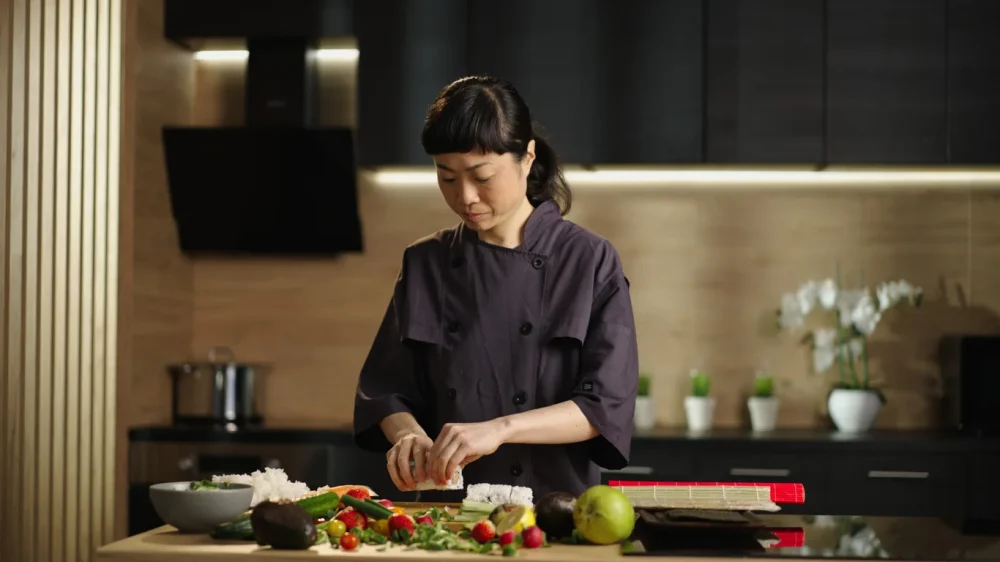
For most of the 20th century, the industry treated the idea that women could not be sushi chefs in Japan as fact. No law banned women from the profession, but industry leaders upheld the belief, and traditional Edomae sushi apprenticeships almost entirely excluded women. These were long, hierarchical and heavily gatekept by male masters.
Today, female sushi chefs are still rare, but they are gaining numbers. For example, Nadeshiko Sushi opened as a women-run sushi restaurant staffed entirely by female chefs. It became a huge success because—shocker—the sushi was good.
“Women in Japan should relinquish ownership after marriage.”
Women in Japan can legally own property and land and inherit assets. Families and institutions still often encourage women to relinquish ownership after marriage or hold assets “temporarily” until a male relative takes over. Inheritance customs continue to favor men, especially in traditional households that prioritize family lineage over individual rights. Families frequently register property under husbands or eldest sons, particularly in rural areas or family-run businesses.
“Women in Japan are banned from Mount Omine.”

Authorities still ban women from entering certain sacred sites in Japan, including Mount Omine, a UNESCO-listed spiritual site. They justify this through the idea of “spiritual purity,” treating women as a source of ritual impurity, often linked to menstruation. Other temples and shrines also restrict access to inner sanctums or limit participation in specific rituals, framing these rules as preservation of tradition.
“Women in Japan cannot become professional sumo wrestlers—or even step inside the ring.”
There are no professional female sumo wrestlers. The Japan Sumo Association governs the sport and does not permit women to compete as rikishi (professional wrestlers). There is no pathway, ranking system or professional league for women within the sport’s official structure. It also bars women from stepping into the ring under any circumstances, including emergencies. During a 2018 event held at the Maizuru Cultural Park Gymnasium in Maizuru, several female nurses leapt into the ring to administer CPR on a man who had collapsed, but the arena announcer instructed them to leave the ring.
“Women in Japan cannot easily keep their last name after marriage.”
In Japan, a married couple cannot be legally married while keeping different last names. The law requires both spouses to share one surname in the family registry. In theory, the couple can choose either the husband’s or the wife’s name, but around 95 percent of couples register under the husband’s surname. There is no legal option for dual surnames or hyphenated names, meaning one person must give up their legal identity in order to be married.
“Married women in Japan cannot get an abortion without partner consent.”

This one is nuanced, and we cover it in a full article here. Access to abortion is governed by the Maternal Protection Law, which generally requires the consent of both the pregnant woman and her spouse if she is legally married. While the law does include exceptions, such as when the spouse is unknown, unreachable, deceased or unable to express consent, these are applied inconsistently in practice. Unmarried women are not legally required to obtain partner consent, but many clinics still request a partner’s signature as a matter of internal policy, so that they can avoid any potential legal trouble.
You might also be interested in reading:
Are Trains in Tokyo Safe for Women? A List of Women-Only Cars in Tokyo
Japan Drugstore Guide: Period Pain Relief and Women’s Health