The Bullet Train, A Loaded Story
Japan likes to say the Shinkansen arrived just in time for the Olympics. But in truth, it arrived in spite of everything.
On an autumn morning in 1964, as Tokyo prepared to welcome the world for the Olympics, a white-and-blue streak cut across the farmland of the Tokaido plain. Though the train, Hikari No. 1, sped with smooth elegance, the story behind it was anything but.
It is a tale of bureaucratic infighting, financial scandal, resignation in shame and a fiercely persistent engineering pursuit. The kind that bent a nation’s will and redrew global boundaries of possibility.
The Shinkansen’s most pivotal architect was Shima Hideo, the engineer who was the first to propose what would become Japan’s famed bullet train. It would be a purpose-built, straightened, high- capacity line running between Tokyo and Osaka. After the war, as chief engineer of Japanese National Railways (JNR), he resurrected the plan and reframed it as an audacious, nation-binding project that could propel Japan into a new economic era.
This required rebuilding Japan’s main artery, the Tokaido Line, as an entirely new rail system with wider rails, and new tunnels, bridges and stations. It would also be designed to operate at 210 km/h (130 mph).
But cracks soon formed in this vision of the future, as Shima encountered resistance at every turn: skepticism from politicians, horror from budget committees, and thinly-veiled hostility from rival executives who saw the project as reckless at best and self- destructive at worst. The price tag ballooned, and construction delays multiplied. Land acquisition became a diplomatic labyrinth, especially through Shizuoka’s tea fields and Gifu’s mountain hamlets. Villages and farmland along the route were disturbed, displaced or cut through.
The line ultimately required more than 60 tunnels and over 3,000 bridges, carving its way through mountains and over rivers to maintain a straight-enough path for the speeds engineers hoped to achieve.
“By 1963, the project’s finances had spiraled nearly 90 percent above the initial ¥200 billion budget.”
What began as a concern inside JNR soon erupted into a national scandal. The Diet launched an investigation, uncovering inflated cost estimates, sketchy contracting and evidence that executives had approved unvetted expenditures under intense political pressure.
The fallout was swift. JNR President Araki Sadanobu resigned, followed by several senior board members. And finally, Shima—whose engineering vision had driven the entire enterprise—submitted his own resignation with a characteristically spare statement: “The responsibility is mine alone.” He later conceded that it had been “a serious miscalculation” to underestimate the true cost of tunneling, land battles and the unyielding Olympic deadline.
Looking back, it is astonishing that the project made it to the end at all. By every rational measure, its spiraling costs, political fallout, engineering unknowns and loss of its founding visionary meant that the Shinkansen should have been paused or scrapped.
But Japan simply couldn’t stop. The Tokaido corridor was collapsing under demand, threatening to choke the nation’s economic engine. The Tokyo Olympics loomed, carrying the weight of Japan’s postwar rebirth. Too many tunnels had been bored, too much land seized, too many contracts signed and too much national pride invested.
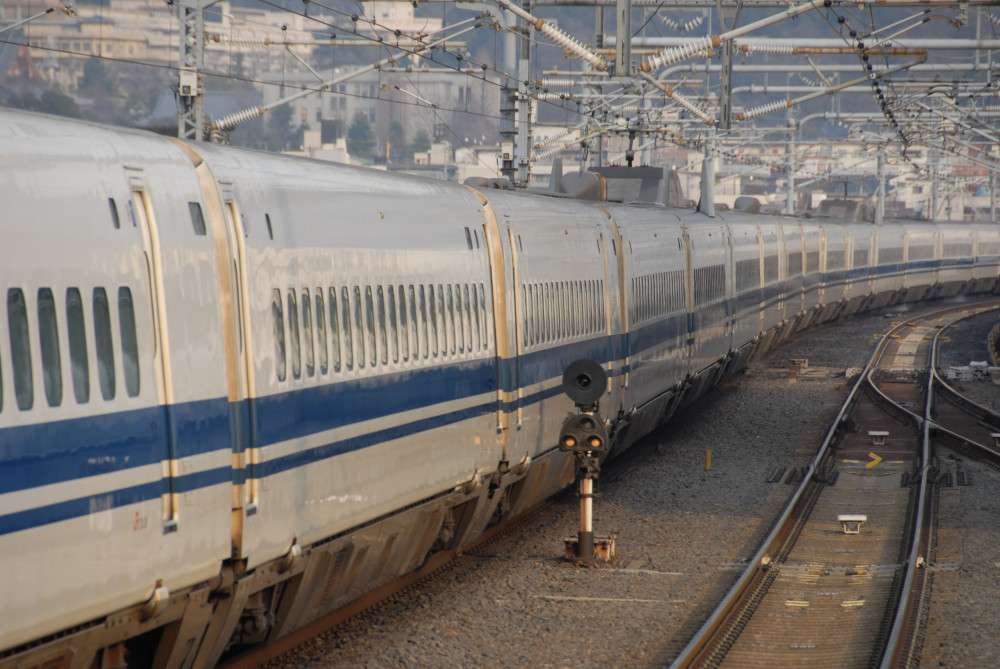
The project had become too large, too symbolic and too necessary to abandon; failure was no longer an option. The Shinkansen moved forward not because circumstances were easy, but because the cost of stopping had become unthinkable.
In the wake of the scandal, Ryosuke Ishida was appointed JNR president. Ishida was not an engineer but a meticulous administrator, brought in to stabilize the organization, restore political trust, and shepherd the half-finished Shinkansen toward its date with Olympic history. Under his more conservative, compliance-driven leadership, JNR tightened oversight, calmed political waters and pushed the project toward completion.
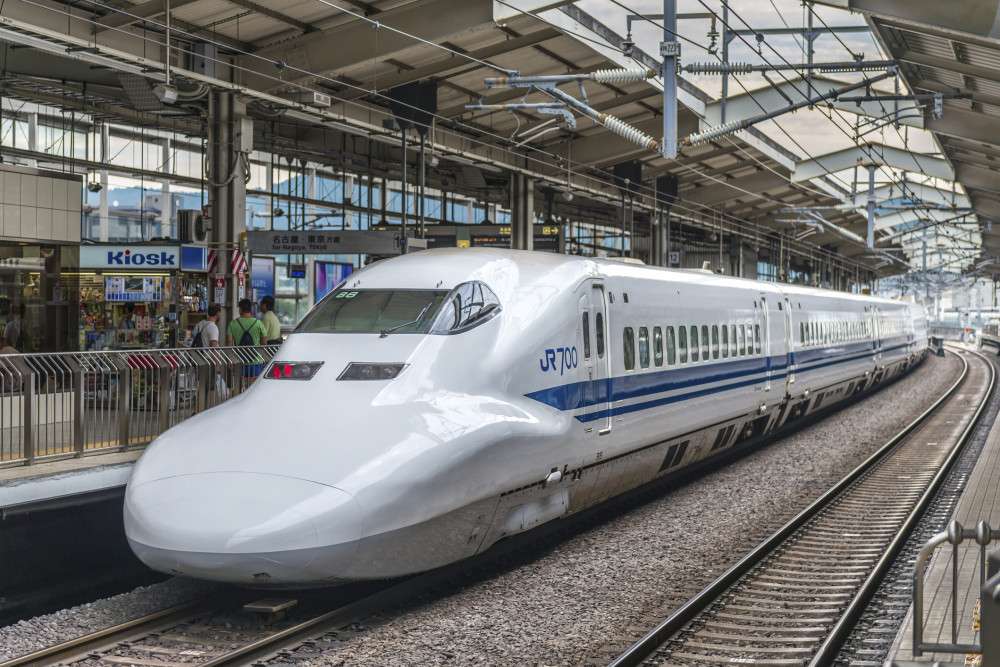
The Tokaido Shinkansen officially opened on October 1, 1964, just ten days before the Tokyo Summer Olympics. The inaugural service ran between Tokyo and Shin-Osaka stations, covering 515 kilometers in just over four hours. It was less than half the time of the prewar express.
At 6am, the first Hikari No. 1 eased out of Tokyo Station to national fanfare. Crowds lined platforms, embankments and overpasses all along the route, watching a machine once considered impossible take flight along steel rails.
In the decades since that first run, the Shinkansen has rewritten the geography of Japan. It has collapsed travel times between the country’s largest economic hubs, enabling the kind of fluid labor movement and business exchange that helped fuel Japan’s postwar boom. Entire regions, once peripheral, have been pulled into the gravitational field of Tokyo and Osaka. Tourism corridors flourished. University towns expanded their reach. Rural prefectures gained weekday commuters and weekend visitors whom they never could have attracted by car or conventional rail.
And beneath all this, the Shinkansen’s unmatched safety record of zero passenger fatalities from accidents in more than half a century reinforced national trust in rail as both backbone and a lifeline. It didn’t just connect cities in Japan; it reshaped economies, lifestyles and expectations of what distance means here.
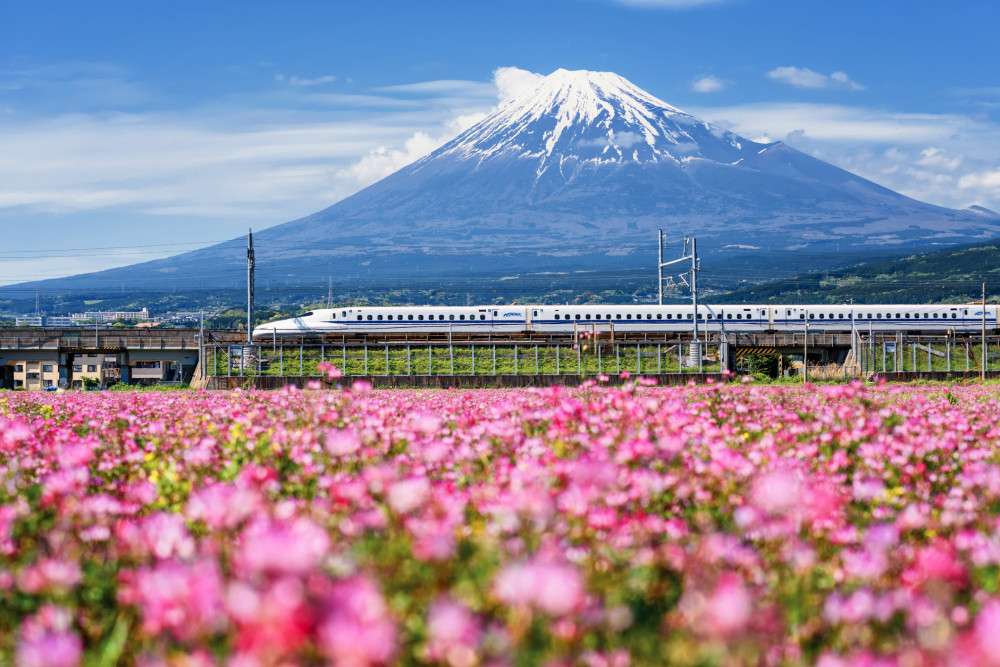
For all its political turmoil and engineering audacity, the Shinkansen is now something profoundly gentle in Japanese daily life. It’s a symbol children learn before they can read. A promise of hometown returns during the New Year. A sleek blur you look for from the car window as it slips across the horizon.
This article was originally published in Metropolis Magazine, “Drama,” Spring 2025. Read the full issue here.