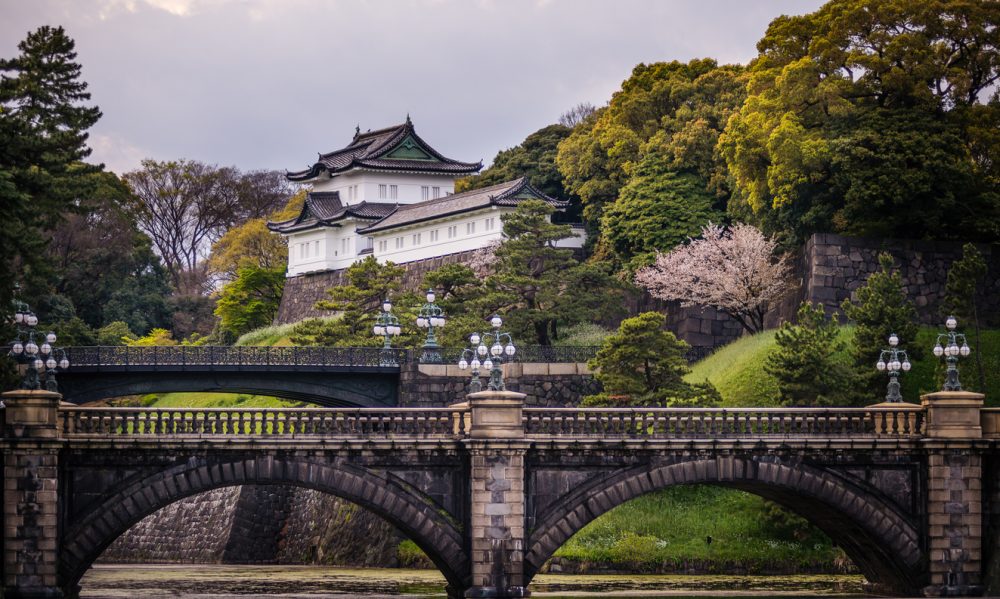
Your Official “Hometown” Is the Imperial Palace? Welcome to Japan’s Honseki System
The bizarre loophole that's turning castles, stadiums and airports into official family homes
If you’ve ever filled out a Japanese form and hit the field labeled 本籍 (honseki), you may have assumed it was just another way of asking where you live and moved on. It isn’t. And that confusion has produced one of the more absurd bureaucratic situations in modern Japan, in which thousands of newlyweds have officially declared their family registry to be located inside a baseball stadium.
So What’s the Difference Between Honseki and Jusho?
Your jusho (住所) is your actual address: where you sleep, where the delivery guy rings the wrong buzzer, the thing you write on forms when forms make sense. It’s tied to your juminhyo (resident certificate) and follows you around when you move.
Your honseki (本籍) is something else entirely. It’s where your koseki (family registry) is kept. The koseki is Japan’s meticulous public record of your existence: birth, parents, marriage, children, death. The full annotated edition of your life, and critically, it does not have to exist anywhere near where you actually live.
By law, honseki can be set to any address in Japan that appears in the land registry. Your parents’ house, your new apartment, a rice paddy in Niigata, all fine. But also: Tokyo Tower, Osaka Castle, Haneda Airport, Tokyo Disneyland.
The Marriage Catch
When a couple gets married in Japan, they must declare a single, shared honseki for their new family unit on the kon’in todoke (婚姻届, marriage registration form). Only one address, that’s the rule.
The old default was simple: the wife’s family registry moves into the husband’s. Tradition upheld, nobody asks questions. But modern couples increasingly find this arrangement a bit, shall we say, one-sided. Why should one partner’s family address become the official “home” while the other’s gets absorbed? It’s not exactly a 50/50 start to a marriage.
So couples started picking neutral ground. A place that belongs to neither family but means something to both. And once you’ve accepted the address can be anywhere, the question becomes: why not make it somewhere good?
The Honseki Leaderboard
According to Mynavi Wedding, here are some of the most popular honseki locations in Japan:
Imperial Palace (1-1 Chiyoda-ku, Tokyo) ~3,000 registered
The undisputed number one. Reasons cited range from “it sounds powerful” to “easy to remember” to, presumably, chaos.
Osaka Castle (1 Osaka Castle, Chuo-ku, Osaka) ~800 registered
For those who want historical gravitas with a Kansai accent.
Hanshin Koshien Stadium (1 Koshien, Nishinomiya, Hyogo) ~699 registered
If you bleed Tigers orange, apparently so should your koseki.
Tokyo Tower, Tokyo Disneyland, Haneda Airport
All popular. The airport choice in particular raises questions about one’s relationship with permanence.
Chiyoda Ward’s Recurring Nightmare
The Imperial Palace sits in Chiyoda Ward, which means Chiyoda Ward is legally responsible for managing the family registries of around 3,000 people who thought it would be funny (or romantic, or both) to put the Emperor’s address on their marriage form. Every year, the ward office fields a stream of calls asking the same question: “Is the address 1-1 Chiyoda-ku, Tokyo? Is that right?”
Staff who should be dealing with Chiyoda’s actual 68,000 residents are instead confirming, repeatedly, that yes, you may place your family registry inside the Imperial grounds. The ward has reportedly described the volume of inquiries as affecting normal operations.
For context: Chiyoda’s real population is about 68,000. Its honseki population, people with their family register officially located in the ward, is approximately 213,000. Three times as many. Tokyo Tower and Tokyo Station accounts for a significant chunk of that (both are in Chiyoda), but the Palace leads the pack.
The Law Change That Made It Worse
For a long time, there was at least one practical reason to keep your honseki sensible: if you needed a koseki tohon (family registry certificate), you had to request it from the specific ward office holding your records. Remote honseki meant paperwork by mail, delays and occasionally lost documents.
Then, in 2024, Japan revised the Koseki Law. Koseki certificates can now be obtained from any ward office nationwide. You can have your family registry at Osaka Castle and pick up the paperwork at your local city hall, five minutes away. Registrations at landmark addresses have risen noticeably since.
Sources: Mynavi Wedding, Hotel Chinzanso Tokyo Wedding Guide, Yomiuri Shimbun, Asahi Shimbun