April 10, 2026
Based in Japan: Inside Rakugo With Katsura Sunshine
Translating Japan’s Traditional Comedic Storytelling
By Tamaki Hoshi
Experience Japanese culture through the belly-busting humor of rakugo, a 400-year-old tradition of comic storytelling. Passed from master to apprentice, rakugo has tickled the funny bone of Edo samurai, Osaka merchants and commoners alike since Japan’s feudal ages.
Metropolis sat down with rakugo master Katsura Sunshine, who trained under the legendary Katsura Bunshi VI and now brings this classic art form to audiences around the world, entirely in English.
This article was originally published in Metropolis Magazine, “Drama,” Spring 2025. Read the full issue here.
Metropolis: What sets rakugo apart from other forms of comedy shows?
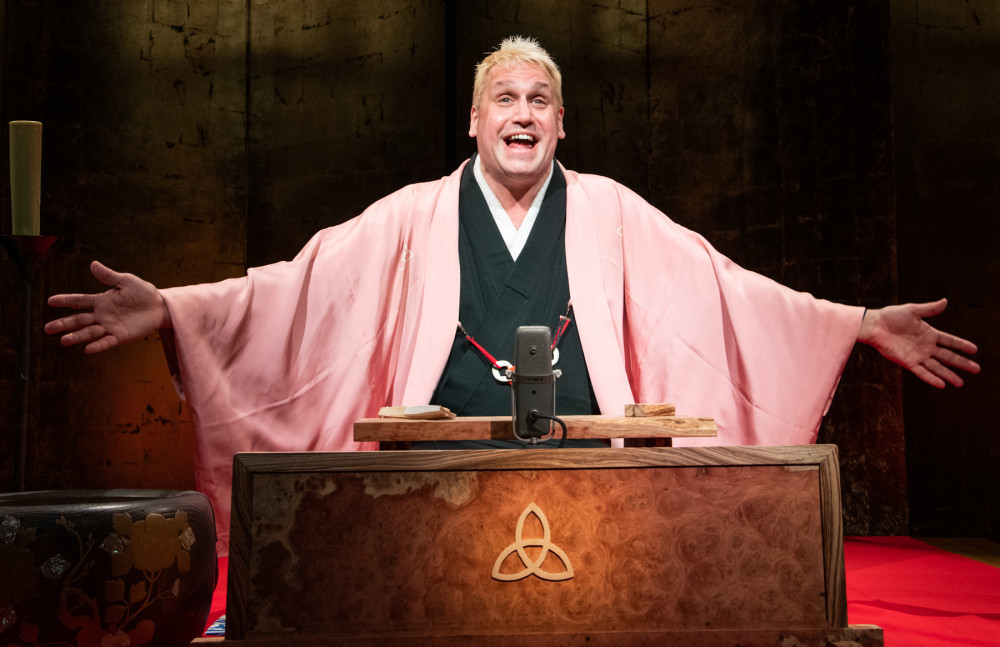
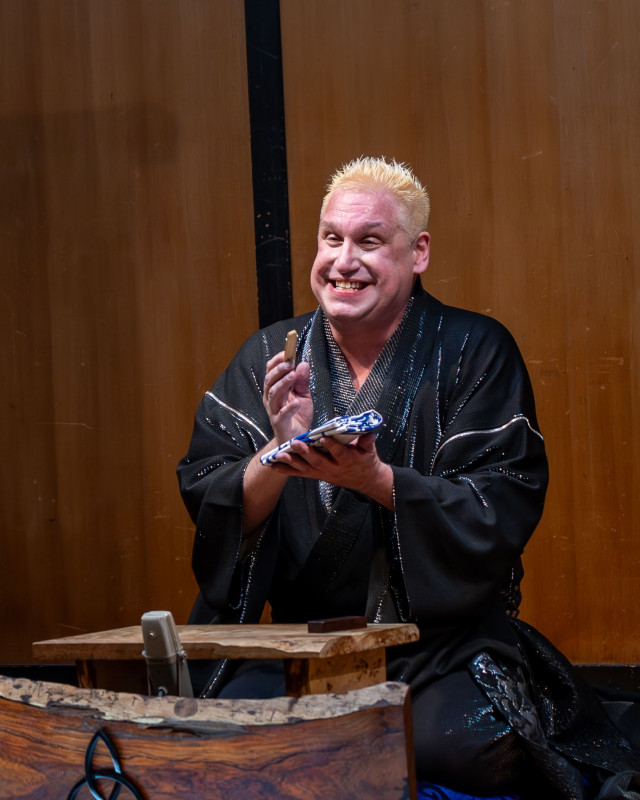
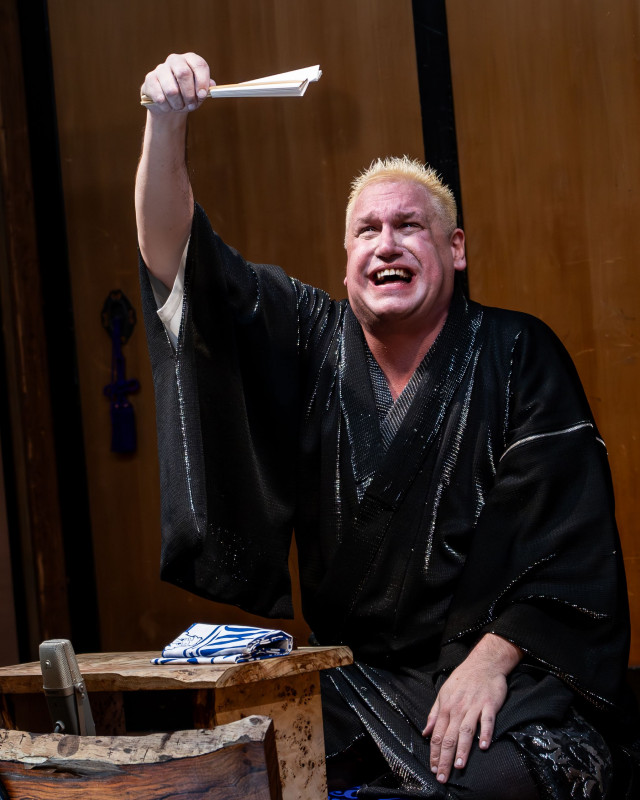
Katsura Sunshine: What makes rakugo immediately disarming is its intimacy. A performance feels less like a staged show and more like a conversation with an exceptionally hospitable friend, inviting you to relax while they guide you through a nostalgic tale. Seated on a cushion and armed with only a folding fan, a small cloth and a kimono-clad body, the rakugo artist conjures entire worlds through voice and gesture alone.
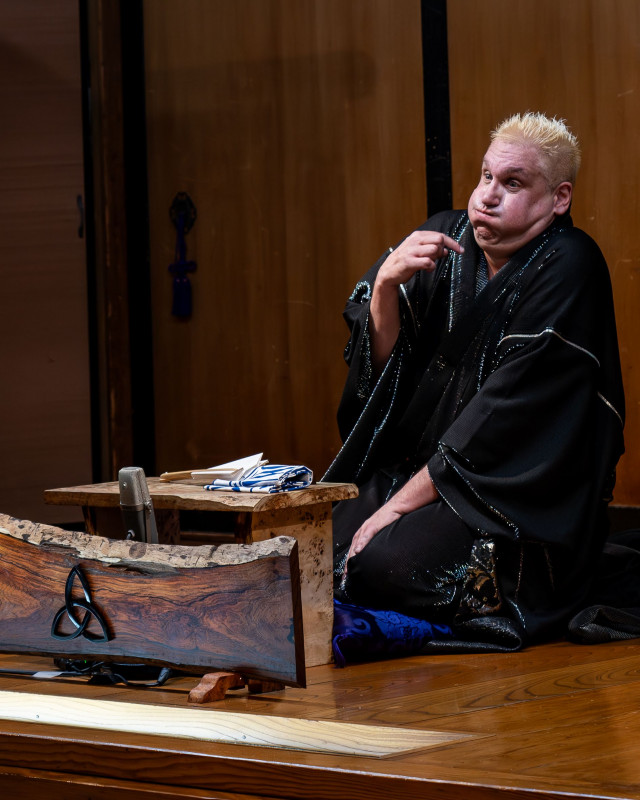
Unlike many storytelling traditions that rely heavily on narration, rakugo unfolds almost entirely through dialogue. The performer becomes multiple characters by subtle turns of the head and shifts in tone, giving each story a brisk yet deeply character-driven rhythm.
Every rakugo story traditionally ends with a final ochi, often translated as a “punchline,” though Sunshine explains it’s closer to a clever wrap-up that makes everything click. Thus, unlike stand-up comedy, where humor builds toward multiple punchlines, rakugo locates its comedy within the storytelling itself: the characters, their quirks, and the relatable absurdities of everyday life.
M: Isn’t a traditional art form like rakugo difficult to understand?
KS: Although rakugo stories are usually set in Edo-era Japan, Sunshine reassures audiences that no cultural background is required.
“Rakugo was made from the beginning to be as simple and easy to understand as possible, because the whole point was to make the audience laugh,” he explains. Mid-conversation, he demonstrates by holding his fan like chopsticks and skillfully miming a character slurping udon noodles.
“You could have never been to Japan, and you’d still know exactly what’s going on,” he says. “So this idea that rakugo is old and hard to understand, I think, is untrue.”
M: Why is rakugo so easy to enjoy?
KS: akugo’s origins are humble. Its earliest forms emerged when Buddhist monks told jokes during long sermons to keep listeners awake. “And the best part is, those jokes had nothing to do with their teachings,” Sunshine smiles. “They just thought, ‘People look tired. Hm, maybe I’ll tell a joke.’” These stories were later written down, forming rakugo’s foundations.
Because of this lighthearted beginning, rakugo rarely carries heavy moral lessons. “You’ll see people who do foolish things,” Sunshine explains, “but no truly ill-intentioned characters. Even thieves are kind of goofy. There’s no need for serious life lessons on good versus evil when the aim is pure amusement.”
Ironically, this pursuit of lightheartedness grew out of hardship. During the Edo period, entertainers lived outside the rigid class hierarchy and were often looked down upon. “The performers had tougher lives than we do now,” Sunshine reflects. “And they learned to laugh about it.” That modest spirit shaped the rakugo artists’ tone of humility and gentle self-deprecation towards their audience, creating an atmosphere that feels warm rather than authoritative or theatrical.
M: What is a rakugo performance like?
KS: Every rakugo performance begins with the makura, or “pillow talk”: an opening that thanks the audience, lightly touches on seasonal topics or current events, and gently introduces cultural references that may appear later. It also allows the performer to read the room before transitioning into the honpen, the main story.
When we attended Sunshine’s performance at Mokubatei Theater in Asakusa, he entered with a broad smile and simple props in hand. Through his makura, he welcomed us warmly before seamlessly guiding the room into an age-old tale. Within minutes, the yose theater was filled with laughter and spontaneous banter. By the time the ochi arrived, we were no longer simply watching a performance, but participating in it; carried together by a story that felt both centuries old and vividly present.
M: Why attend a rakugo performance?
KS: Thanks to the pioneers of English rakugo like Master Katsura Sunshine, this comedic form is more accessible than ever before. In addition to touring internationally, Sunshine performs regularly at Mokubatei Theater in Asakusa, an area still rich with nostalgic downtown charm.
For English-speaking residents and visitors in Tokyo seeking new forms of drama, rakugo offers an immersion into a living tradition, felt through stories that warm the heart and ripple laughter through the ribs.
Want to watch a show? Check out Katsura Sunshine’s official website for date and ticket information.