January 14, 2026
Why Do Birth Rates Plummet Every 60 Years During the Year of the Fire Horse?
Debunking an old, sexist myth
In 1966, births in Japan dropped by roughly 25%, leaving a visible notch in the population pyramid that demographers still point to today. The reason wasn’t war, famine or disease. It was a superstition, one centered almost entirely on women.
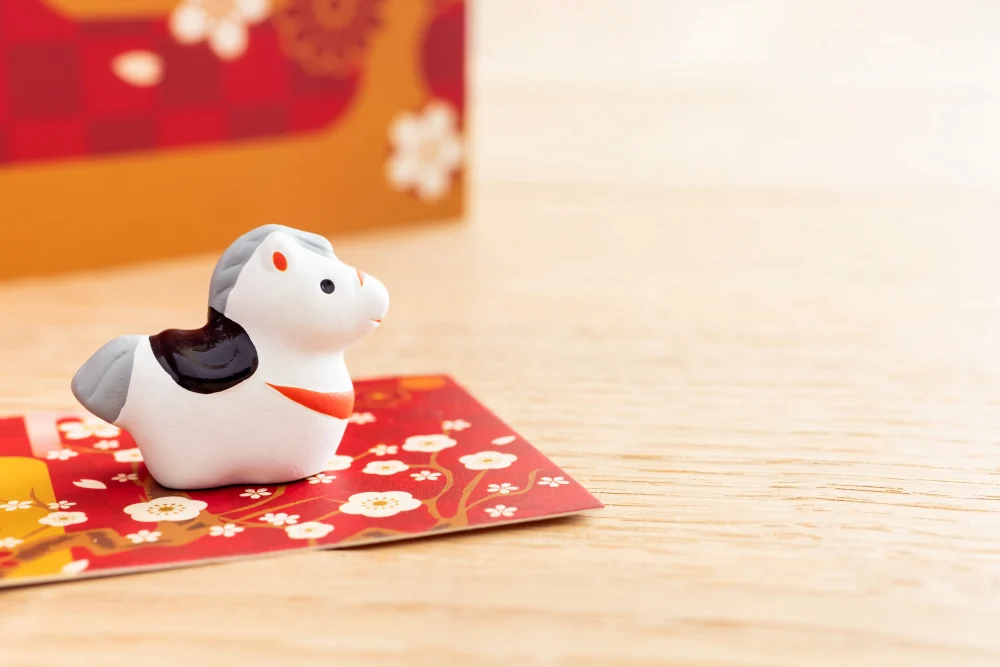
1966 was the Year of the Fire Horse (丙午, hinoe-uma), part of the traditional 60-year zodiac cycle. According to a belief that gained traction in Japan, women born under this sign were said to be hot-tempered, uncontrollable, and disastrous for marriage. Some versions went further, claiming they would “consume” or destroy their husbands and fathers.
Don’t forget to check out our article on the Chinese New Year in Japan.
A Superstition With a Target
The Chinese zodiac cycle originated in China, but there is no equivalent stigma against Fire Horse women there. In Chinese astrology, the Fire Horse is associated with intensity, charisma and momentum, not marital catastrophe. The idea that women born under this sign were inherently dangerous is something that took hold specifically in Japan, amplified over centuries through folklore, theater and later, mass media.
One commonly cited influence is the Edo-period story of Yaoya Oshichi, a young woman executed for arson after setting fires in a desperate attempt to see a man she loved. Her story became popular in puppet theater, and her birth year—1666, a Fire Horse year—was retroactively treated as proof of the sign’s danger.
It was a moral tale dressed up as destiny. And like many moral tales, it landed hardest on women.
The Sexist Logic Behind the Myth
At its core, the Fire Horse superstition reflects a familiar pattern. Traits that might be admired in men, like assertiveness, ambition and intensity, become liabilities when attached to women. A “strong-willed” man is a leader while a strong-willed woman is stubborn. The Fire Horse myth framed female independence not as strength, but as danger.
It also tied a woman’s worth to her marriageability. The fear wasn’t that Fire Horse women would be unhappy; it was that they would make others unhappy, especially husbands. In that sense, the superstition functioned less as astrology and more as social control.
What the Chinese Zodiac Actually Says About the Fire Horse
Strip away the Japanese taboo, and the Fire Horse looks very different. In traditional Chinese astrology, the Horse is associated with movement, vitality and independence. The Fire element intensifies these qualities. Fire Horse people are often described as:
- Strong-willed and decisive
- Highly energetic and expressive
- Quick thinkers who act on instinct
- Charismatic, persuasive and socially adept
They tend to thrive in environments that reward initiative rather than obedience. They dislike stagnation, resist micromanagement, and lose interest when passion fades. These traits can cause friction as Fire Horses can be impatient, easily bored and overly self-directed. But they’re also why they’re often drawn to entrepreneurship, leadership, creative industries and advocacy.
Reframing the Fire Horse Legacy
Now, sixty years later, the cycle returns. Tuesday, February 17, 2026, marks the start of the next Year of the Fire Horse. Whether the superstition will have any measurable effect on Japan’s already fragile birth rate remains to be seen.
If anything, the Fire Horse woman, as described by the zodiac itself, is adaptable, passionate and resilient. Not someone to fear, but someone who tends to move first, whether society is ready or not. And that, more than any superstition, may explain why she was singled out in the first place.
You might also want to read Is Japan’s Cultural Aversion to Public Noise Suppressing Its Birth Rate?