Is Japan’s Cultural Aversion to Public Noise Suppressing Its Birth Rate?
Is Japan’s silence pushing families away?
A father pushed a baby stroller into the half-empty carriage of a Tokyo subway train. As soon as he sat down, loud cries of his young son emerged from the stroller. Rushing to quiet the child, he pulled a stuffed animal from his bag and breathed a sigh of relief when the child let out a loud laugh at the sight of his fluffy friend.
But the father’s relief quickly faded when a woman sitting opposite him let out a sharp “shush.”
“Sorry, excuse me,” the man responded apologetically.
“This is not a kindergarten,” the woman announced, throwing a stern glare before looking back at her smartphone.
The “virtue” of public silence in Japan
When a friend told me this story, it showed how deeply silence shapes public behavior in Japan. Even casual banter in public spaces often draws criticism. People who break these unspoken rules risk being labeled as social irritants, a concept known as meiwaku (“bothersomeness”).
Perhaps nowhere is this more evident than among the country’s metro systems. Journeys in subway trains, whether up in Sapporo or down in Fukuoka, often filled me with concerns about speaking too loudly. Surrounded by quietly snoozing salarymen, headphone-toting teenagers engrossed in short videos, and the occasional bibliophile, my friends and I often felt guilty continuing our conversations after boarding a train. And indeed, multiple times across multiple cities, fellow passengers quietly nudged us to keep our voices down.
After decades of this quiet reality, many in Japan have come to view silence in public as a sign of consideration and good manners. People often view speaking loudly or drawing attention to oneself as disruptive, reinforcing the idea that maintaining harmony in shared spaces is part of everyday social etiquette.
A virtue taken too far?
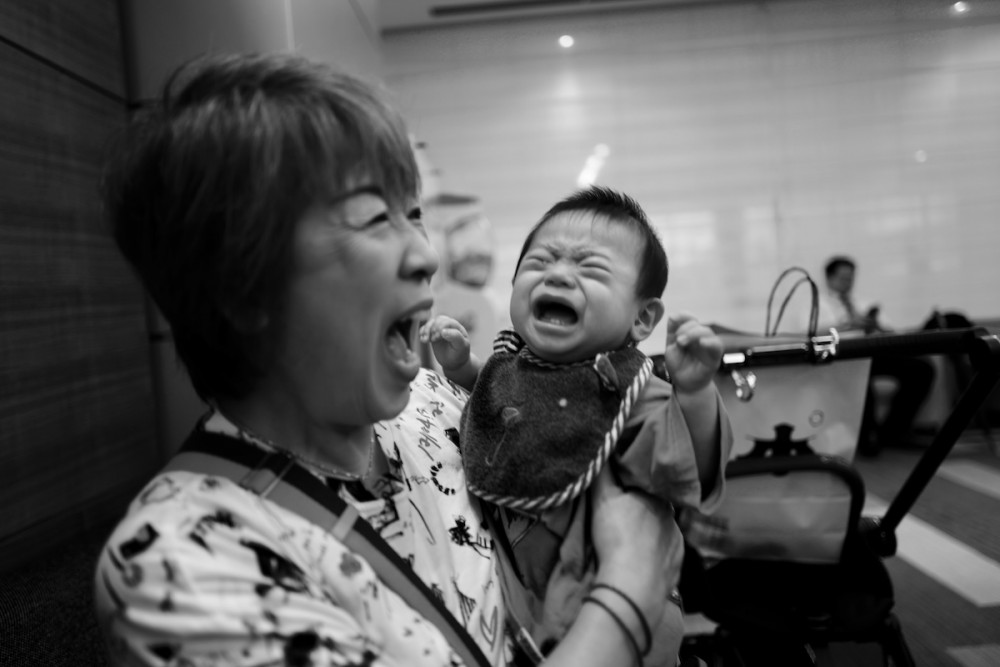
Unfortunately, while the average baby knows no virtue of silence, the Japanese public increasingly wants families to conform to the same social norm. The criticism of a baby’s vocal expression symbolizes how an obsession with noise control can fundamentally change social relationships beyond noise itself.
As vocal children become the quintessential meiwaku, parents like the father with the young son often apologize for their babies’ uncontrollable noise.
Such apologies have reinforced the social marginalization of those with children. Recent reporting shows that both economic pressures and social factors—such as resistance to childcare facilities and restrictions in shared public spaces—shape Japan’s declining birthrate.
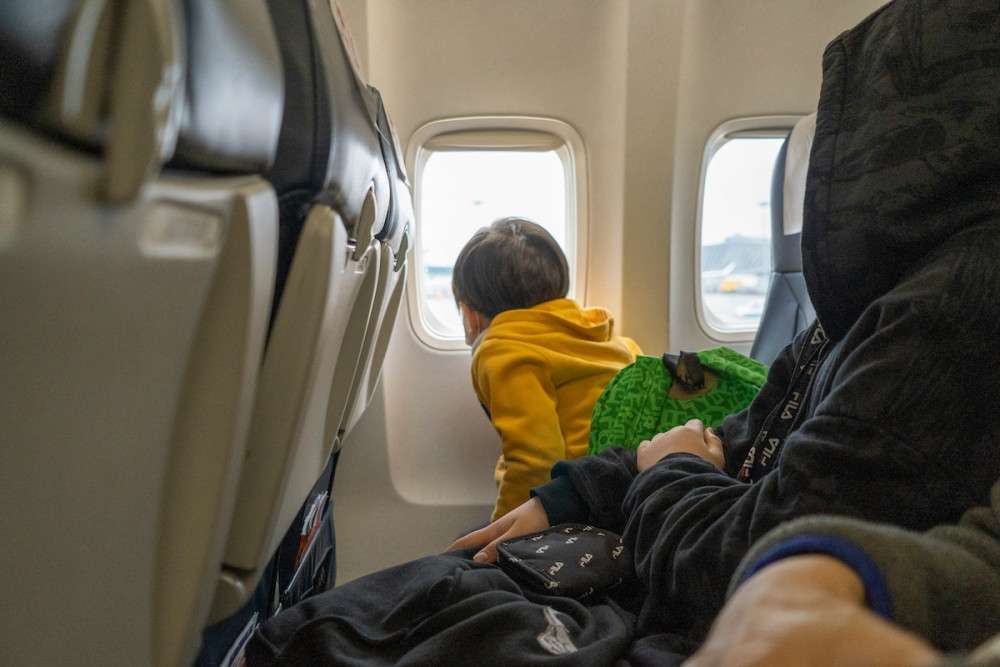
Even Japan Airlines details how it restricts where children can sit on a flight by marking only some seats as available to infants. These attitudes show how the public often treats children as undesirable in shared spaces.
The collective ostracization of children as socially disruptive may further compound Japan’s already severe demographic challenges. According to The Japan Times, the number of births in Japan has continued to fall to record lows in recent years, while the country’s fertility rate remains far below replacement level. While economic factors remain central, social pressures — including expectations around public behavior — may also influence how comfortable families feel raising children, particularly in dense urban environments.
Can something be done about the “anti-baby” attitude in Japan?
As aversion to public noise pushes people to have fewer babies, it will be increasingly urgent to frame this cultural idiosyncrasy as an economic liability. Data from the Bank of Japan shows that approximately 60% of the Japanese economy is private consumption. The country’s future economic health depends increasingly on the local consumer base not shrinking rapidly in the coming years.
The general public will not voluntarily abandon a cherished social norm. Instead, it will be up to the Japanese government to look at how it can reverse cultural aversions to children among citizens. In particular, the government needs to push for stronger policy reforms to build a more supportive mindset around the presence of babies—and their inevitable noise—in public spaces. Transparent regulations, such as on what types of businesses in what areas can restrict access to children at what times, will provide the legal foundation for new social expectations.
The solution to the low birth rate in Japan?
The government could also enact financial measures to protect young families from outright ostracization. Rather than just funding nurseries and kindergartens, the government could invest in more inclusive public facilities, from buses specifically catering to families with infants to baby-friendly restaurants. Such initiatives may help a new form of “ageism,” like the loud “shush” on the train, a new taboo. This is a good first step to shift social attitudes toward babies from concern and opposition to tolerance and then acceptance.
You might also be interested in, “Giving Birth in Japan as a Foreigner”
Originally published in January 2025. Updated in April 2026 for accuracy.