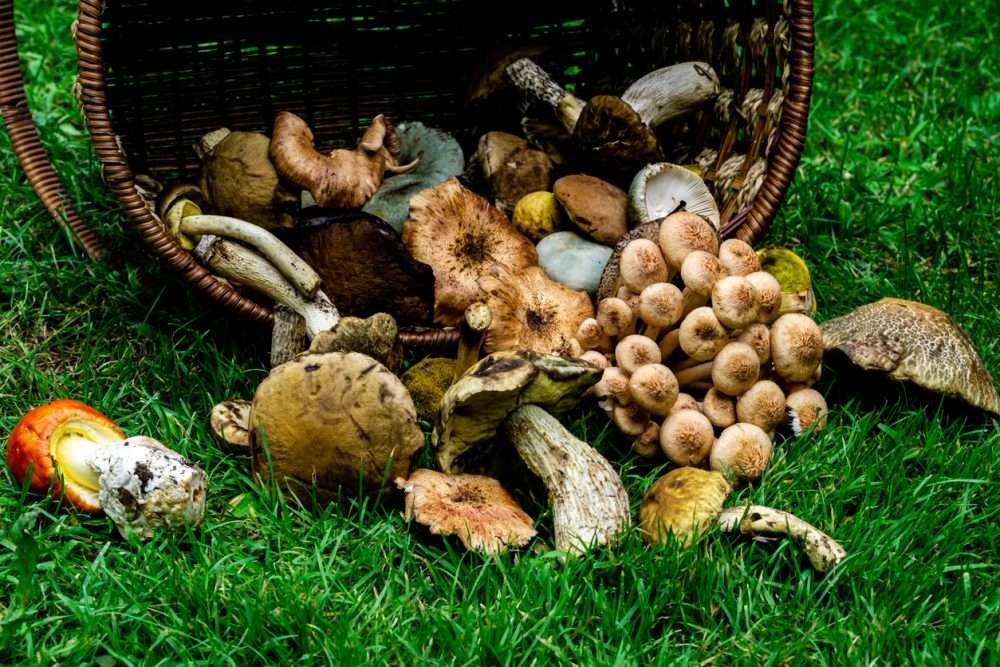
Japan’s Wild Mushrooms
When autumn settles over Japan's mountains, wild mushrooms emerge in abundance across the forests
Japan is home to hundreds of wild mushroom species, and many have long been part of regional food traditions. From matsutake to lesser-known varieties found in specific forests and mountain regions, each has its own growing habits, character and culinary uses.
Autumn marks the height of the wild mushroom season in Japan, when many of the country’s most prized varieties appear across its woodlands and highlands.
Their presence also reflects the conditions around them, from the trees they grow alongside to the soil, moisture and shifting temperatures that allow them to flourish. With that in mind, here are seven wild mushrooms found across Japan’s forests this season.
Matsutake (松茸, pine mushroom)
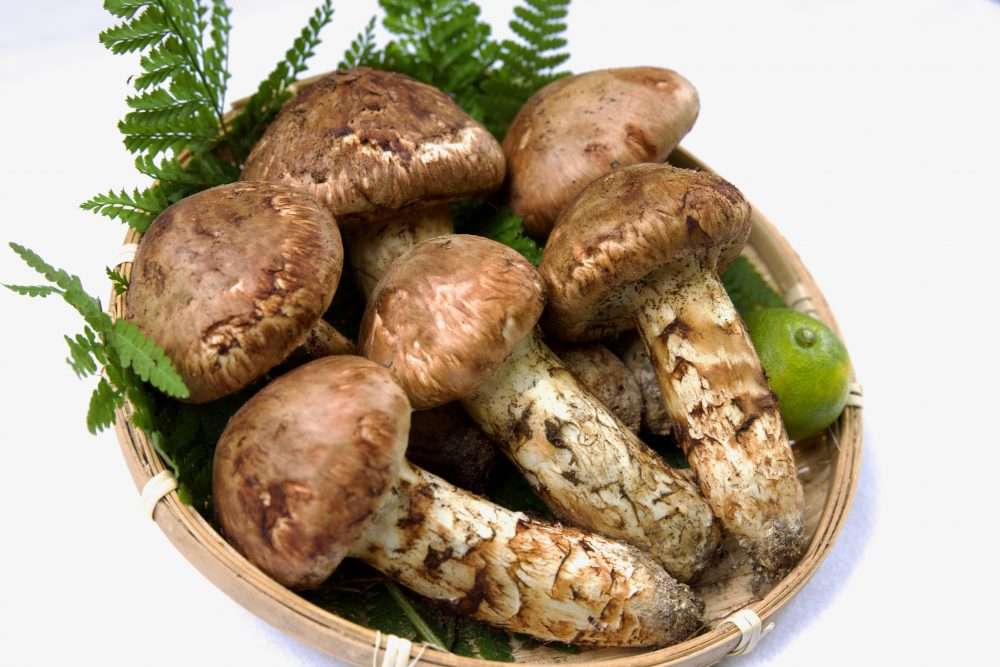
Matsutake takes its name from matsu, the Japanese red pine whose roots it grows from. Because it forms a mycorrhizal bond with those living roots, no one has managed to cultivate it successfully. As a result, its scarcity and intense aroma push prices as high as ¥100,000 per kilogram. Today, Nagano, Iwate and Kyoto remain the country’s top matsutake regions.
Maitake (まいたけ, dancing mushroom)
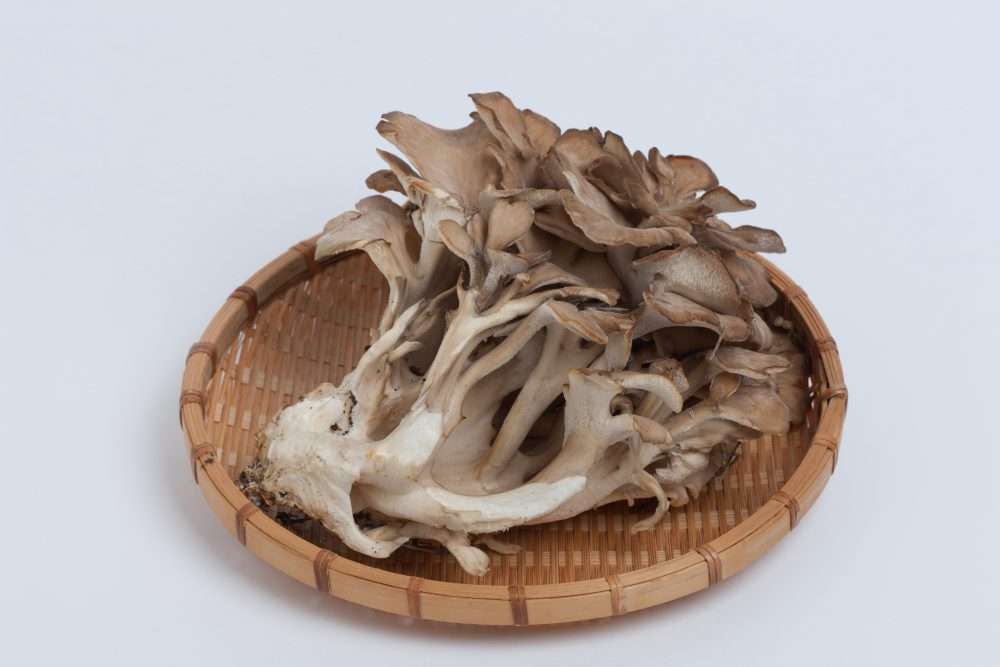
The name is said to come from the joy foragers felt finding a patch large enough to sell. It grows in dense, frilled clusters at the base of old oak trees. Tiered caps ripple like a skirt in motion. The flavor runs deep and almost meaty, making maitake a favorite in nabe hot pot and tempura.
Hon-shimeji (本しめじ, true shimeji)
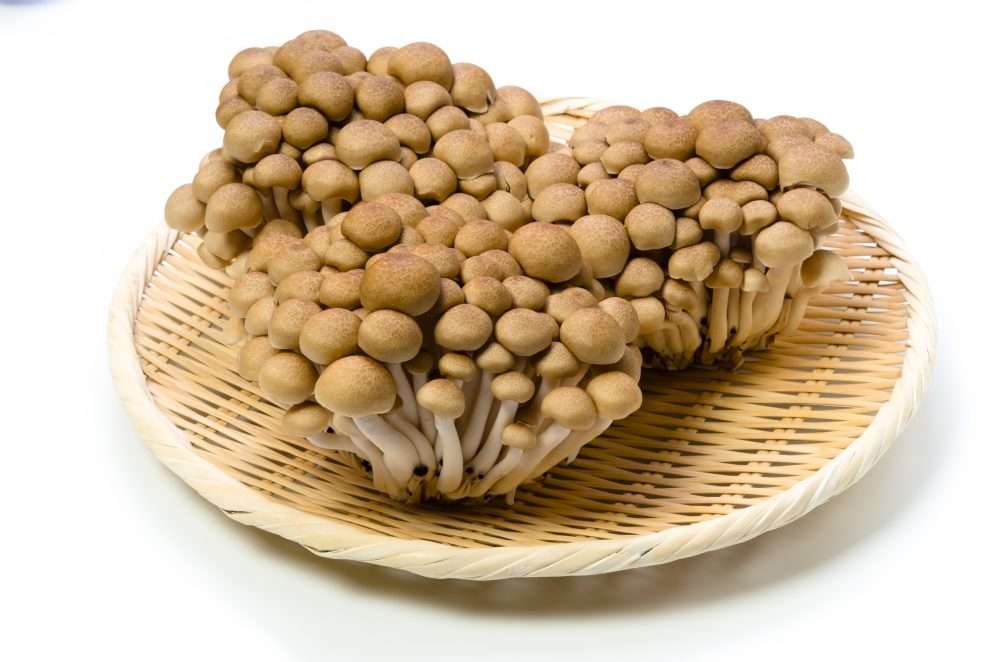
The prefix hon sets the wild mushroom apart from its cultivated counterpart. It grows in mixed pine and oak woodlands. While matsutake wins on aroma, cooks prize hon-shimeji for its taste. In fact, a well-known Japanese saying sums it up: kaori matsutake, aji shimeji (香り松茸、味しめじ), meaning “matsutake for aroma, shimeji for flavor.”
Nameko (なめこ, slippery-capped mushroom)
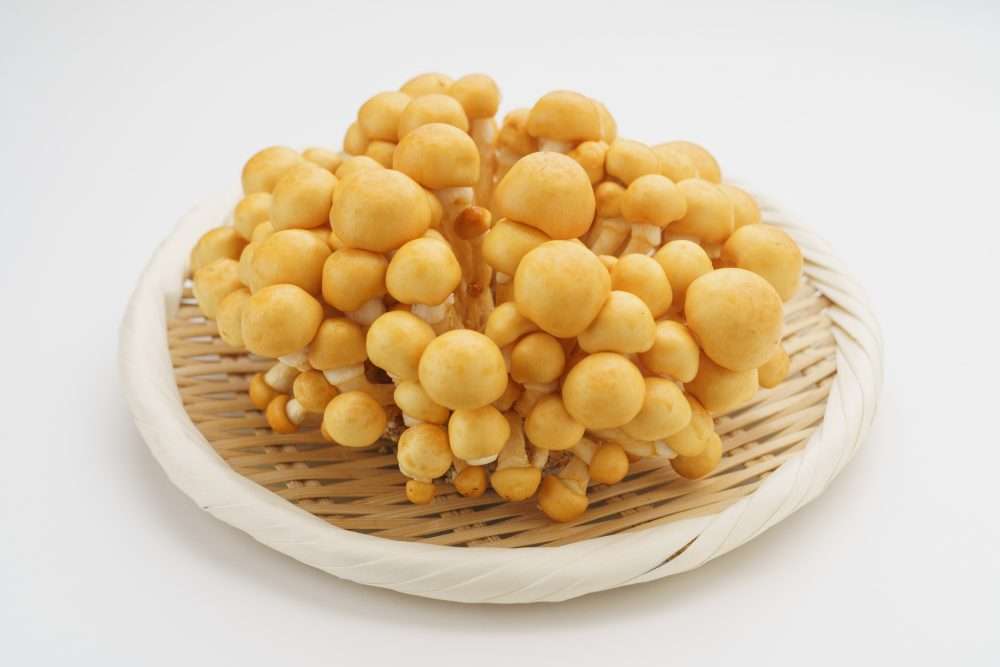
Nameko takes its name from nameraka, the Japanese word for smooth, a nod to its gel-like cap coating. It grows in tight clusters on fallen beech logs. Wild nameko turns up most often in miso soup and tastes stronger than the farmed variety sold in supermarkets.
Chichitake (ちちたけ, milk mushroom)
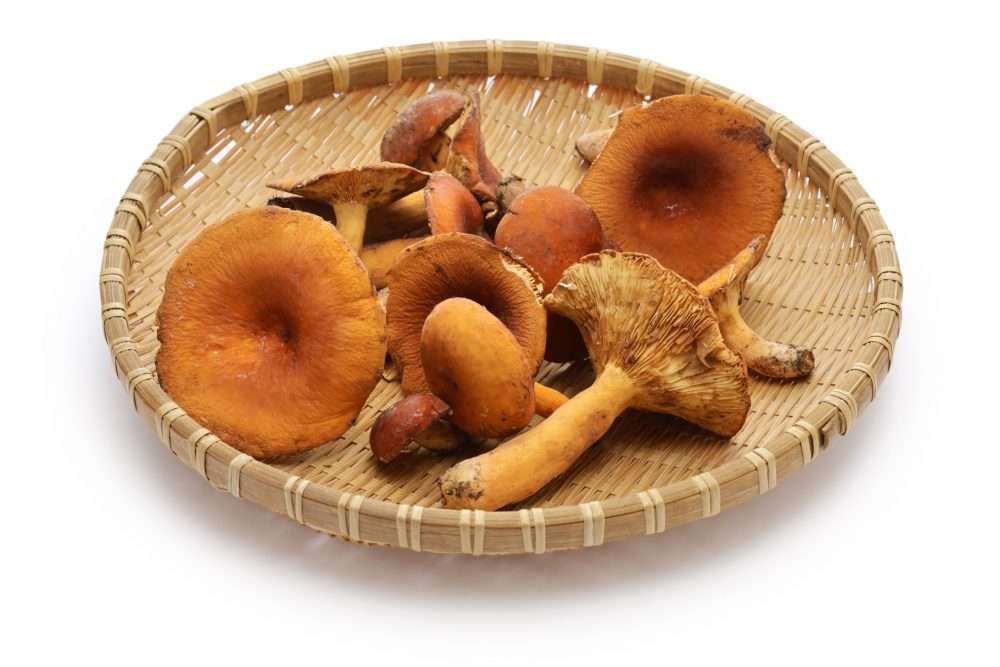
The mushroom is named for the milky white latex it releases when cut. It grows across oak and beech forests from summer into autumn. The aroma is mild and slightly fishy, mellowing once cooked. Tochigi Prefecture built a regional dish, chitake soba, around the mushroom’s savory broth.
Naratake (ならたけ, oak mushroom)
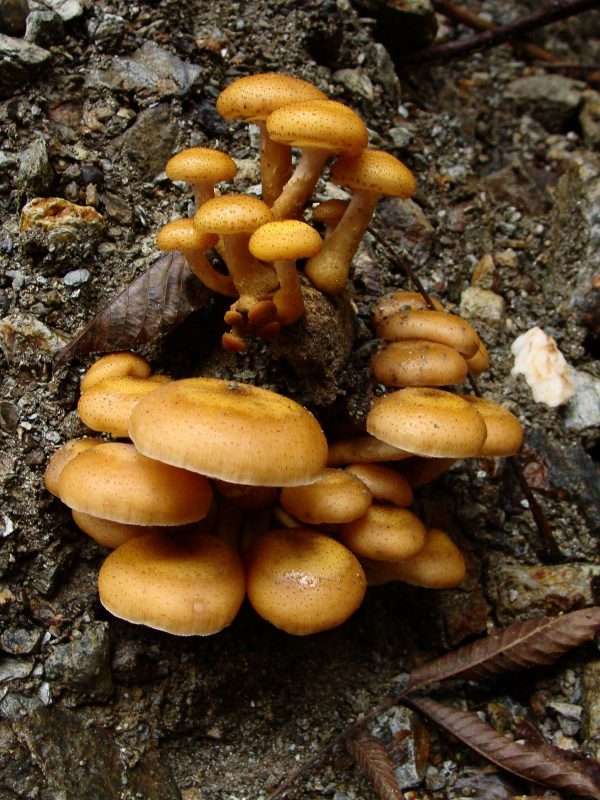
Naratake takes its name from nara, the oak trees, like konara and mizunara, at whose base it clusters each autumn. Known in English as the honey mushroom, the mushroom has many different names depending on the region, including boribori in Hokkaido, samodashi in Akita and ashinaga in Niigata. That range reflects how widely it has been foraged for generations. Cooks must boil naratake thoroughly, since eating it raw can cause stomach upset.
Yamabushitake (ヤマブシタケ, mountain ascetic mushroom)
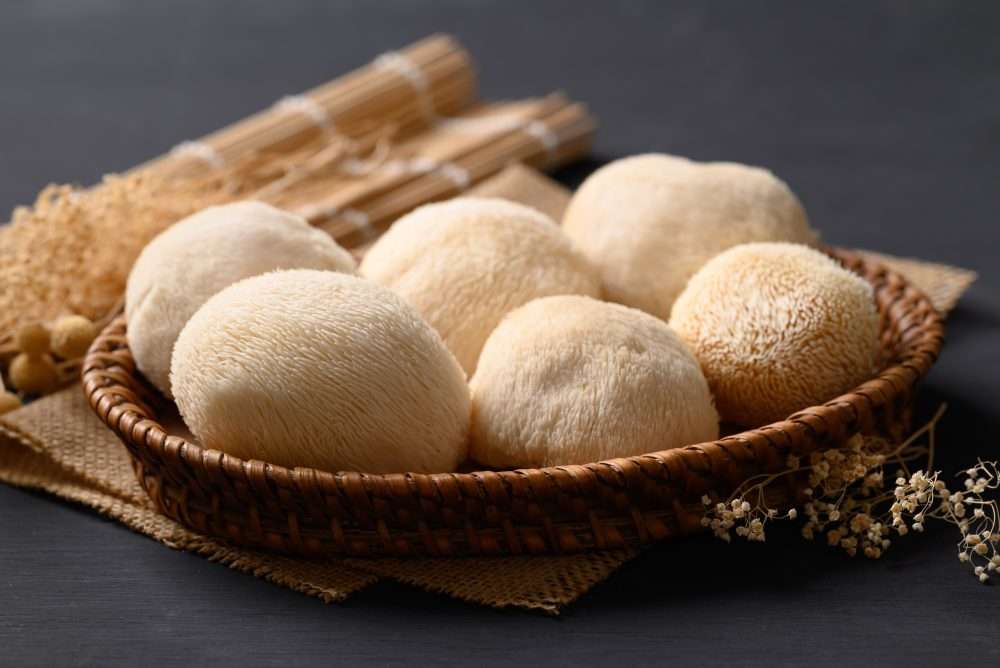
The name comes from its resemblance to the pom-pom ornament worn by yamabushi, Japanese mountain ascetics. It grows in a single white mass on dead broadleaf trees. Chefs compare its mild flavor, sold fresh or dried, to crab or lobster.
Discover More of Japan’s Nature:
Foraging Wild Wasabi in Japan’s Mountain Streams
Endemic Species That Only Exist on Specific Japanese Islands