March 2, 2026
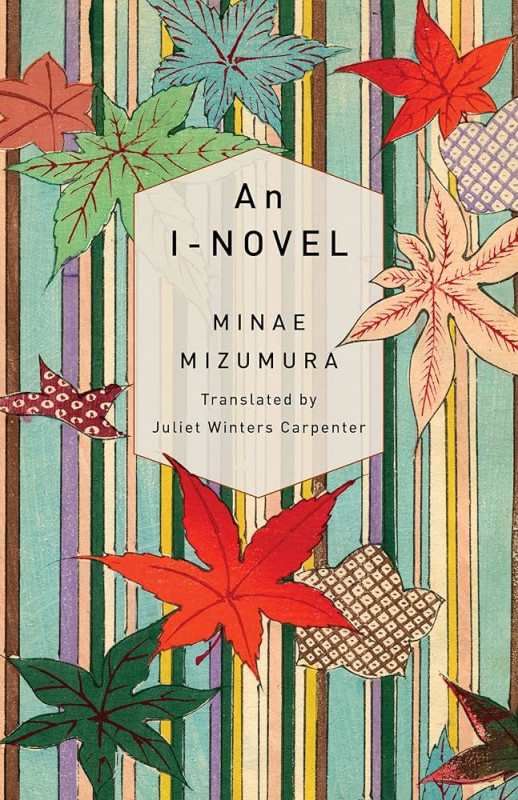
Book Review: “An I-Novel” by Minae Mizumura (Translated by Juliet Winters Carpenter)
A bilingual meditation on navigating belonging in isolation
Minae Mizumura’s “An I-novel” confesses the emotional whirlwind of trying to define “home” in a place that never quite feels like one.
In the 1980s, more than 30,000 Japanese nationals were living in the United States on long-term visas. For many, language became more than a tool of communication—it was a daily negotiation of identity, a tension that sits at the core of “An I-Novel.”
Set over the course of one winter day, the novel follows Minae, a Japanese graduate student in the United States. A phone call from her older sister, Nanae, reminds her that it has been 20 years since their family moved abroad. Alone in her apartment, she revisits her childhood and early adulthood growing up in North America. Ultimately, Minae grapples with decisions she will make outside of what she has known; the novel lingering on her determination to leave her life in the U.S. and return to Japan to become a writer in her mother tongue.
A story delineating Minae’s life, “An I-Novel” exposes the turbulent relationships between family, societal expectations, language and self.
Read more of Metropolis’ Japanese literature recommendations here
Inside the Mind of Minae Mizumura
Minae Mizumura has published many novels; her body of work includes “Light and Darkness Continued” (Zoku Meian), a praised sequel to Natsume Soseki’s unfinished novel “Light and Darkness” (Meian), and “A True Novel,” which reimagines Emily Brontë’s “Wuthering Heights” in post-war Japan. A novelist and a critic, Mizumura is deeply engaged with the realm of modern Japanese literature.
Contrary to most Japanese novels, “An I-Novel” stands apart in form. Written primarily in Japanese but littered with English phrases—aptly referred to as bilingual writing—it embodies the bilingual condition Mizumura repeatedly reflects upon in her story.
As a result, Juliet Winters Carpenter’s English translation has to navigate this linguistic duality, preserving the original English phrases to ensure they are not lost in translation. What results is a lauded English edition of “An I-Novel,” successfully creating the distinction between her translation and Mizumura’s original English. In addition, the English copy contains Carpenter’s translator’s note, which provides essential context to explain how Mizumura uses bilingualism as an intentional structure to confront being diluted in the influx of English publishing. “An I-Novel” is more than just a reflection of self, but a one-of-a-kind work celebrated in Japan for its composition.
Shishosetsu, The Genre on Confession
Mizumura’s novel belongs to the tradition of shishosetsu, a genre of confessional literature that blurs the lines between fiction and autobiography. Also called an I-novel, the Japanese literary genre emerged in the early 1900s as intimate works that give readers a glimpse into the author’s emotional world.
Through shishosetsu, Minae’s reflections center around coming to terms with learning a new language, managing societal expectations of women, confronting familial responsibilities and navigating life-changing decisions for herself. These issues find themselves manifesting in much of our personal lives, with Mizumura communicating her own experience clearly, she creates space for readers to relate to her story.
Written in a non-linear structure, Mizumura takes advantage of the flexibility in the confessional genre to move between time. Mirroring the way memory intrudes, flickering between past and present, the narration moves from present reflection to childhood memory, then back again in transition. Following a stream of consciousness rather than a formulaic structure, the novel brings up many thought-provoking questions when one finds themselves positioned against the world rather than within it. Ensuring that Minae emerges as more than just a lost soul, Mizumura emphasizes her narration as a fully realized person with depth and nuance, shaped by history, family and choice.
Language as Barrier and Anchor
Despite its many themes, the narrative repeatedly returns to language. Minae’s fraught relationship with English shapes her sense of alienation while living abroad. In an age where buying a ticket to the other side of the planet is as easy as pressing a few buttons, the story reflects an increasingly global experience; asking what is lost when one’s inner voice shifts languages—or resists doing so.
A Step into Autobiography
For readers curious about contemporary Japanese literature, “An I-Novel” offers a thoughtful entry point into the confessional genre. The novel is personal and relatable, the emotional register is subtle, with a bittersweet tang of relateability. By the final pages, Mizumura doesn’t strike with a hard conclusion, but recognition of a universal experience.
Read “An I-Novel” by Minae Mizumura, translated by Juliet Winters Carpenter, here