June 3, 2010
Christopher Dillon
Entrepreneur and author of Landed: The guide to buying property in Japan
By Metropolis
Originally published on metropolis.co.jp on June 2010

Where are you from, and what brought you to Asia? Where do you live now?
I’m originally from Canada. I met the woman who is now my wife at a party after the 1988 Winter Olympics in Calgary. She was on her way to Japan, and I came for a visit in December 1988. I lived in Tokyo from 1989 to 1992 and have been in Hong Kong ever since.
Tell us about what you do.
I’m an entrepreneur. At the moment, I run a corporate communications company and a multimedia studio. When I’m not doing that, I write books. My most recent project is Landed: The guide to buying property in Japan.
Is this a good time for a first-time buyer?
It potentially is, but you have to be an educated buyer, because there are things that look really, really attractive that are actually not so attractive. For example, a lot of rural properties are priced at absolute bargain-basement prices… If you live inside a metropolis like Tokyo, to be able to get out and smell the fresh air and enjoy the quiet is a very, very attractive proposition. What people sometimes fail to understand is that it’s a little bit like getting a gym membership. You know, you buy this thing and you think you are going to use it, and then on Saturday morning you wake up and you’re facing a 90-minute train ride and you think: do I really want to do it?
What does a person need to get into the market? Do you need Japanese citizenship?
Japan is one of four places in Asia where non-nationals—for lack of a better expression—can buy and own property. The other three are South Korea, Hong Kong and Singapore. In Singapore and South Korea, there are restrictions on certain parts, but as a non-Japanese person you can walk in and buy pretty much anything.
And how much does it take to jump into the market? Not a lot. You can buy rural property for ¥3-4 million.
Is it a good idea to continue renting with the market as it is right now, or is it better to buy?
It really depends a lot on your personal circumstances. If your family situation, your career situation and such is that you are going to be here for a long time, it probably makes more sense. But if you don’t know if you are going to be here by the end of the year, you may find yourself in a situation where you’re having to sell into a falling market, or a dip in the market, and that’s probably less than optimal.
Do you see any problems with buying, then using it as a rental property when you go back home?
Not at all. As a matter of fact, it’s a great idea, but it goes back to the whole demographics question. Everybody knows that Japan’s population is shrinking and getting older, but there is a concurrent rise in the number of small households. A lot of that is being driven by, for example, elderly Japanese women outliving their spouses. So if you’re going to buy with the idea of renting, one of the things you might want to do is think elderly-friendly.
How often do you come to Japan?
Over the past two years, I’ve visited Japan eight times, doing research and client assignments.
What do you like to do when you’re in Tokyo?
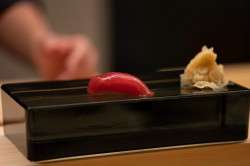
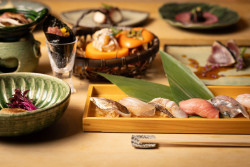
I spend time with old friends, which allows me to indulge my passion for Japanese food. I’m constantly amazed by how good the food is, even at a modest izakaya. Tokyo’s art scene is another attraction. On recent trips, I’ve visited the Bridgestone Museum of Art and the Museum of Contemporary Art, both of which were a treat.
For more information and free samples of the book, see www.landedbook.com. Readers can also check out www.facebook.com/LandedJapan.