The 2011 Tohoku Earthquake: A Short Story “The Earth After”
A childhood memory traces what the 2011 earthquake and tsunami took
The first thing the earth took from us was my mother’s good china.
Not our house in Morioka, or anyone we knew. Just Alice in Wonderland teacups, little plates and a matching milk jug. They leapt from the kitchen shelf and shattered on the floor. My mother said there was no point trying to catch them. Too many fell at once.
I wasn’t there. I was in the school gymnasium when it began.
At first, the lights moved.
They were those long fluorescent tubes suspended from the ceiling, and they swung in unison above us: left, right, left. We stood underneath them in our gym clothes, our eyes tick-tocking in sync. Nobody screamed at first. We stumbled and watched the lights, struggling to keep balance. The movement was too strange. The gymnasium rocked as though we were in a ship’s cabin at sea.
The ocean was near my cousins and aunties and uncles, but not near our school. Everything was all right, wasn’t it?
The teachers told us to get out, now, and we filed our way to the emergency meetup point. The polished floor rolled beneath my sneakers as we exited. The beams of the gym groaned. Somewhere behind us, basketballs had escaped from the racks and begun bouncing. The floor bounced too. In and out of sync with our little footsteps and the thud thud thud of the balls.
Later, I learned in class that parts of northeastern Japan had shifted more than five meters east. The earthquake redistributed the planet’s mass, nudged its axis and shortened the 24-hour day by an amount no human body could feel.
But at school that day, I thought the earth had broken. I wasn’t sure who was supposed to fix it.
Emergency protocol ensued. School was canceled. And when I finally got home with my friends, my mother handed me a few thousand-yen notes and instructed us to go to the convenience store for supplies.
“More water,” she said. “Something to eat. Batteries, if they have any.”
My friends and I diligently skittered to the convenience store, fuelled as much by the thrill of a suddenly-canceled school day as by the earthquake itself. Telephone wires wobbled against the sky above our heads. Aftershocks.
Outside the Family Mart, staff had set up temporary tables. Inside, the shelves had already begun to empty. Bottled water, instant noodles, soup packets, canned foods. We passed everything and went straight for packets of potato chips…
My mother stared into a half-eaten bag.
“Potato chips?”
“We got different flavors.”
It seemed important to say this. Salt. Seaweed. Consommé.
Behind her, the pieces of china set had been swept into a pile. The television showed a black wave carrying houses across fields.
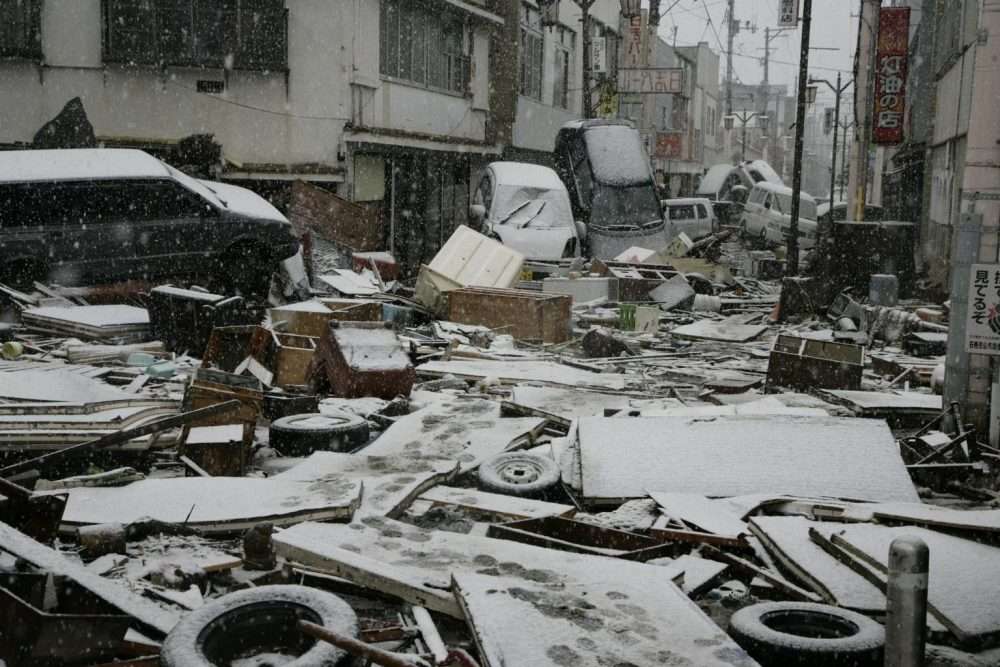
It looked viscous. Cars floated in it. Like Hot Wheels, I thought. Roofs turned slowly. Whole buildings went whoomp under the surface.
The helicopter camera kept its distance, and from that height the flecks of houses seemed no larger to me than the pieces of my mother’s china on the floor.
Further east of us, the ocean was entering living rooms like mine.
It was taking family altars and school bags, wedding portraits, slippers waiting in entranceways. Drawers were pulled open and cupboards emptied. Photographs lifted out of albums and drifted into streets, fields and branches…
Afterward, volunteers began finding them in the mud. I watched them on the news.
“We washed each photograph as carefully as we could,” they told the reporters.
“Though water had already done its worst. Faces emerged beneath the dirt: children at sports days, grandparents holding newborns, birthday parties, families lined up in their formal best…”
Some were returned to the people who had lost them. Others belonged to families who could no longer come looking. Later, artist Munemasa Takahashi helped exhibit those that remained unclaimed.
Later still, I heard pieces of other stories from friends.
“In Ishinomaki, taxi drivers picked up passengers who asked to be taken home. The passengers vanished, but the drivers took them home anyway. Others stayed in the back seat until the taxi reached the address, but when the driver turned around, nobody was there…“
“I heard one driver saying he never charged them. He just bowed his head and switched the meter…“
Perhaps this was superstition, I thought.
I used to imagine the drivers taking the ghosts home along roads that no longer recognized the addresses.
Because the earth changed after the water withdrew.
Some towns were rebuilt higher. Others never got rebuilt at all. Their populations had already been shrinking; then, suddenly, they became smaller still.
Great platforms of earth were raised above the old flood line, and new roads climbed and dipped between them in courses that would seem like terrible urban planning unless you knew the history.
But the ghosts remembered the way.
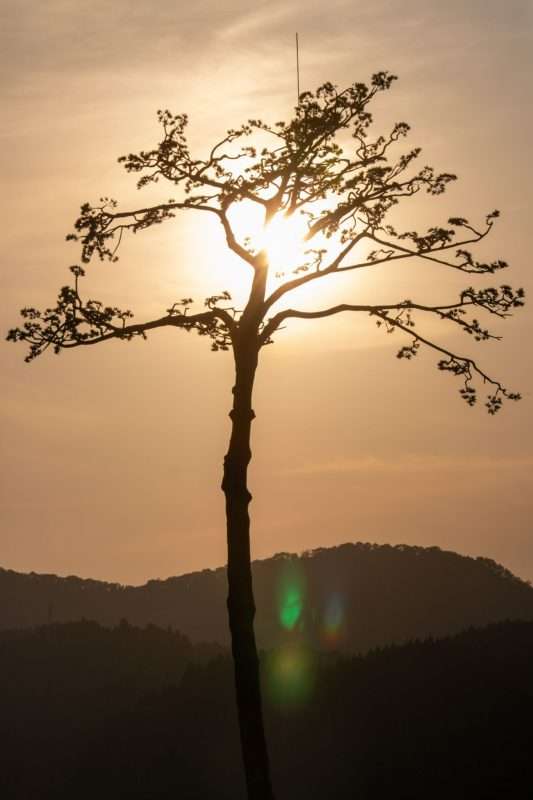
In Rikuzentakata, tens of thousands of pine trees once stood along the coast. The tsunami took all but one.
I read in the local paper that they called it the Miracle Pine. When I eventually saw it, the tree looked alive. From a distance, it still does. My dad shared details with me after he took a trip there.
“See, saltwater had poisoned its roots. It survived the wave but died the following year. People preserved its trunk and raised it again near the memorial museum...”
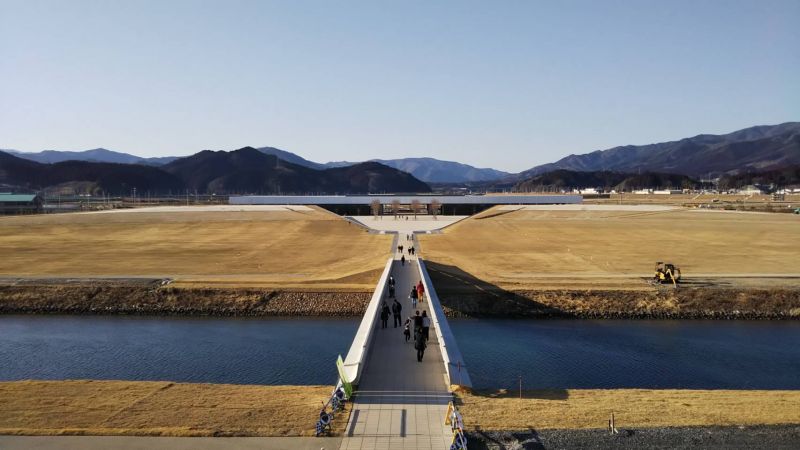
Visitors still come to the museum to look at the pine and at the nearby building husks. They learn how high the water came and watch footage of streets becoming ocean. They stand on ground that has been lifted above the ground where people once lived.
I was nowhere near the water that day, and for a long time, I thought this meant I had not really been there. Whenever anyone asked me about that day, I told them about the gym, the potato chips, my mother’s china…
The teacups weren’t something we could fix with glue or kintsugi. There were white Wonderland chips everywhere. Under the refrigerator, behind a cabinet. Like the set didn’t just break once. Every time we discovered another piece, even now, it went on breaking.
Read more:
Japan 9.9 Earthquake Alert Retracted After System Error
What To Do In An Earthquake In Japan?
Tokyo Earthquake Simulator: The Thrilling Way Japan Teaches Disaster Preparedness