April 7, 2026
Why Do So Many Japanese Love Stories End in Double Suicide?
How a trope lasted from its birth in theatre to its role in anime
If you have spent any time watching anime or exploring Japanese theater and film, you have probably noticed that many Japanese lovers don’t just break up; they die together.
From references in modern anime to tragic finales in classical theatre, lovers choosing death together appear again and again in Japanese storytelling. The trope is known as shinju (心中), meaning “double suicide,” and its roots run deep in Japan’s literary history.
But why does it keep resurfacing?
Not Just Romeo and Juliet
Yes, the West has its own iconic lovers’ tragedy. Whether your English teacher assigned it in high school or you watched the 1996 Romeo + Juliet starring Leonardo DiCaprio, the melodramatic story of two young lovers dying for their relationship became one of the most famous endings in Western theater.
But Japan’s version of the trope developed differently.
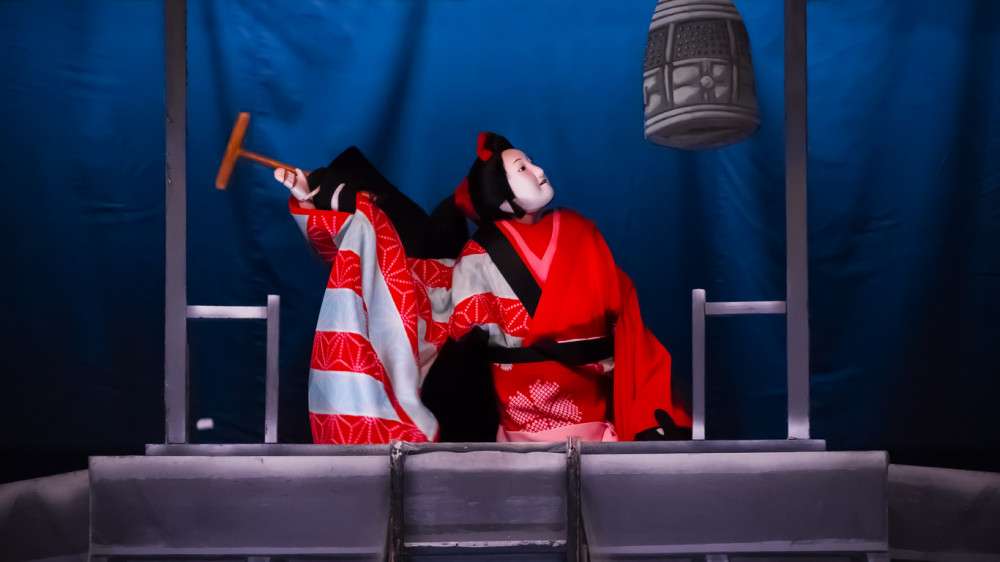
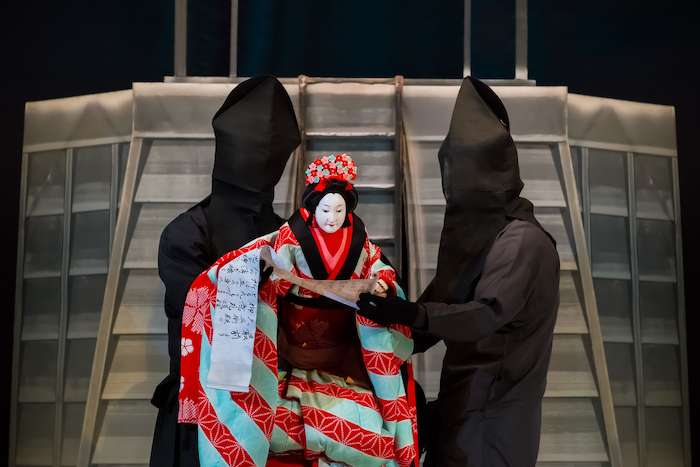
In Japanese storytelling, shinju is tied closely to bunraku, traditional puppet theatre that flourished during the Edo period. Rather than focusing solely on romantic devotion, these stories explore the pressure of social expectations—and what happens when love conflicts with duty.
Where Did Shinju Come From?
The trope became famous through the works of bunraku playwright Chikamatsu Monzaemon, also known as the Japanese Shakespeare. Writing in the early 1700s, Chikamatsu created dramas that resonated deeply with audiences.
His most popular works, Love Suicide at Sonezaki and Love Suicide at Amijima, explore stories of lovers caught between personal desire and social responsibility ends with death.
In Love Suicide at Sonezaki, soy sauce merchant Tokubei falls in love with the courtesan Ohatsu. He rejects an arranged marriage with his uncle’s niece, leading to financial trouble.
Without money to marry Ohatsu and framed for stealing the dowry money, Tokubei and Ohatsu flee to the woods of Sonezaki. There, Tokubei kills Ohatsu before taking his own life.
A similar conflict drives Love Suicide at Amijima. Jihei, a struggling paper merchant with a wife and children falls in love with a courtesan, Koharu. Attempts by friends and family to stop the relationship fail. The pair ultimately run away to the bridge of Amijima, ending their lives together.
While the plays were fiction, these stories are not purely fictional. Love Suicide at Sonezaki was inspired by a real incident in Osaka involving a clerk and a courtesan committed to dying together. By turning contemporary scandals into dramatic stage productions, audiences were captivated as Chikamatsu blurred the lines between reality and performance.
While the plays became wildly popular, this phenomenon had troubling side effects. Historical reports suggested that real couples would imitate the story. This lead to authorities to temporarily ban such plays.
Despite these events, shinju continued to become a storytelling formula that endured in Japanese literary history.
The Formula for a Double Suicide Story
At the heart of many shinju stories is a tension between two ideas: ninjo and giri, stemming from the cultural and social context of Edo Japan.
Ninjo (人情) refers to human emotion—love, longing and personal desire.
Giri (義理) represents social obligation—duty to family, employers, reputation and social order.
In Chikamatsu’s plays, characters find themselves crushed between the two.
In Love Suicide at Sonezaki, Tokubei’s ninjo is his love for Ohatsu. His giri is to honor his family’s arrangements and financial responsibilities. When those forces become irreconcilable, the story moves toward its inevitable conclusion.
In this sense, shinju functions as a dramatic release. If society leaves no space to reconcile emotion and obligation, death becomes the only place where conflict can end.
From Puppet Theater to Film
Although traditional shinju performances are less common today, their influence continues.
Director Masahiro Shinoda’s 1969 film, Double Suicide, is one of the most famous modern reinterpretations. The film adapts Chikamatsu’s work while visually referencing the art of bunraku by revealing puppet theater stagehands and imitating stage sets. The result is a blend of theater and cinema that honors the story and its origin.
Check out the Double Suicide (1969) Film Here
Shinju in Anime
Despite its traditional conception, the trope found its way into contemporary pop culture.
In Bungo Stray Dogs, the character Osamu Dazai frequently jokes about wanting to commit double suicide with a beautiful woman—a reference to shinju and the real-life writer, Osamu Dazai, who attempted several double suicides before dying with his lover in 1948.
In Bleach, the character Shunsui Kyoraku’s bankai (an ultimate ability) is called Katen Kyokotsu: Karamatsu Shinju. The attack unfolds like a tragic stage performance. Each “act” pushes both fighter and opponent closer to death, echoing the fatalistic structure of a traditional lovers’ suicide play.
The Apothecary Diaries also draws on the trope. In one storyline, the main character, Maomao, investigates what appears to be a lovers’ suicide between a courtesan and a wealthy client at a brothel. After saving them from poison, she quickly realizes the scene was staged.
The courtesan had actually attempted to murder the man and disguised the attack as a romantic double suicide to avoid suspicion. The episode plays on the audience’s familiarity with the shinju trope, turning what first appears to be a tragic love story into a calculated act of revenge.
These references would go on to show that shinju was more than a formula for theatre, but a relevant tool for storytelling in Japan.
Why the Trope Still Resonates
Although the world of Edo-period Japan is now long-gone, the tensions between personal desire and social expectations remain familiar—especially in a society where fitting in is valued over individuality.
Japanese stories has always been curious to explore how individuals navigate obligations to family, work and society. In that context, shinju represents an extreme, tragic solution when those pressures become impossible to resolve.
Whether appearing in classical puppet theater, film or anime, the trope reflects a recurring question in Japanese narratives: what happens when love and duty cannot coexist?
Read more on Japanese literature: