Why It Always Comes Back to Being an Island
From gara-kei to J-pop: unpacking Japan's "Galápagos syndrome," exceptionalism, and the truth behind the isolated-nation cliché.
Y2K is back. One of the essentials of the early 2000s aesthetic was the flip phone. But the Japanese snap-open status symbol has a unique retrospective name now: gara-kei, short for Galápagos keitai (mobile phone). And no, these phones did not come from the Ecuadorian archipelago.
The “Galápagos” label came from Japanese business writers in the early 2000s. They began describing the domestic market as an ecosystem that had evolved in isolation, just like the Eastern Pacific islands home to the endemic species that inspired Darwin’s theory of evolution and natural selection. It is, supposedly, one of the phenomena caused by Japan and its people’s insular tendencies.
There is a Japanese word, shimaguni, that simply means island country, as well as a related phrase, shimaguni seishin. Roughly translated, it is the sensibility of a people who live on islands. English calls it something similar, island mentality, but the translation only half lands.
Galápagos and shimaguni seishin are both part of this “island theory” that gets used to explain a lot in Japan, by those on and off the archipelago: high-speed trains, J-pop, skincare marketing, people’s heights and even the Y2K phone. But is Japan really a solitary island?
The Endemic Phone
When I moved from Japan to the U.S. in 2003, I remember being surprised at the monochrome phone screens around me, having grown up watching my parents tap on full-color, high-resolution ones.
By the mid-2000s, Japanese phones could do things the rest of the world would not catch up to for years: mobile internet, contactless payments, digital television and more. These phones were, by any reasonable measure, the most advanced consumer phones on earth at the time.
But they were also developed for the specific needs of the domestic market, with proprietary technology. They relied on Japanese infrastructure, logistics and technical specifications that were particular to Japan: an NFC payment system, a proprietary 3G network. None of it was simply exportable, and this evolution inside an isolated context is the first half of the Galápagos phenomenon.
The second half is also demonstrated by gara-kei’s vicissitudes. When the iPhone arrived, Japan, having perfected one evolutionary branch, found itself completely unprepared for the next. Today, Japan has one of the highest iPhone market shares in the world, exceeding the U.S. Just like the endemic species we hear about in National Geographic, islands are susceptible to outside influence, whether environmental change or the arrival of a foreign species.
The Galápagos Islands’ relative isolation from the mainland produced what biologists call living fossils: organisms that have persisted on islands long after their continental relatives disappeared. Japanese flip phones were more advanced than phones elsewhere, and that is what made them living fossils for a while, sitting somewhere between a flip phone and a smartphone.
The rest of the world had more reason to move on, because their flip phones did not do most of what users wanted. The way out was a different form entirely: the smartphone.
Japan had taken the other route years earlier, and kept innovating inside the flip phone format itself. Even after smartphones arrived, the transition was slow because the switch did not feel as urgent as it did abroad.
By the time the demand became unmistakable, Japanese manufacturers had spent so long refining the specific style of their phones that diverging into a completely different one was difficult. This is supposedly caused at least in part by the shimaguni seishin of the people.

Fragile and Small
Like the Galápagos, island ecologies are often unique—but they are also fragile. It is a familiar narrative: continental species, hardened by competition across a vast landmass, are strong, while island species are delicate.
In Japanese primary school biology classes, the dandelion is a recurring example. The common dandelion, Taraxacum officinale, native to the Eurasian continent, has nearly pushed out Japan’s native varieties. Whether turtles or crayfish, many of the archipelago’s smaller native species are under pressure from bigger ones introduced from the continents.
There is some truth to the comparisons, but the logic of fauna and flora has been imported into the imaginary. The reference shows up in everyday life often enough that you stop noticing it: somehow, anything in Japan, including people, is fragile and small. This “island dwarfism” is not a case of Japanese people performing the pick-me, “I’m such a small bean” thing. It is often more of an exaggerated and internalized stereotype. Visitors and residents in Japan often joke about how tall they were here, despite the average height difference between the U.S. and Japan being only 2 to 4 centimeters in most statistics, for example.
Reddit threads about Japan rightly question this phenomenon. As one poster writes, “Something I see on Reddit a lot is Redditors saying ‘when I was in Japan I felt like Godzilla,’ ‘everyone is tiny,’ etc.” While the average height differs by region, the exaggerated storytelling of these narratives is clout-chasing more than anything, as plenty of commenters point out. It has more to do with projected stereotype than statistical reality, which is a form of orientalism.
And this exaggeration gets perpetuated in the media, like the famous elevator scene in “Lost in Translation.” As with the marketing around sensitive Japanese skin, the narrative gets internalized once it has been repeated enough.
Japanese travel guidebooks routinely advise bringing your own medicine from home, because foreign drugs are “too strong.” There is truth to the idea of traveling with what your body is used to, and to being prepared in a place you do not know. But the general understanding that things abroad are stronger and harsher is an oversimplification.
International brands also reinforce this framing through consumer language. Skincare gets formulated for nihonjin no binkan na hada, sensitive Japanese skin, according to brands like La Roche-Posay and Lancôme. It is not unlike how skincare aisles talk about men, with lines for dry, combination, oily and… men.
That said, some of it is well-founded. Japan, alongside the EU, maintains famously strict regulations on cosmetic, quasi-drug and pharmaceutical ingredients. Body size genuinely matters in determining the safety and efficacy of ingredients and formulations, and the longstanding bias toward the average white male body in data, testing and clinical trials has produced real gaps in how medications and other products work for women and for people of color. Just like how people with natural red hair metabolize anesthesia differently, recognizing physiological differences across demographics is not paranoia; it is science.
Also, in their defense, the reasons the brands use these phrases in marketing can also be more pragmatic. The language of localization in Asia was built specifically around Japan as one of the first non-Western, majority non-white countries to industrialize and reach what the post-war order called “first-world status.”
Japan held the position of the world’s second-largest economy from roughly 1968 to 2010. When international brands wanted to localize for a non-Western market with the scale to justify the effort, Japan was the obvious choice.
This is the same reason that the internet often talks about Starbucks and McDonald’s menus in Japan, and yes, those chains localize elsewhere too. But for the longest time, it was most prominent in Japan. To put it simply, it was large enough to matter, different enough to require creativity.
It is undeniable, however, that the island metaphor and the exaggeration around it have been working overtime, because reality is always more complex. Even in nature, the real picture is messier than the metaphor explains. Anyone in Europe or North America knows kudzu and Japanese knotweed, both native to the archipelago, as among the most aggressive invaders on record. Foster’s rule, the ecological principle describing how island species change size relative to their mainland relatives, also accounts for island gigantism, not only dwarfism.

Big in Japan
Music is another place to see the supposed island ecology in action. J-pop is often compared to K-pop, but mainly in the form of a question: Why don’t you hear about J-pop? The term K-pop was coined in the late 1990s explicitly as an equivalent to J-pop, and the difference in buzz, to say the least, is obvious.
One might question: Why compare them at all? Once you know that the Japanese music market is the second largest in the world, after the United States, the question becomes more valid: Why don’t we hear about it?
One of the answers follows the same logic as before. For a large enough market, looking outward was never required. Japanese artists have not needed to strategically target foreign markets or follow trends elsewhere in order to survive. The result is a scene that developed on its own terms, idiosyncratic, and, ironically, exactly the reason it accumulates devoted niche fans abroad.
However, the industry has also been criticized for a more literal kind of isolation, sometimes called its music sakoku, after Japan’s closed-country foreign policy during the Edo period (1603 to 1868). Japanese agencies that manage artists have long enforced strict policies around the use of their music, photos, videos and other exposure.
Unlike many foreign markets, which allow fair use in some form, Japan enforces copyright without a general fair-use doctrine. Even music videos, to protect physical sales of tracks and visual content, were often only partially uploaded online as teasers. And because the domestic market was large enough on its own, labels did not need to list tracks on international streaming services. Some avoided streaming entirely, both to protect sales and to secure better royalties for artists.
The market is isolated but functional, profitable and in many ways enormous. The difference between the real sakoku and this one is that nothing keeps outsiders out. The Japanese market remains, in fact, lucrative for those who arrive.
K-pop’s first major export market outside South Korea was Japan, and Korean acts began taking Japanese lessons and releasing Japanese-language versions of their songs early on, a practice now standard across the industry.
Korean labels tried English-language crossover into the West at the same time, but it was easier and faster to move into Asia, where they were not dismissed on sight. K-pop also picked up the focus on physical sales and collectables from Japan, while keeping fan participation and streaming at the center, which made it much easier for international fans to join in.
In the Western music industry, “Big in Japan” is a recorded phenomenon, which owes much to the particular island setting. It refers to foreign, usually English-language acts that find a level of success in Japan that exceeds what they enjoy at home.
Examples are bands that have a more indie or niche following and enjoy more mainstream recognition in Japan, like the British band Japan (yes, that’s the name). The pattern even inspired another British band to name themselves Big in Japan, who were, ironically, never that big in Japan.
Some now-major acts found their first sizable audience in Japan before breaking elsewhere, Bon Jovi among them. And sometimes it is a single late-career resurrection. Dead or Alive’s biggest hit, “You Spin Me Round (Like a Record),” peaked in 1985, but their second-biggest, “Turn Around and Count 2 Ten,” sat at No. 1 in Japan for 17 weeks in 1988 while topping out at 70 in the UK. By the 1990s, the only record deal they had was a Japanese one.
This kind of geographic cult status is not unique to Japan. Artists find unexpected second homes everywhere, especially in markets bound by a different language or media infrastructure. A lot of it comes down to which labels have which channel relationships, who gets marketed how and what gets lost or refracted in translation.
There is a famous Japanese advertising cliché, zenbei ga naita, “all of America wept,” which is a tagline slapped onto Hollywood imports to suggest they were already triumphs back home. Big in Japan works on a related logic. Things arriving from the West carry prestige and the assumption of cool. And inside the confined space of the Japanese market, whether they were Michael Jackson or strictly an “if you know, you know” name back home, the starting line gets compressed.
Music is one of the things where the island theory actually does some work, though not for any geographical reason.

Leaving Asia
All of these in-depth discussions of Japanese island-related phenomena feed into some sort of exceptionalism.
The English term “island mentality” usually carries a sense of superiority that stems from isolationist exceptionalism. Shimaguni seishin is slightly different, though the two terms get translated back and forth incorrectly by non-native speakers all the time.
Shimaguni seishin in Japanese carries a generally self-deprecating connotation, often closer to small-mindedness than to pride, similar to how “Galápagos” became a term used to explain failures in the Japanese business sector. Still, both belong to the same broader family: island theory as a form of exceptionalism, in one direction or the other. This raises the question of how exceptionalism forms, and whether it is more likely to happen to island nations.
Nihonjin-ron, the long-running genre of writing on what makes Japanese people Japanese, is often treated as synonymous with island mentality itself. But the existence of this rather cringey genre is not, in itself, an exceptionalist claim. The people who validate nihonjin-ron generally assume that every nationality has its own corresponding -ron, that group character is a normal subject of inquiry for anyone. Seeing a Paris travel guidebook and concluding that Paris thinks it is exceptional would be strange, even if, in some ways, it does. Essentialist self-description is a near-universal habit, albeit unnecessary.
What matters more is that this is rarely innate or intrinsic. It is more often an external view that has been internalized enough to feel like introspection. Japan was, for centuries, a favorite curiosity of Western anthropologists, missionaries, travelers and potential conquistadors. The earliest documents now retrospectively classified as nihonjin-ron include Azuchi-Momoyama and Edo-period missionary reports back to Europe. By many Western scholars and explorers, Japan was being recorded the way National Geographic records a species: its dress, its food, its mannerisms, its habitat and its habits.
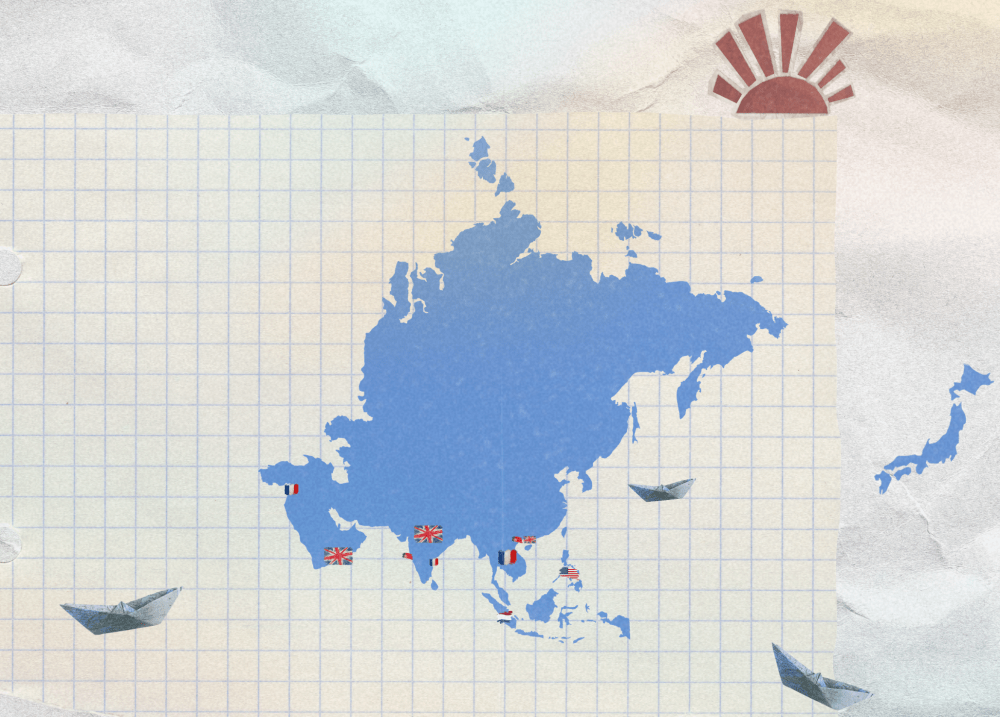
Sure, being an island might have contributed to this, on top of the more obvious forces of orientalism and Eurocentrism. The roughly 300 years of sakoku, the Edo-period policy of restricted foreign contact, left Japan more mysterious to outside observers than most of its neighbors. And Japan is unusual in Asia for never having been a European colony, which meant the West had fewer points of contact with it, fewer of the familiarities that colonialism, however brutally, produced elsewhere in the region.
Then Japan reopened in the Meiji period with an explicit project of modernization. The Japanese began studying what foreigners said about them, then writing their own versions of it, with some nationalism sprinkled in for taste. The model of modernization was Western, so Japan saw itself in a binary: itself versus the outside, meaning the West.
The most notorious ideology that showcases this is Datsu-A Ron, “Leaving Asia,” typically read today as nihonjin-ron in a superiorist register. The essay appeared anonymously in 1885, widely attributed to Yukichi Fukuzawa, in a period when essentially all of Asia was being carved up by European and American powers, and Asians were not regarded by white observers as fully human.
Its argument, that Japan should stop tying itself diplomatically to old Asia, such as Qing China and Joseon Korea, and join the ranks of the Western powers, rests on a premise: the West equals civilization and progress, Asia equals stagnation and inferiority. Fukuzawa, if it was him, knew enough about how controversial the argument would be to publish without a byline. From that alone, it is clear it was not a popular position, but it shows where the exceptionalism can stem from.
The Taiwanese scholar Chen Kuan-hsing puts a useful frame on this. Japanese exceptionalism, he argues, is easier to understand once you remember Japan’s particular position: it became a major actor in Western-style imperialism, which came packaged with industrialization and global power, while being non-Western itself. In a period when the world was effectively divided into colonizer and colonized, Japan landed inside the binary on the colonizer side, but as a non-Western colonizer.
The exceptionalism that follows is less a quirk of national character than a structural position: being a power that creates the self-versus-other binary while also being on the wrong side of it from the West’s perspective.
Exceptionalism in national identity is near-universal, from American manifest destiny to Australia and various others who described themselves as God’s Own Country, to the British, who seem to believe God would protect their monarch in particular, over others. Treating Japanese exceptionalism as a peculiarly Japanese pathology is itself a kind of exceptionalism.
Islands, Reconsidered
All of this leads to one point: there are insular tendencies in Japanese society, and while the island metaphor is convenient, a lot of what it explains has more to do with other factors.
There is also an underrated point worth making about the geography itself. Islands are not necessarily less connected than continents. For much of human history, water was the fastest means of long-distance transport, faster than crossing mountains or deserts, or simply walking. The sea has, in many ways, been a connector rather than a barrier.
Ironically, debunking exceptionalism case by case does, to an extent, end up reinforcing the unique context each phenomenon stands on. So this is not a call to retire the framework, only to think for a moment before reaching for the shimaguni explanation.
The Galápagos phenomenon, coined to describe a specifically Japanese problem, paradoxically, has since been exported. The Financial Times has used it to describe the U.S. car industry, which spent decades building cars too big and too thirsty to compete in fuel-conscious markets like Japan and Europe.
And the metaphor does not always end the way it did for the gara-kei. The world’s first high-speed rail began operation in 1964, between Tokyo and Osaka. Commercial air travel as we know it today, mass-market and jet-lined and reasonably safe, was forming its shape around the same time. Rail systems were still necessary, but few thought they needed a major update. They were a living fossil of the transportation world, which made Japan’s bet on high-speed trains seem peculiar.
The result was expected to be Galápagos: new carriage, new gauge, new engine system, running on infrastructure no one else had. But it did not end up as an endangered species, nor was it confined to the island. The technology was followed by several European countries in the 80s and 90s, and by China in the 2000s.
We notice the phenomenon, we look for the answer, and we reach for the island. The gara-kei really did evolve in an isolated market; the J-pop industry really is structurally self-contained. However, in the end, the “island” is not so much a real feature of Japan, but rather a habit of how we look at Japan.