Izu Islands: Tokyo’s Secret Volcanic Archipelago
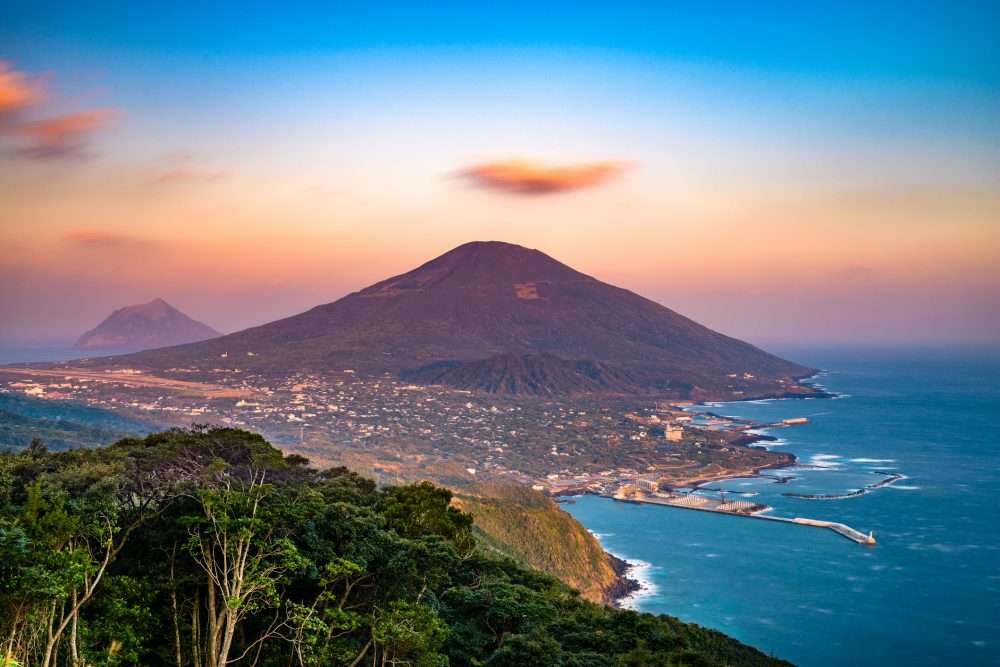
The far side of Tokyo: nine inhabited volcanic islands stretch south into the Pacific, and all of them are part of the world's largest city.
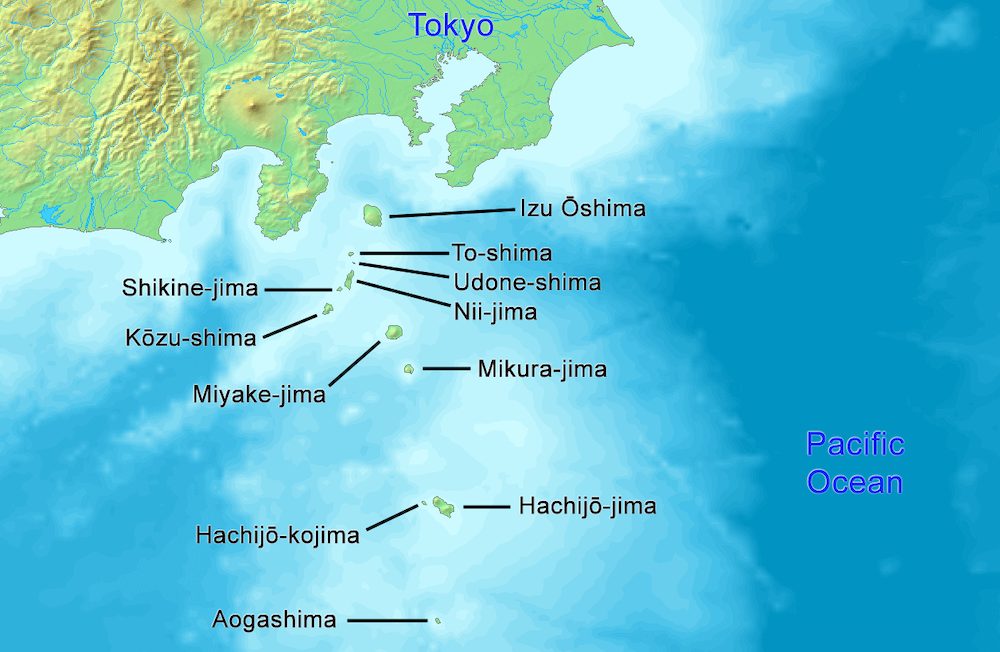
South of Tokyo, the city runs out of city, its islands appearing on maps as a loose scatter of dots trailing into the Pacific. The Izu Islands are made up of nine inhabited islands stretching over 300 kilometers from the Japanese coast, all of them technically part of the world’s largest metropolis. Most people who have lived in the capital for years have never visited any of them.
These islands were known for centuries as the Izu Shichito, the Seven Islands of Izu, though there are actually more than a dozen in the chain. They are volcanic, young in geological terms, formed by the same tectonic restlessness that still occasionally reminds visitors the archipelago hasn’t entirely settled. They are the kind of places you reach by ferry or small plane and sleep in a ryokan or a tent, where the convenience of the city feels genuinely far away, which, despite what the map says, it is.
Izu Oshima
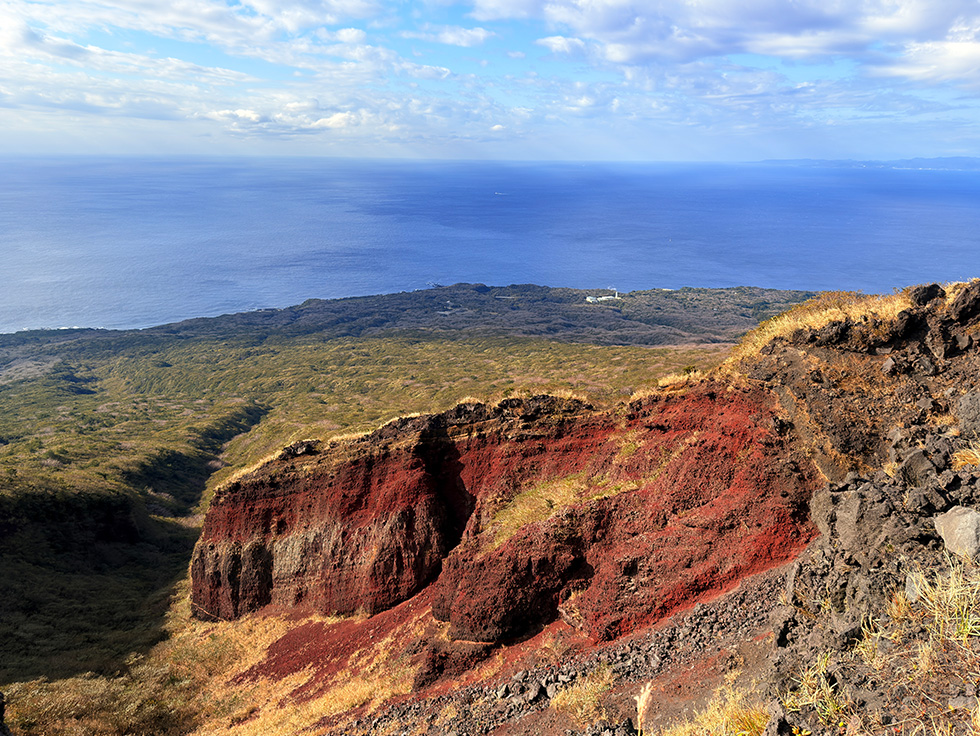
Oshima’s active volcano, Mount Mihara, last erupted in 1986, leaving dark lava fields stretching toward Ura-Sabaku, a striking black volcanic desert; signature camellias offer the counterpoint each spring, brightening the landscape with pink-red petals. A 45-minute hike leads to the Mihara crater, and on clear days, Mount Fuji is visible across the sea.
Worth seeking out is the Great Road Cut, discovered during road construction in 1953: 24 meters of compressed volcanic ash that locals have taken to calling “Baumkuchen” for its resemblance to the layered German cake.
In July and August, traditional matsuri animate the island’s villages.
Toshima
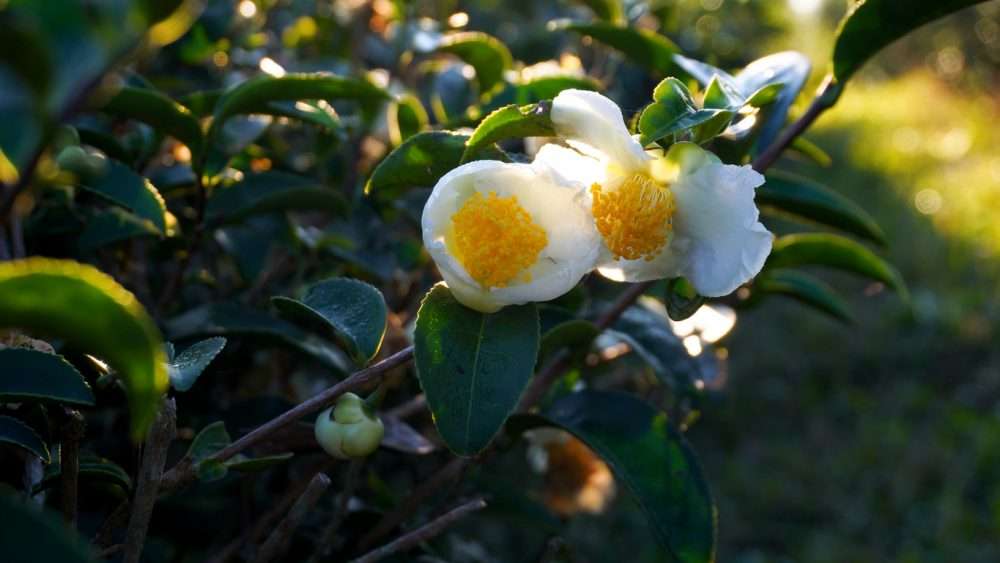
Tiny Toshima, the smallest of the inhabited islands and home to around 300 people, is covered with thousands of camellia trees and fields of sakuyuri lilies.
The island is best known for its camellia oil, still pressed here in traditional fashion, and for a shochu distilled from sakuyuri sold at Toshima Farm.
Dolphins frequent the waters around the island, and tours for swimming and diving run from March through November. It rewards visitors who want little more than trails and blooms.
Niijima
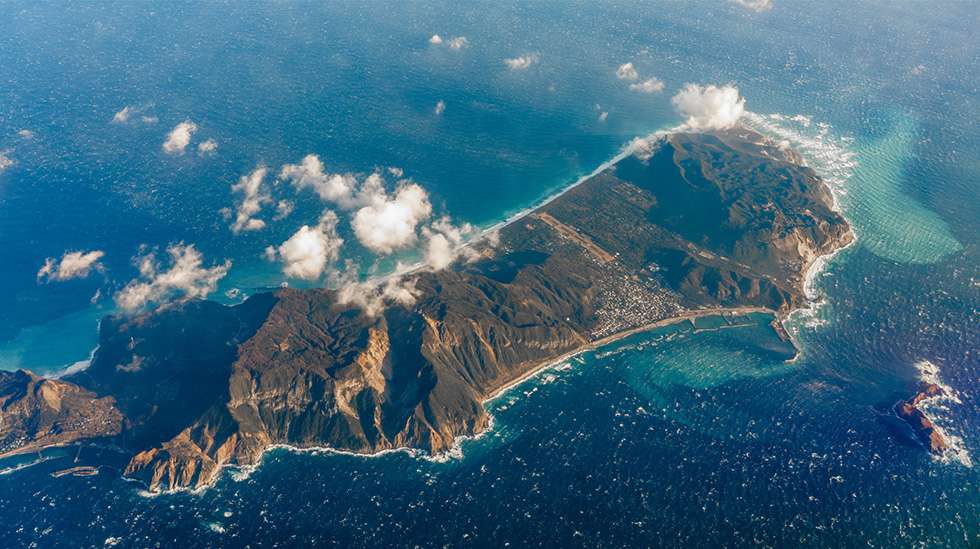
Niijima has two identities. For surfers, it is a pilgrimage: white waves, clear water, consistent swells. For everyone else, it is the island of moyai statues, the local variant of moai, derived from the word “moyau,” meaning to join forces and help one another.
The island is one of only two places in the world where koga stone, a sponge-like pumice formed by volcanic activity, can be extracted, the other being Italy.
After surfing, head to Yunohama Roten Onsen: a free, mixed outdoor bath built directly into the coastal rocks, with six pools open to the ocean breeze and the sky. Try the dried horse mackerel before you leave, a local specialty.
Shikinejima
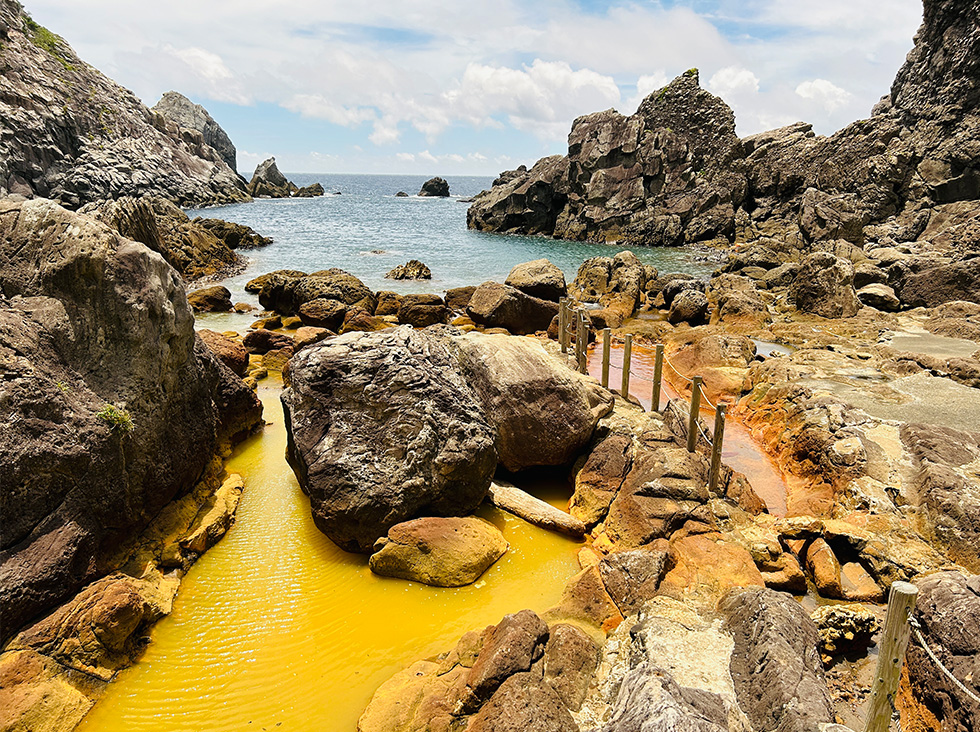
Shikinejima is the island for people who want to do nothing in particular, and do it well. It is small enough to cover on foot, though renting a bike from one of the island’s rental shops is the better call.
Its emerald lagoon at Tomari Beach is among the most beautiful swimming spots in the Tokyo region, with a beach hut selling cold drinks and snacks in summer. Jinata Onsen, carved into the rocks at the shoreline, fills with natural hot spring water.
The island also has its own ghost. Local legend holds that a tax official, despised for his severity, was lured onto a boat during rough seas by residents pushed to their limit. He drowned. His spirit, the Kannamboushi, is said to return every January 24 to torment the locals. They stay home that day, just to be on the safe side.
Kozushima
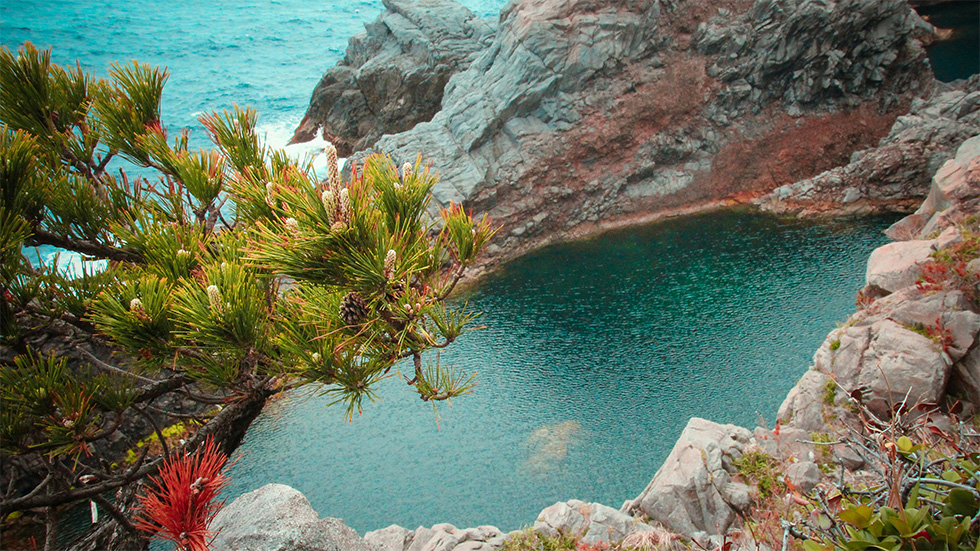
In 2020, Kozushima was designated an International Dark Sky Park by the International Dark-Sky Association, only the second such certification in Japan. From the Miura Bay Observation Deck, on a clear night, the Milky Way is unobstructed and overwhelming. The island has been called “the gathering place of the gods”—the kami, presumably, also appreciate a good view.
Its relative remoteness has kept Kozushima largely undiscovered. Which is a shame, because it offers more than most: beaches, surf breaks at Maehama, fishing, diving, hiking up Mount Tenjo and the open-air Kozushima Hot Spring Recreation Center for when you’ve earned the rest.
Miyakejima
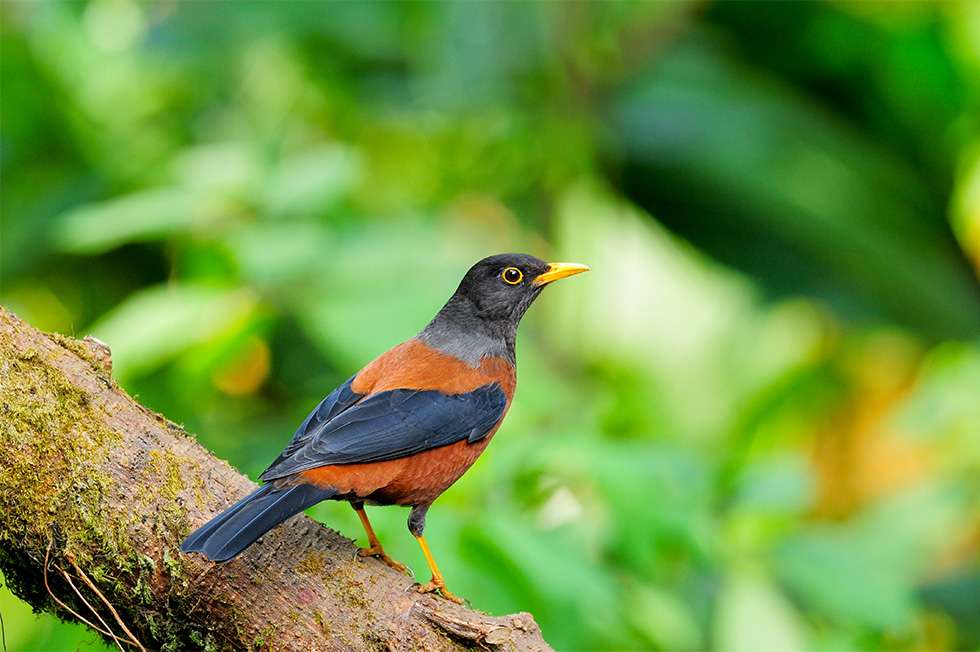
Miyakejima is for birdwatchers. The island’s endemic Izu Thrush, Akakokko in Japanese, draws birders from across the country, and its rough volcanic terrain has kept much of the island ecologically intact, including well-preserved coral reefs that make for excellent diving.
The island was evacuated entirely in 2,000 following a major eruption and resettled years later; its recovery is its own kind of story. Residents and visitors are required to carry a gas mask at all times on Miyakejima due to ongoing sulfur dioxide emissions from Mount Oyama.
It sounds more dramatic than it is in practice, and it makes for a good story when you get home. Ashitaba, a hardy perennial herb almost unknown on the mainland, grows here in abundance and appears in everything from tempura to soft-serve ice cream.
Mikurajima
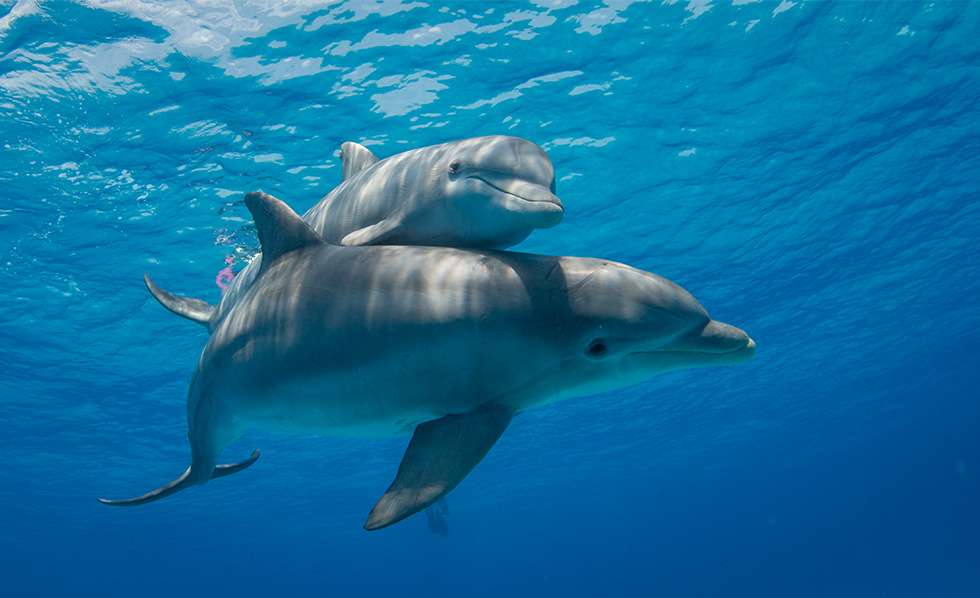
At just 20 square kilometers, Mikurajima is one of the smallest and least-visited of the nine. It is known for its resident pod of bottlenose dolphins, swimming with them is the island’s primary draw, and for its dense forest, which serves as the world’s largest breeding ground for the streaked shearwater.
This seabird spends its days hunting fish offshore and returns to the forest canopy at night, clambering up the trees in a spectacle that is, by all accounts, quite something to witness. Boxwood and mulberry crafts made by local artisans are among the few souvenirs you’ll find.
Hachijojima
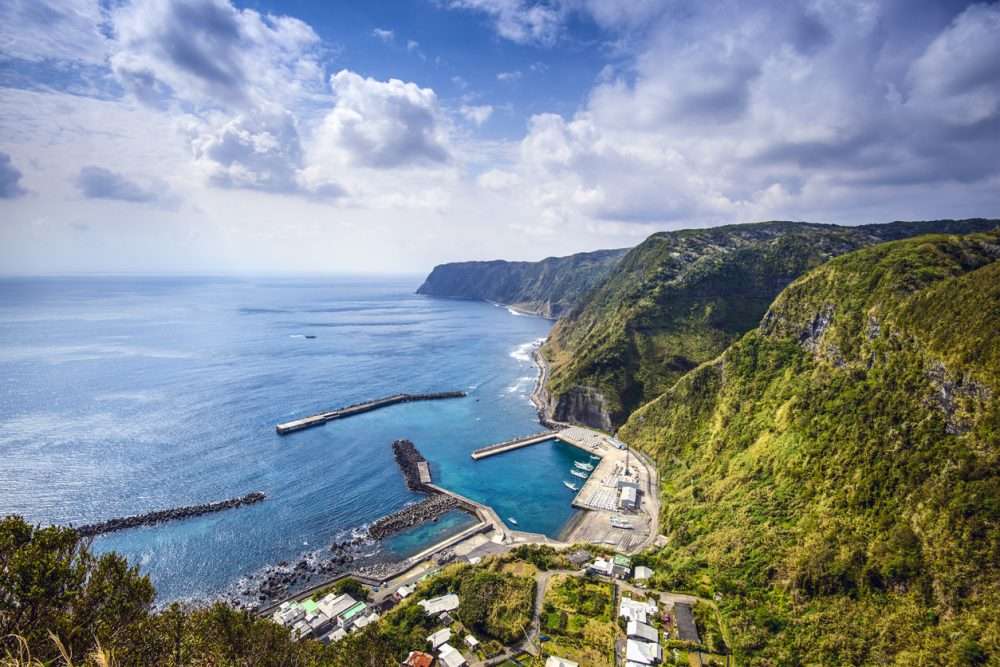
Hachijojima was, during the Edo period, a place of exile, remote enough to contain whoever had fallen out of favor with the shogunate. That history has faded, and what remains is the most developed of the outer Izu islands, with a population of around 7,000 and a food culture worth the trip alone.
Shimazushi (island sushi) uses locally caught fish marinated and served with Japanese mustard instead of wasabi. Kusaya is a fermented fish with a pungent smell and a devoted local following, produced here since the early Edo period. For both in one sitting, the izakaya Ryozanpaku, open since 1979, has an English menu.
The ocean, kept warm year-round by the Kuroshio Current, supports over 700 marine species, including sea turtles, healthy coral and a pygmy seahorse barely a centimeter long, discovered here in 2018. Humpback whales pass through between November and April.
On land: black sand beaches, a hike up Mount Hachijo-Fuji, the open-air hot spring at Miharashi no Yu facing the Pacific and in summer, bioluminescent mushrooms glowing faintly green in the forest undergrowth.
Aogashima
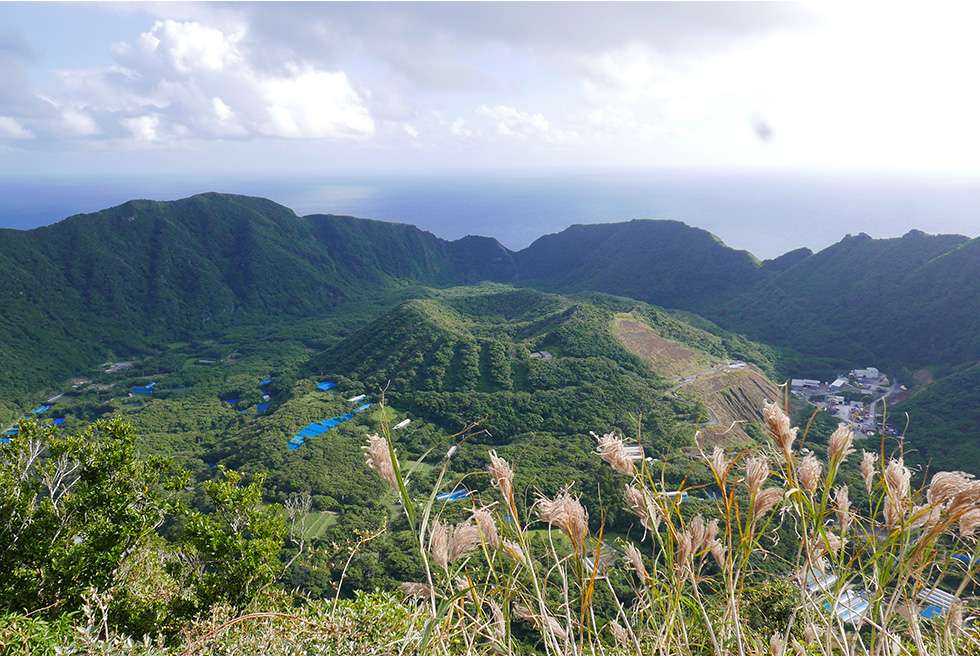
The most remote and the most startling. Aogashima is a double caldera, a volcano within a volcano, home to fewer than 200 people. It was evacuated entirely after a major eruption in 1785 and resettled 50 years later.
There are no natural harbors or beaches; the island is, literally, just a volcano rising from the Pacific. Access is by helicopter or a three-hour ferry ride from Hachijojima, which is subject to weather and never quite guaranteed, making it a natural one-night excursion from the larger island.
Once there, the main attraction is the island itself. A natural sauna powered by volcanic steam sits near the caldera, with open views of the ocean.
The island also produces aochu, a local shochu made with natural koji and wild yeast, each bottle distinct, none of it leaving the island in any real quantity. You’ll have to go there to get it.
This article was originally published in the Summer 2026 “Islands” Issue of Metropolis.