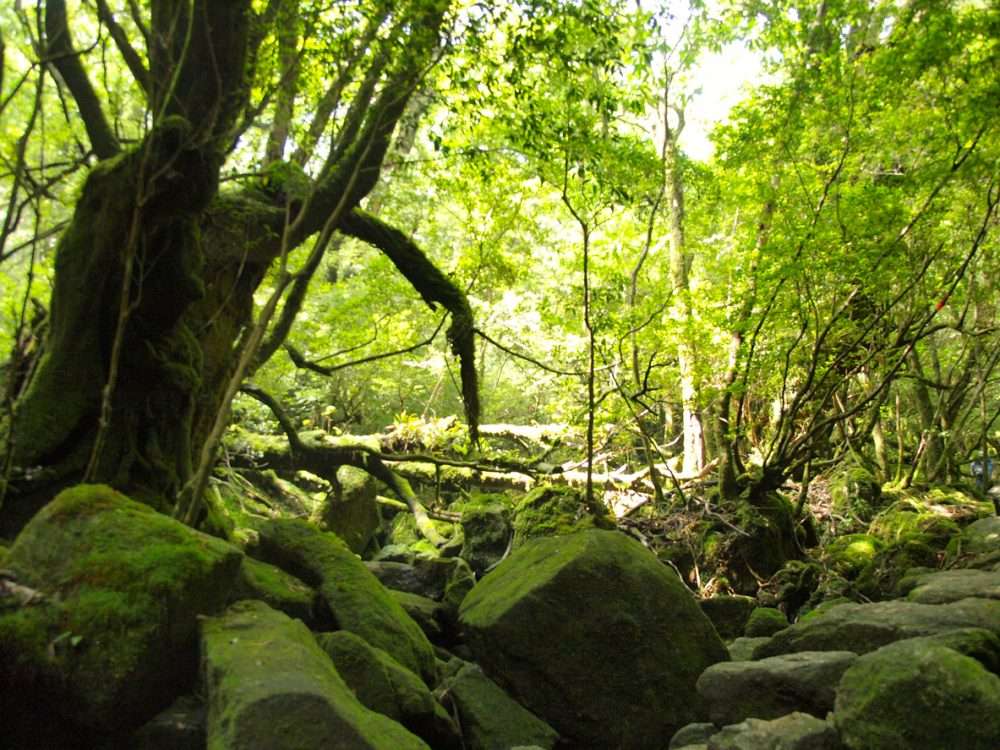
The Forest That Grew From Stone
Inside the island landscape that inspired Princess Mononoke
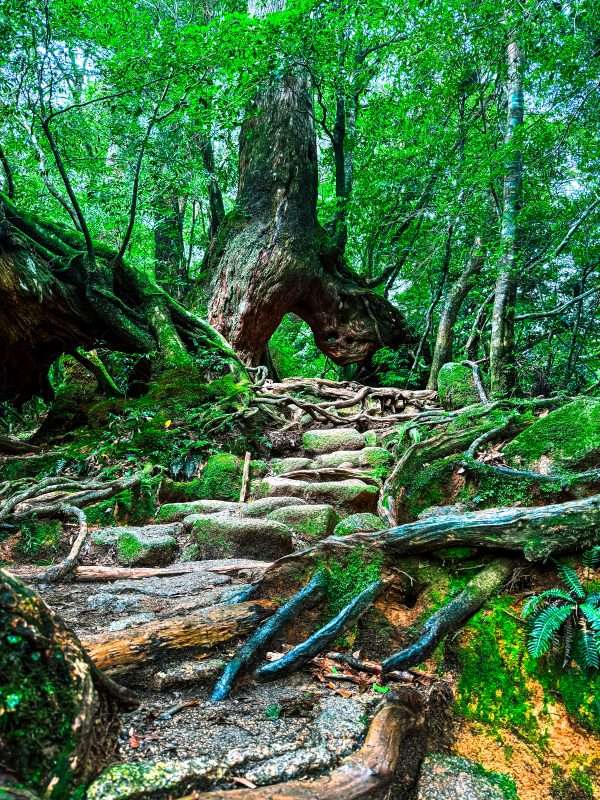
Deep in Yakushima Island’s Shiratani Unsuikyo Ravine, granite boulders vanish beneath emerald moss. Streams slip over stone and mist drifts between ancient trees. It is the kind of landscape Ghibli fans may recognise instantly: the forest widely said to have inspired Princess Mononoke.
Hayao Miyazaki is believed to have visited Yakushima during the film’s creation and the island’s wild, moss-covered landscape seems to echo through the film’s vision of nature.
But the real story of this land is equally as remarkable as the fictional tale.
Yakushima is largely granite, with surprisingly shallow soil. This small island became a World Natural Heritage site in 1993 for its extraordinary ecosystems and landscapes, supporting more than 1,900 plant species across climates ranging from subtropical coastlines to cool mountain forests.
So how does such abundance take root on such unforgiving ground?
The answer is a seemingly delicate green carpet that quietly holds water, builds habitat and helps turn bare stone into a living forest: the moss.
How Moss Turns Stone Into Habitat
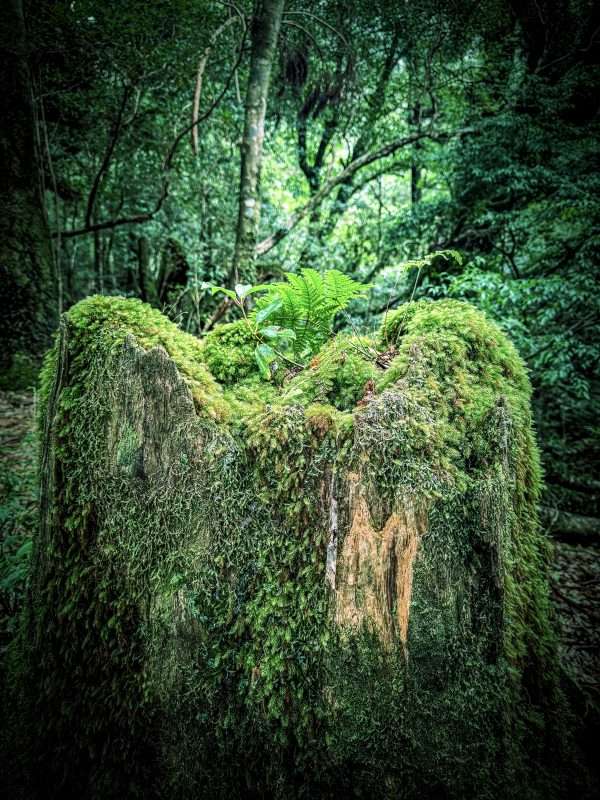
Moss is one of nature’s quiet builders.
It can settle directly onto exposed rock and survive without the deep soil required by larger plants. Instead of drawing water through extensive roots, moss absorbs it across its surface, forming dense mats that hold moisture close to the ground.
As the moss grows, its tangled structures catch dust, fallen leaves and other organic matter.
Over time, this material breaks down and contributes to the formation of soil. Seeds and young plants can then find the moisture and organic material they need to take hold.
On Yakushima, where granite and shallow soil define the landscape, that role becomes especially visible.
When the Forest Begins to Glow
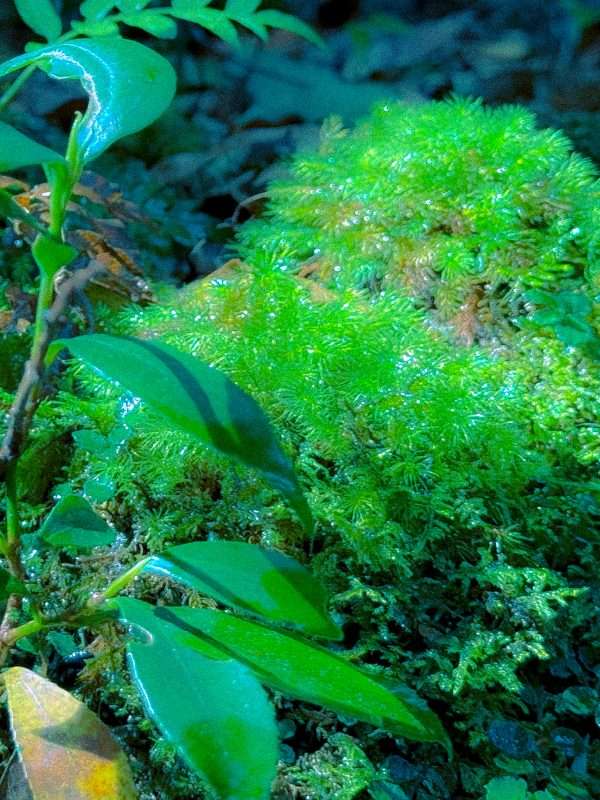
There is a moment in Shiratani Unsuikyo when the moss seems to stop looking like a plant and start glowing like light.
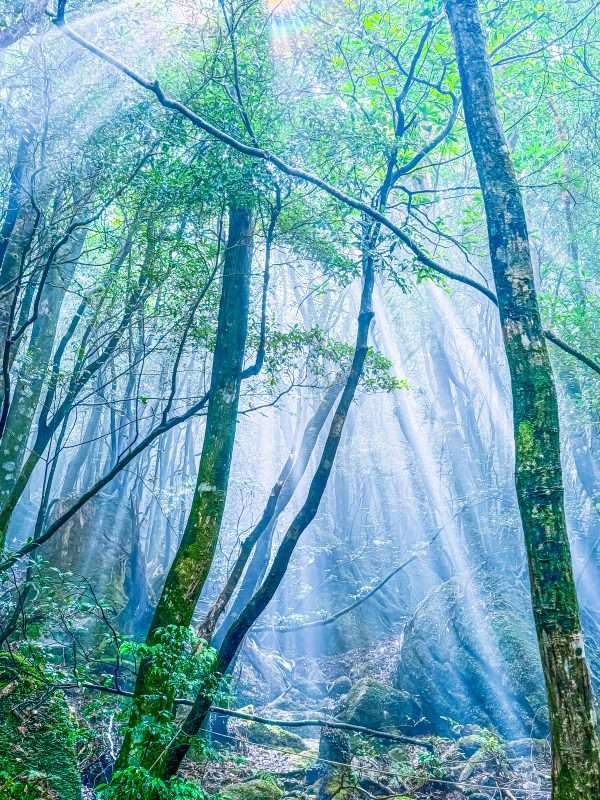
It happens most dramatically after rain. Droplets gather across the moss while the surrounding granite turns dark and reflective. Through the canopy, small fragments of sunlight reach the forest floor and the green seems to glow against the shadows.
There is science behind this magic. Many mosses are adapted to low light, with cells and chloroplasts arranged to capture and reflect limited sunlight, helping create their remarkable luminous green.
Visit after rainfall, and you may understand why this forest has inspired artists and filmmakers.
Let Moss Lead the Way
Moss not only changes what the forest looks like. It changes how the forest feels.
Its moisture and shade help keep the ground cool, and its layers of green soften the hard edges of Yakushima’s granite surface.
Furthermore, by insulating soil from heat and helping create a moist environment, moss contributes to the wider web of life.
Tiny insects shelter among its leaves, fungi thrive in the dampness, and seedlings take root on the otherwise rocky terrain. And somewhere among the trees, a deer or Yakushima macaque may pass through in the distance, becoming majestic companions to lucky visitors.
Its centrality to forest life is also why moss deserves to be treated gently. Visitors are asked to stay on designated trails and boardwalks, avoid touching the moss and resist the temptation to take a piece home.
The most respectful souvenir is the memory of seeing it exactly where it belongs.
Plan Your Visit
Yakushima is accessible by air, high-speed ship or ferry, while renting a car is the easiest way to explore the island.
Local buses also reach Shiratani Unsuikyo, though services are limited. For hikers, rain gear, sturdy trekking shoes, water and energy food are essential, and equipment can be rented locally with advance reservations.
First-time hikers may also benefit from an official mountain guide, who can help you choose a suitable route and understand the forest along the way.
Before setting out, check routes, weather and safety information through the Yakushima Environmental and Cultural Village Center.
Why Yakushima Stays With Us
In Japanese aesthetics, moss has long evoked endurance and the passage of time, from the national anthem to traditional gardens.
On Yakushima, that idea comes alive beneath your feet. As you approach the final stretch of Shiratani Unsuikyo, moss glows with rainwater, mist gathers among the moss-covered trees, and shafts of light fall across the emerald floor.
Only by immersing yourself in this forest can you truly appreciate the quiet wonder of what that thin green layer on bare granite has made possible.
Related articles:
Nobeoka, Miyazaki: Seaside Jewel of Kyushu