6 National Parks in Japan Worth Building a Trip Around
Drift ice you can walk on, bears fishing offshore and a pilgrimage trail through an underworld valley
Japan has 35 national parks. However, most visitors never make it past the ones near a Shinkansen stop.
The six below are worth the extra travel time. Highlights include drift ice solid enough to walk on and brown bears fishing a few meters offshore. There’s also a pilgrimage trail through a mountain valley, plus reefs clear enough to spot fish from a kayak.
Daisetsuzan National Park
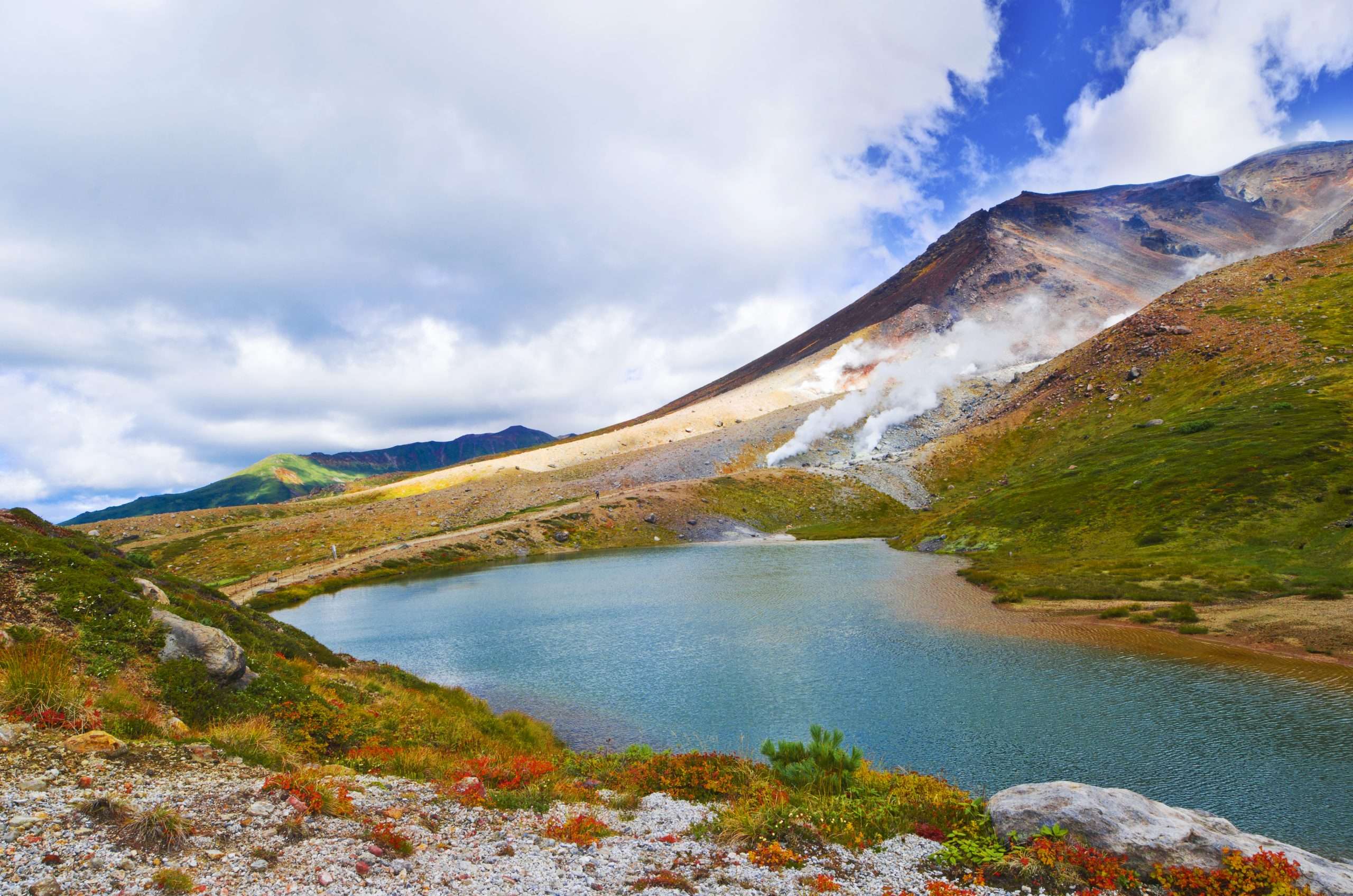
The Asahidake Ropeway climbs above the treeline in about 10 minutes. At the top, active steam vents sit close to the station, so no hiking boots are needed.
From there, the Sugatami Pond loop is an easy one-hour walk past hissing fumaroles and a turquoise crater lake, with Hokkaido’s highest peak, Mount Asahi, rising behind it.
Serious hikers can continue on to the Kurodake ropeway and chairlift combo for a longer ridge walk, where Ezo brown bears and pikas are regularly spotted from a safe distance in late summer.
The park has no train access, so plan on a rental car or a bus from Asahikawa.
- Location: Central Hokkaido
- Price: Free entry. Asahidake Ropeway: ¥3,200
- Best time to visit: Late September for the earliest autumn colors in Japan. July and August for long daylight hikes and alpine wildflowers
Shiretoko National Park
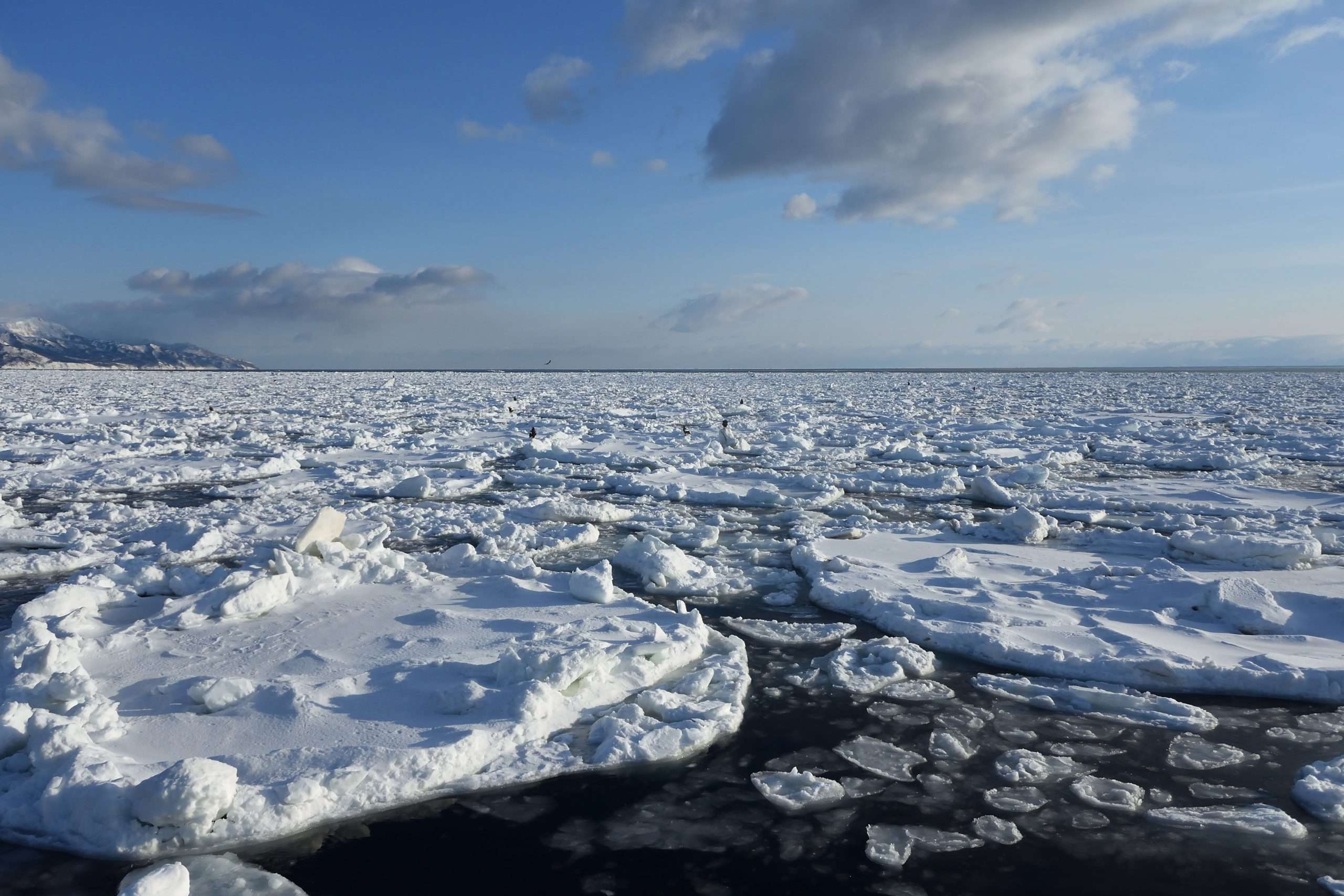
In February, drift ice packs in along the coast solidly enough to walk on, and local operators run guided ice treks in dry suits that let you fall through on purpose and float in the freezing water underneath.
Come summer, boat cruises along the peninsula’s cliffs are close to guaranteed for brown bear sightings, since the bears fish the shoreline in full view of passing boats. Inland, the Shiretoko Five Lakes boardwalk is an easy, mostly flat walk with mountain and lake views, though a guide is mandatory on the ground-level trail from May to July, when bear activity peaks.
- Location: Shiretoko Peninsula, Hokkaido
- Price: Free entry. Parking: ¥500. Guided lake tours: ¥5,000 per person.
- Best time to visit: February for drift ice trekking. June through September for boat tours and hiking
Fuji-Hakone-Izu National Park
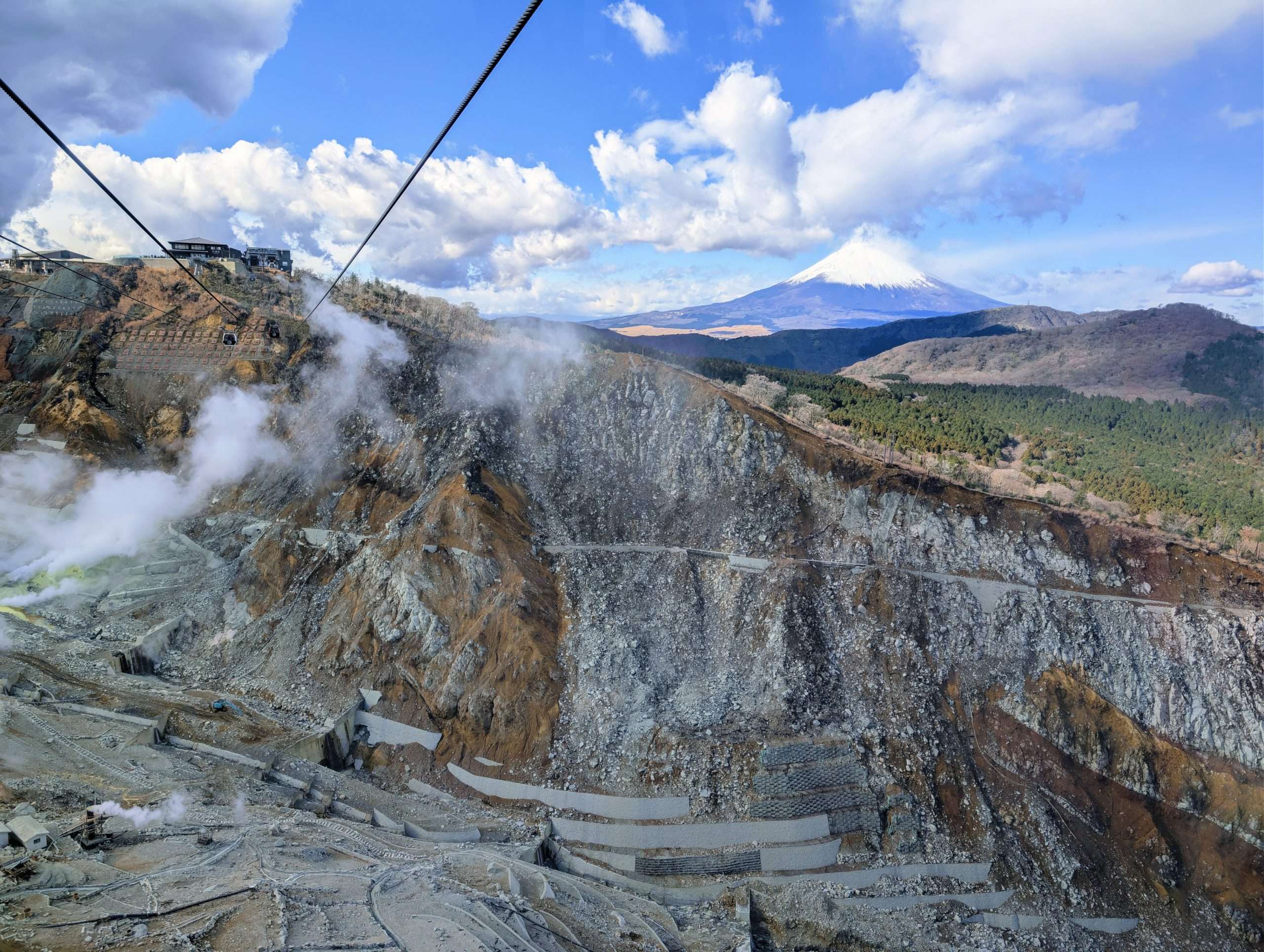
This is the easiest of the six to reach from Tokyo, the Hakone side alone can take a full day: the ropeway over Owakudani’s sulfur vents stops at a station where you can eat a black egg, boiled in the volcanic hot springs and said to add years to your life for every one you eat.
From there, a short walk or cable car gets you to Lake Ashi, where sightseeing boats cross with Mount Fuji as the backdrop on clear days.
For a closer look at Fuji itself, the Fuji Five Lakes area on the mountain’s north side has lakeside trails, campsites and, in autumn, some of the best framed views of the summit anywhere in the country.
- Location: Yamanashi, Shizuoka and Kanagawa prefectures
- Price: Free entry. Hakone Ropeway: ¥3,000
- Best time to visit: Late June for hydrangeas around Lake Ashi. October and November for autumn foliage
Yoshino-Kumano National Park
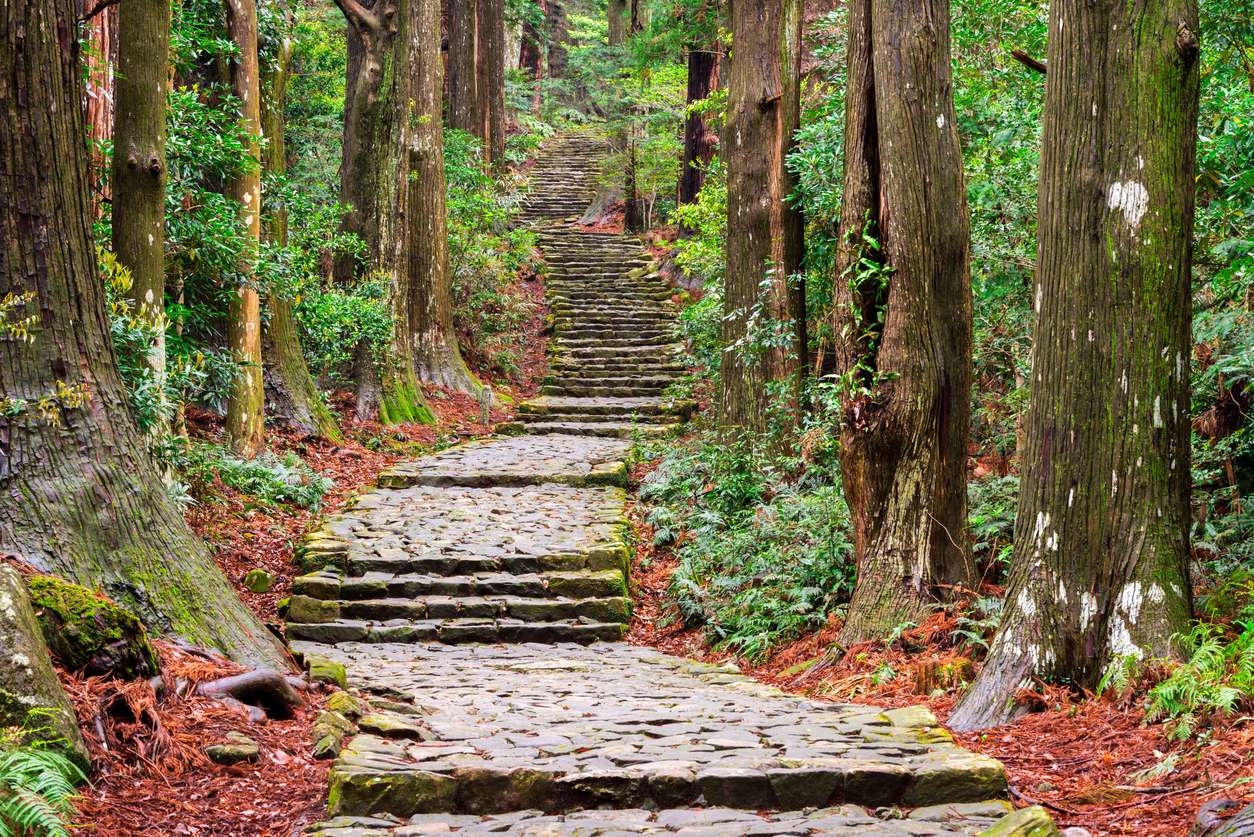
The Kumano Kodo is Japan’s other major pilgrimage route, less crowded than the Camino it’s twinned with and walkable in sections that range from a two-hour stroll to a multi-day trek.
The Daimonzaka approach, a cobblestone path lined with cedar trees, is the most accessible starting point and ends at Kumano Nachi Taisha shrine, right beside Nachi Falls, Japan’s tallest single-drop waterfall at 133 meters.
Divers and snorkelers head instead to Kushimoto, on the peninsula’s southern tip, where the Kuroshio Current keeps the water warm enough for coral reefs, visible without getting wet from the underwater observation tower at Kushimoto Marine Park.
- Location: Nara, Mie and Wakayama prefectures
- Entry fee: Free to walk the Kumano Kodo trails and shrine grounds; some shrines request a small donation
- Best time to visit: Early April for cherry blossoms on Mount Yoshino. Autumn for cooler pilgrimage-trail weather
Keramashoto National Park
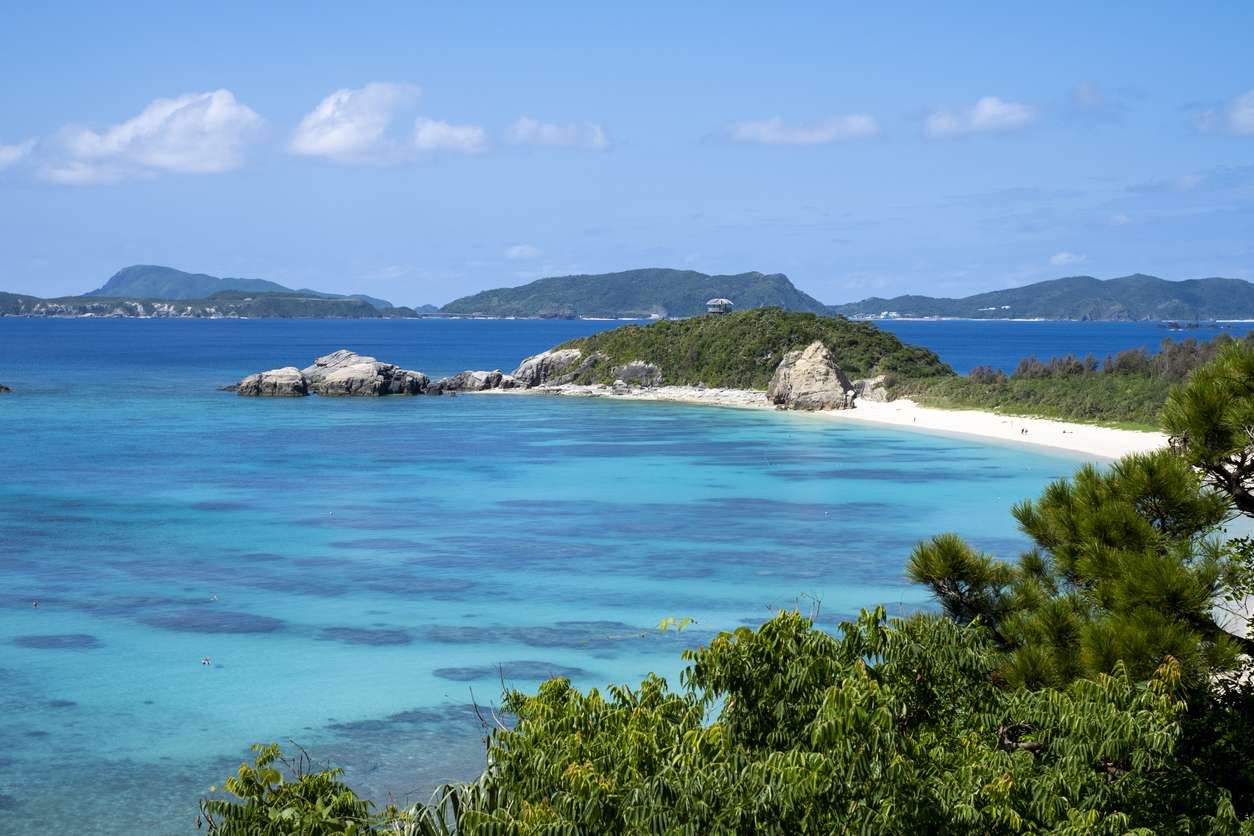
Zamami and Aka islands, an hour or so by ferry from Naha, have some of the clearest water in Japan, clear enough that snorkeling straight off the beach turns up sea turtles and reef fish without a boat.
Dive shops on both islands run day trips out to the surrounding reefs, and from late December through early April, humpback whales breed in the channels between the islands, visible from whale-watching boats or, with luck, from shore.
Furuzamami Beach, a short walk from Zamami’s port, is the easiest base for a day trip: white sand, calm water and rental snorkel gear on-site.
- Location: Kerama Islands, Okinawa Prefecture
- Price: Ferries from ¥2,900 one-way. Snorkeling and diving day trips typically start around ¥5,000
- Best time to visit: January through March for whale watching. May through October for calm, clear diving conditions
Amami Gunto National Park
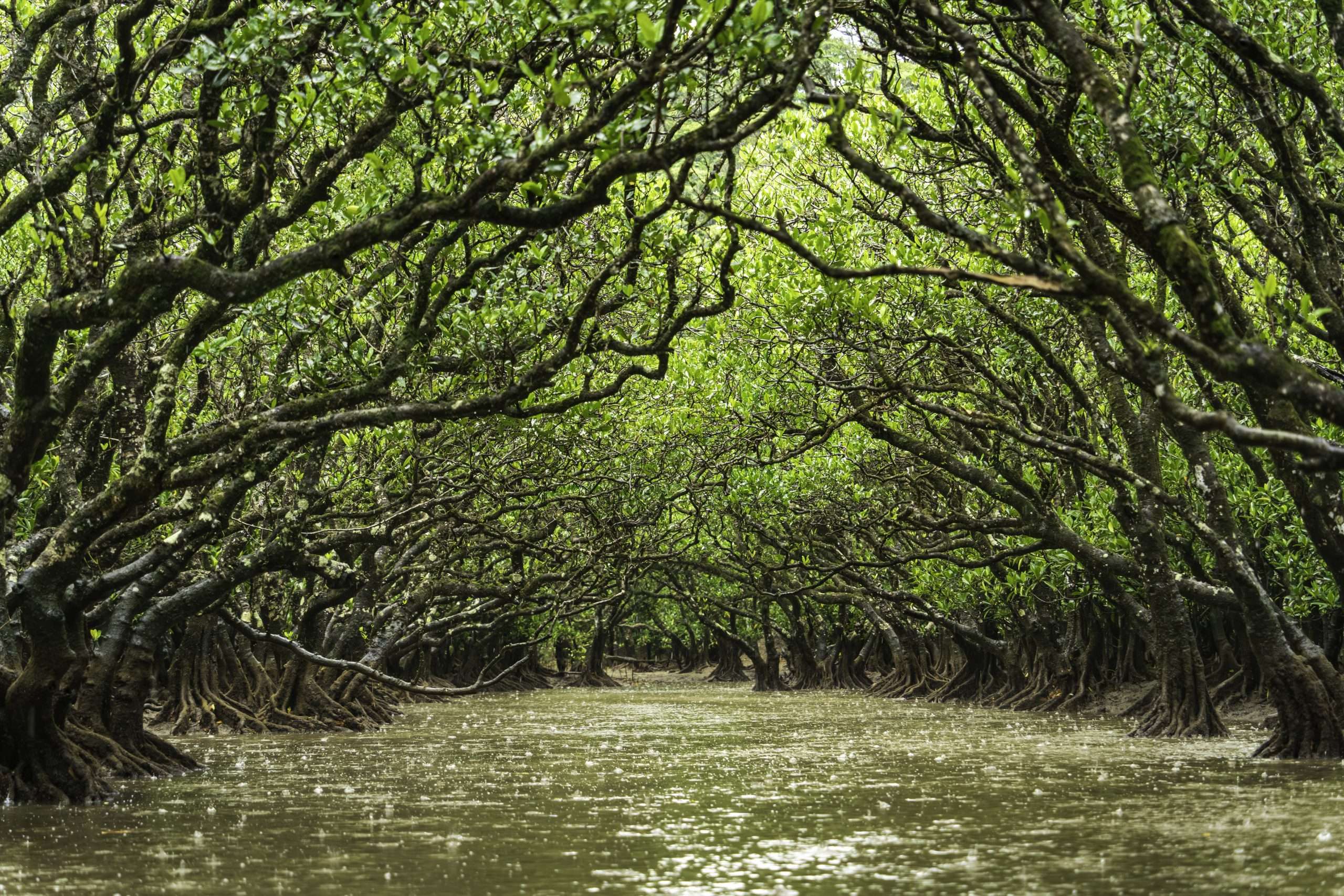
Amami Oshima’s mangrove forest, the second largest in Japan, is best seen by canoe, gliding between the roots at dusk when the tide is high enough to paddle deep into the trees.
After dark, guided night walks in the forest have a good chance of turning up the Amami rabbit, a small, dark-furred species found nowhere else on Earth. The island’s southern coast has its own reef diving scene, quieter than Okinawa’s, and Amami’s beaches tend to stay uncrowded even in peak season.
Winter overlaps with whale-watching season offshore, the same humpback population that passes through the Kerama Islands further south.
- Location: Amami Oshima, Tokunoshima and other Amami Islands, Kagoshima Prefecture
- Price: Free entry to the park. Mangrove canoe tours: ¥2,000 for adults.
- Best time to visit: Winter for whale watching and mild hiking weather. Summer for diving on the surrounding reefs, though typhoon season runs roughly June through October
This article was originally published in the Autumn 2026 “Earth” Issue of Metropolis.
Read more articles about nature and travel:
The Forest That Grew From Stone
Endemic Species That Only Exist on Specific Japanese Islands