January 8, 2026

Eat Tokyo-Grown Food in Tsukiji
Inside “Let’s Eat Tokyo Food,” a free culinary pop-up spotlighting ingredients from the capital
By Walt Delgado
Tokyo imports ingredients from every corner of Japan, but few people realize how much food is grown, harvested and caught within the capital. In December, that quiet truth took center stage at Let’s Eat Tokyo Food, a small-scale culinary pop-up held at Tsukiji Cooking Studio that challenged visitors to rethink what “local” really means in Tokyo.
Just steps away from one of Tokyo’s most famous food districts, the event invited international visitors to taste dishes made entirely with Tokyo-sourced ingredients, from island seafood to mountain-grown wasabi.
A Small Space Designed for Conversation
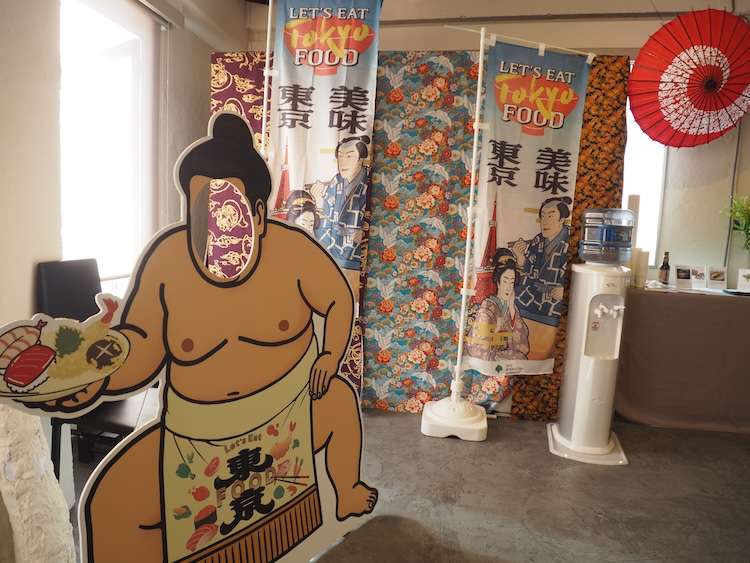
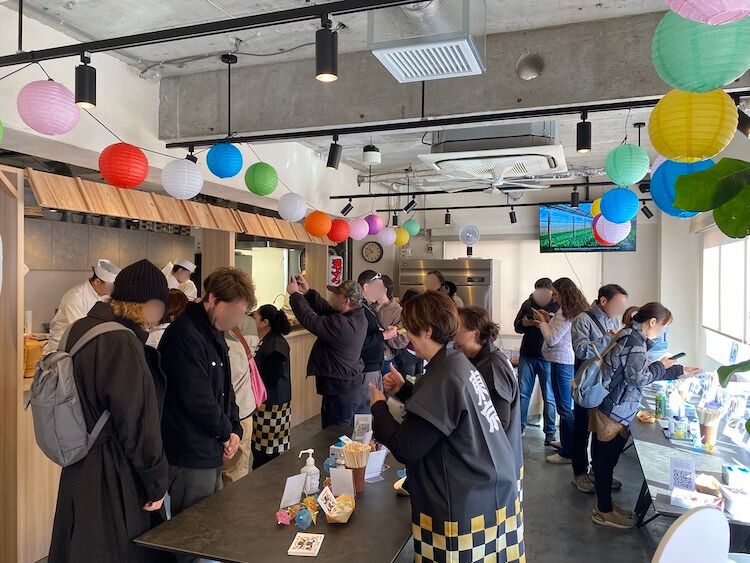
The venue struck a welcoming balance. It was open enough to move comfortably, yet intimate enough to encourage conversation. Edo-inspired decorations lined the walls, alongside a playful cardboard cutout of a sumo wrestler holding sushi that quickly became the unofficial photo spot.
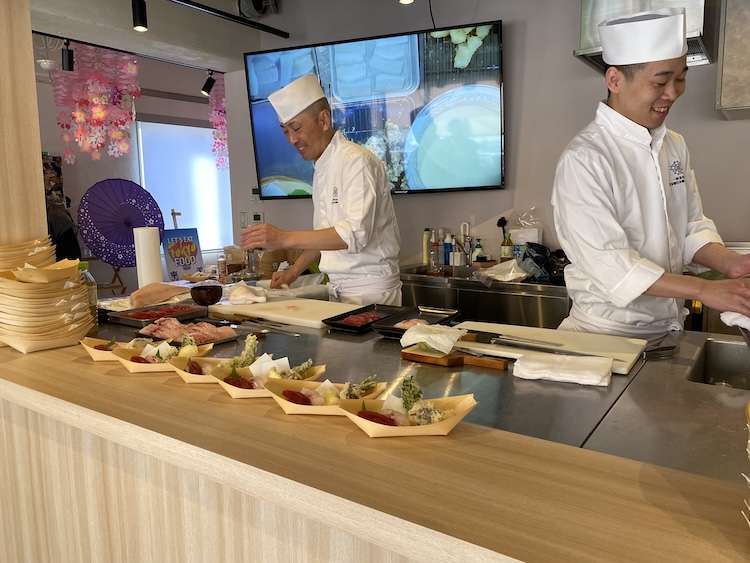
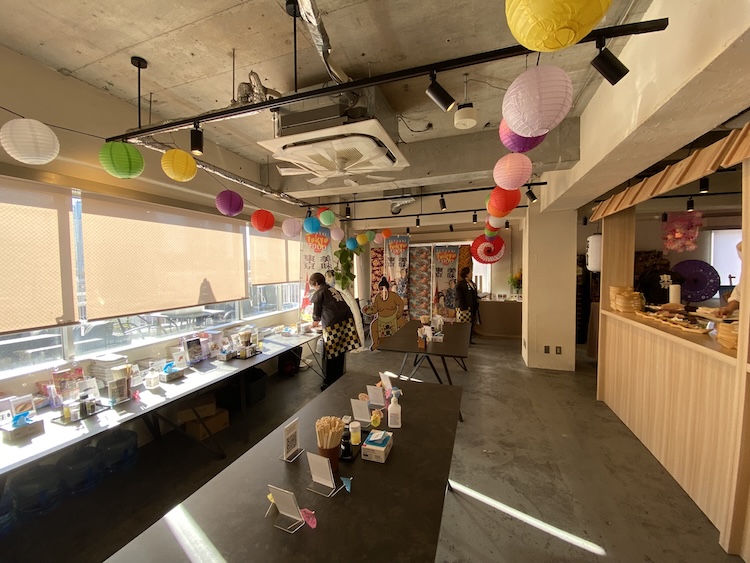
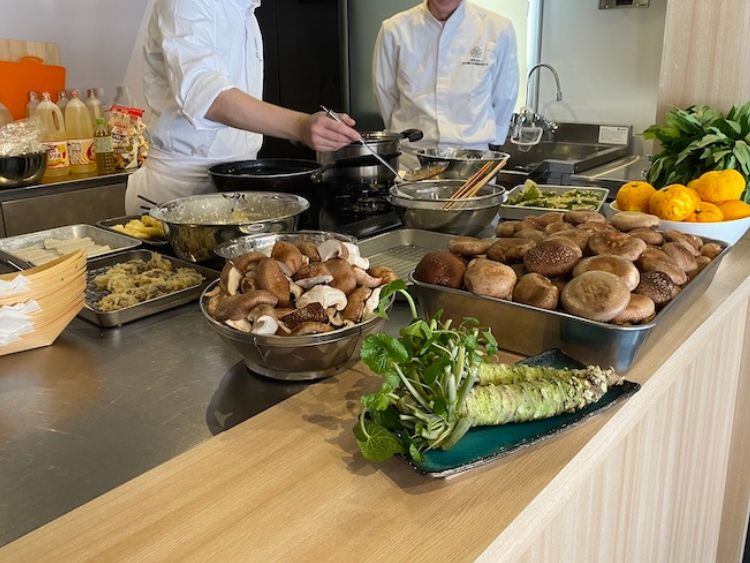
At the center, an open counter allowed guests to watch professional chefs prepare each dish in real time. Visitors picked up tasting trays upon arrival, then settled at one of the two central communal tables or at the wall counters. With space for around 15 guests at a time, the room never felt rushed, and people stayed longer than planned. Always a good sign. Each table featured condiments sourced from across Tokyo’s regions. Guests seasoned their dishes with salt harvested from Ogasawara waters, ashitaba salt derived from powdered leaves grown on Hachijo Island, fresh Tokyo yuzu and wasabi cultivated in the clear mountain streams of Okutama.
Tempura and Sushi, All from Tokyo
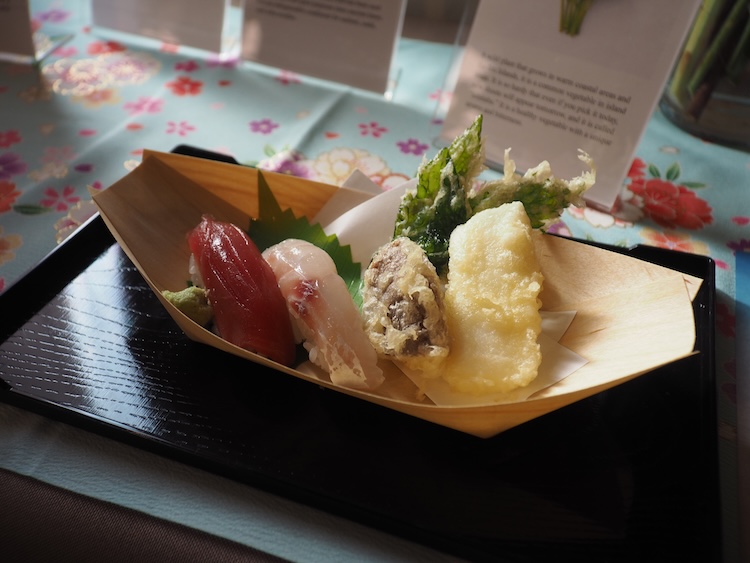
The tasting set focused on two staples of Japanese cuisine: tempura and sushi, both crafted entirely with Tokyo ingredients. The tempura selections included tender sode-ika squid (diamond squid) from the Ogasawara Islands, aromatic ashitaba leaves from Tokyo’s island regions and thick locally grown shiitake mushrooms.
The sushi offering featured two pieces of nigiri topped with Tokyo-caught tuna and hamadai (ruby snapper). Wasabi was served on the side, allowing guests to control the heat rather than surrender to the chef’s judgement.
Chefs from the Tokyo-to Nihonchori Ginoushikai prepared the dishes, and their presence behind the open counter gave the event a relaxed, almost kitchen-table feel, with casual exchanges replacing formal explanations.
Food as a Cultural Exchange
Staff moved easily through the room, explaining ingredient origins and culinary traditions while answering questions. Support was available in English, Chinese and Spanish, which made the event feel genuinely accessible rather than performatively international.
Visitors arrived solo or in small groups, and conversations between strangers came naturally. Shared tables helped, and so did the food. The atmosphere leaned less toward exhibition and more toward exchange, with dialogue between chefs, staff and guests flowing freely. Through this event, tourists were introduced to the appeal of Tokyo-produced ingredients, and initiatives such as promoting restaurants that use Tokyo specialty ingredients helped create opportunities for visitors to taste Tokyo-sourced foods.
The most surprising takeaway for many visitors, including Japanese residents, was how extensive Tokyo’s own food production actually is. From island fisheries to mountain farms, the capital’s food culture extends far beyond its world-class dining scene.
More to Come in February 2026
Following the success of the December tastings, Let’s Eat Tokyo Food will return in February 2026. The next edition will be held over two days, February 26 and 27, at MY Shokudo Hall & Kitchen in the Tokyo Station area.
As before, the event will offer free tastings and a focused introduction to Tokyo-produced ingredients, with an emphasis on direct engagement between chefs, staff and visitors. Further details will be announced closer to the event date, but the format is expected to remain small and interactive.
For readers interested in Tokyo’s food culture beyond the obvious, this is one to keep an eye on.
MY Shokudo Hall & Kitchen
Official Website: mhk-tokyotorch.jp
2-6-4-3F Otemachi, Chiyoda-ku
My Shokudo Hall & Kitchen on Google Maps