December 26, 2025
La Carmina’s Love Letter to Okinawan Cuisine
The best of Okinawa's regional and traditional food
By La Carmina
Okinawan cuisine has recently been trending thanks to a global surge of interest in biohacking. This health trend involves extending one’s healthspan, or the number of years spent in good health, through diet and lifestyle changes. Okinawa is one of the world’s five Blue Zones. It’s a region where residents live long and healthy lives with a remarkable number of centenarians. As a result, food-loving travelers like me are increasingly keen to visit the beachy destination and experience its life-extending dishes.
You might also be interested in our article on Christmas in Okinawa.
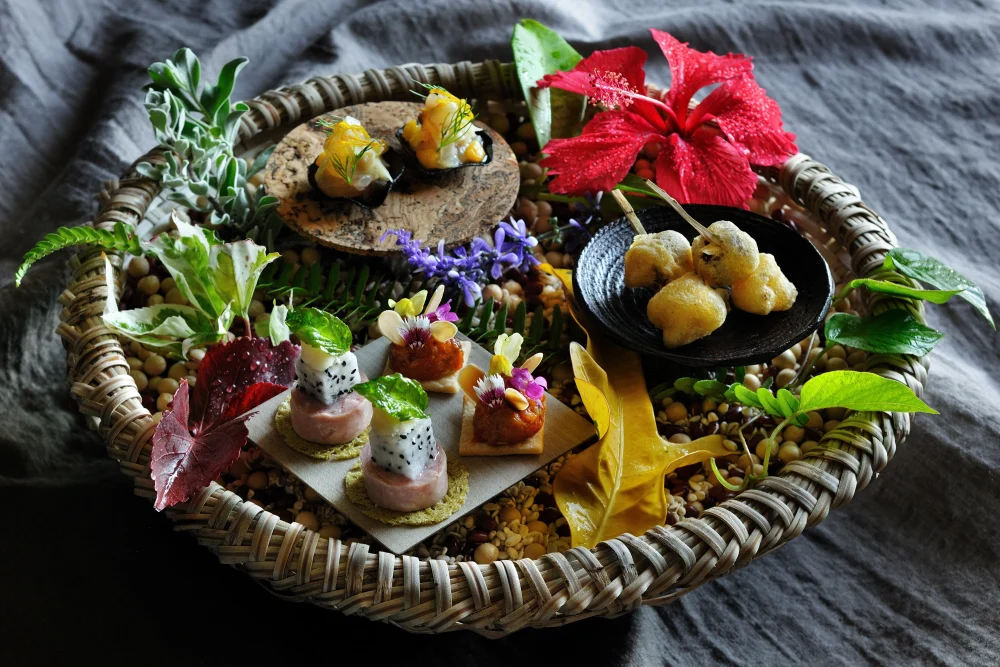
Okinawa’s traditional approach to eating often aligns with the modern-day, science-backed approach to living well. For example, the Okinawan diet focuses on nutrient-rich plant-based foods like sea vegetables, fermented soy products like miso and slowly aged Shima tofu, herbs like ginger and turmeric, fruits such as tart shikuwasa citrus (a personal favorite), and antioxidant-rich vegetables including beni imo (purple sweet potato), umibudo seaweed and goya (bitter melon). Okinawans often also follow the practice of hara hachi bu, or mindfully eating only until you are 80 percent full.
Recent documentaries like Netflix’s “Live to 100” have further renewed interest in the islanders’ historic way of life. Hotels like HOSHINOYA Okinawa have even launched wellness activities and tasting menus for visitors to immerse themselves in this local food culture.
Okinawa’s Diverse and Healthy Cuisine
Japan’s southernmost prefecture, with a humid subtropical climate and over 160 islands, has a fascinating history that has shaped a range of influences in its cooking. From 1429 to 1872, the region was known as the independent Ryukyu Kingdom. This was after Japan annexed and renamed it Okinawa Prefecture. The royal Ryukyu era gave rise to dishes inspired by imperial China and Southeast Asia, as well as an elegant multi-course cuisine called kyu-tei ryouri. Dishes include minudaru, a steamed pork loin marinated in black sesame sauce. After World War II, Okinawa was occupied by American forces, leading to fusion creations like Spam musubi and taco rice.
Ryukyu Cuisine
In the morning, I toured HOSHINOYA Okinawa’s beachfront property’s lush herb garden. It contains Okinawan hibiscus and chomeiso, a “long life” green-leaved plant that is rich in polyphenols. That evening in my suite overlooking the ocean, I sat down to a spread of Ryukyu delicacies, including a starter of three types of sashimi and tender beef steamed with vegetables and aromatic native shell ginger. One of my favorite dishes was a comforting boroboro rice porridge with juicy pork, topped with koregusu hot chilli pepper sauce and served in elegant Ryukyu lacquerware.
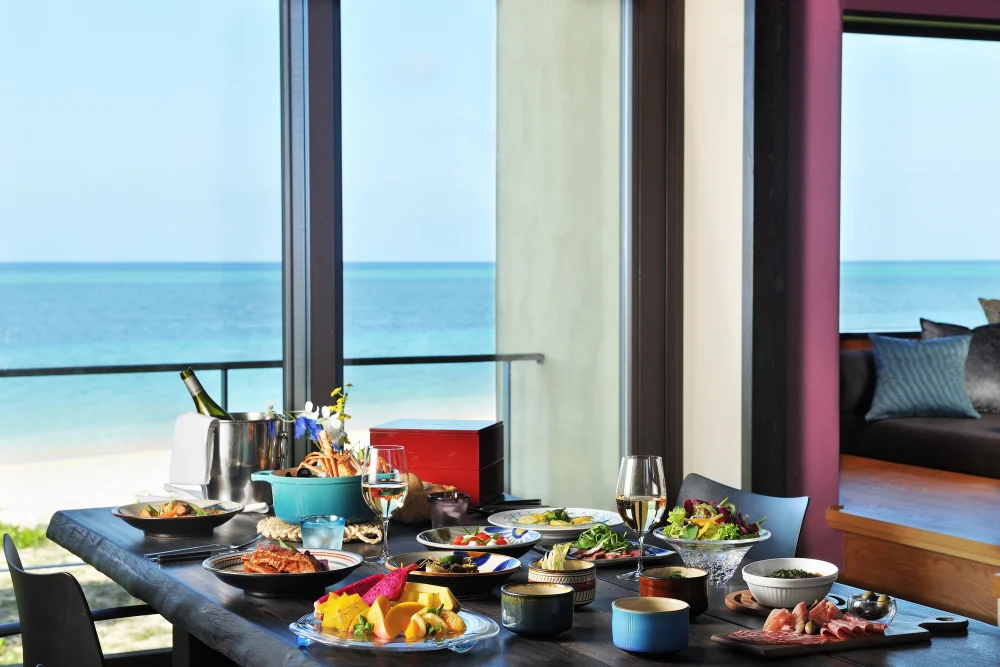
I also dined at Ryukyu Gastronomia―Bellezza. It presents a nine-course set menu inspired by kusuimun, or the philosophy that a nourishing, balanced diet is akin to medicine. Each course highlights a nutrient found in ocean-fresh ingredients, honoring the booming maritime trade of the Ryukyu Dynasty. As an anti-aging aficionado, I was pleased to try the “Collagen” dish of steamed ruby snapper in fish and chicken bone broth.
Immersive Okinawan Food Activities
To dive deeper into the local culinary culture, I took part in food-focused activities, including a purple sweet potato tasting experience. I sampled several varieties of the spud, each with distinct flavors and textures. Caramelized purple potato with sweet potato cream and rum raisin ice cream followed.
Like many contemporary health enthusiasts, I’ve been paying attention to gut health and probiotics. Okinawa has a long-standing fermentation culture, bolstered by its year-round warm, stable climate. Since the days of the Ryukyu Kingdom, the region has excelled at producing fermented products, including kusu awamori, an aged rice liquor made with black koji mold. The resort offers a “fermentation stay” program that lets you sample foods. For example, Kumejima miso, tofuyo cheese-like tofu, and Moromi vinegar made from kashijee or sake lees, byproducts of awamori distillation.
To better understand the regional twists on Japanese cuisine, I tasted Okinawan-style pork bone shoulder soba in clear broth at Inaka Noodle House in Yomitan, and Okinawa Soba Den in Naha (their spicy mazesoba is also fantastic). I loaded up on seasoned ground beef and salsa over rice at King Tacos, which has several locations.
For a cozy evening, reserve a table in advance at Shima Robata Fuji izakaya. Indulge in an Aigu pork sampler paired with awamori. Finally, I stopped for Blue Seal ice cream, found all over the main island: originally created by the U.S. military for stationed American soldiers, it has become a beloved local treat with flavors like yam and yuzu.
The Ryukyu-era philosophy of ishoku dogen—or that food and medicine are one and the same—is as pertinent as ever in the modern age. Visiting Okinawa gave me an unforgettable taste of some of the prefecture’s traditional dishes. They are as good for the body as they are delectable.
There’s more to Okinawa than its food. Here’s what you can do in Okinawa during the winter.