December 2, 2025
Why Does Japan Eat KFC On Christmas?
How KFC became Kentucky Fried Christmas in Japan
By Metropolis
It has become a repeated “did you know?” cliché that Japanese people eat KFC on Christmas.
Corporate associations with holidays are not unusual. Despite the often-repeated myth, Coca-Cola did not invent the modern red-and-white Santa Claus. Still, the brand’s holiday campaigns have become inseparable from Western Christmas culture. But while Coke trucks roll across TV screens every December in the US and many parts of the world, Japan is one of the few places where Coca-Cola never quite managed to claim December 25 as part of its corporate DNA.
So what is Christmas in Japan, then? And why does Japan eat KFC on Christmas?
Follow @metropolisjapan on Instagram and DM us “JAPAN” for a free Tokyo dining experience
Does Japan Celebrate Christmas?
Christmas in Japan is not a public holiday. Many assume this is because Christianity is a minority religion, but the real reason is that Japan is a secular state by constitutional design. No religious holiday is designated as a national public holiday. Culturally and commercially, however, Christmas is one of the busiest events of the year.
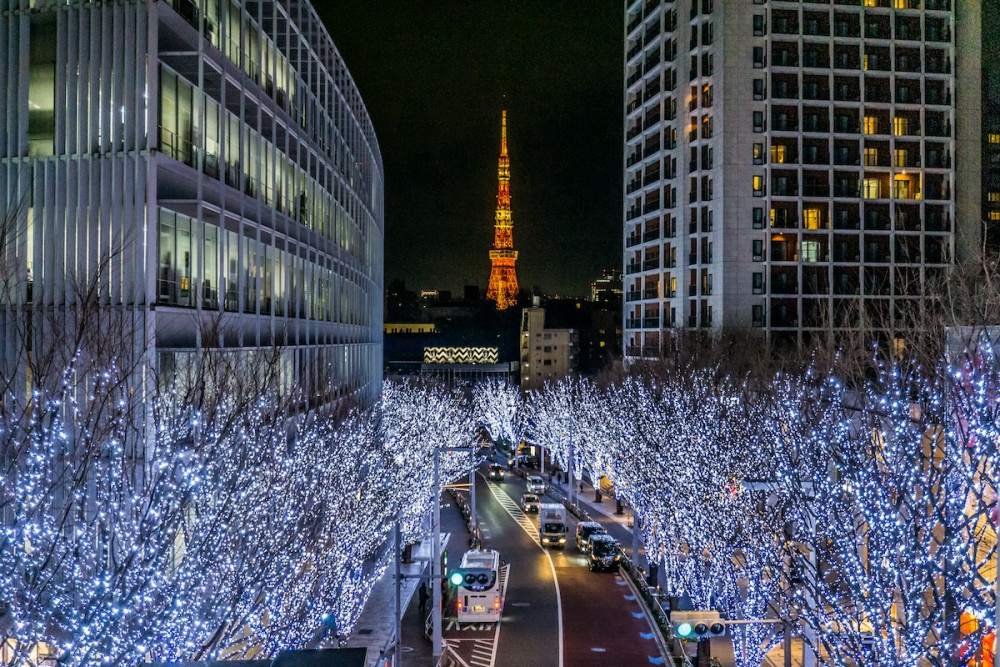
Christmas Eve, the 24th, has a strong romantic association. Couples go out for dinner and walk through Christmas illuminations, and the night has a feeling similar to Valentine’s Day. The 25th tends to be more family-oriented. In a 2008 survey, more than 60 percent of Japanese respondents said they would go back home and spend Christmas with their family. In addition, year-end parties known as bonenkai crowd the calendar, and Christmas becomes part of a larger stretch of seasonal celebrations.
Check out Metropolis’ recommendations for Christmas dinners in Tokyo:
Christmas Dinners in Tokyo
Do Japanese People Really Eat KFC for Christmas?
Let’s get this question straight: is it an established tradition to eat KFC on Christmas Day?
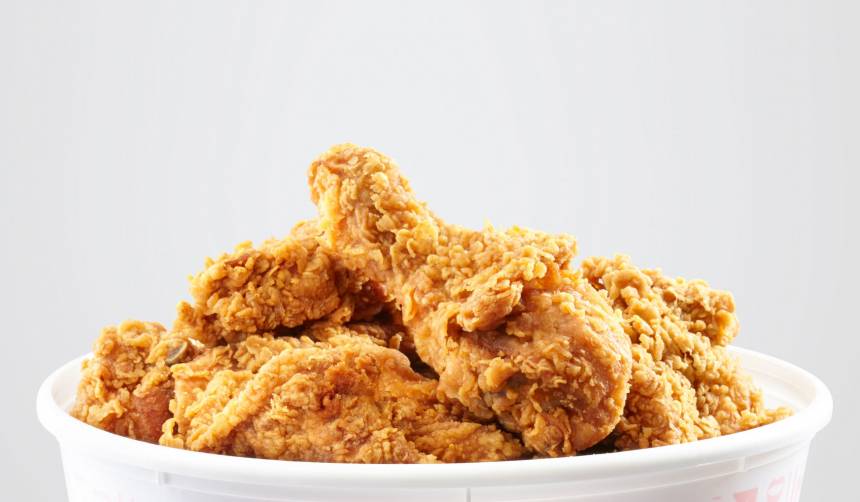
The answer is both yes and no. Eating fried chicken for Christmas is certainly a familiar custom in Japan, and KFC plays a visible role in that image. But it’s not nearly as universal as many online articles make it sound.
According to 2024 data, around 30 percent of people planned to eat some kind of chicken dish on Christmas. Within that group, only about 20 percent bought their “Christmas chicken” from KFC. That means fewer than 10 percent of all respondents were actually purchasing KFC for the holiday.
Still, that small percentage is significant. After all, on what other day would nearly 10 percent of the people in your neighborhood all show up at the same fast-food chain? It remains one of KFC Japan’s biggest annual sales spikes and a recognizable part of modern Japanese Christmas culture.
“Kentucky for Christmas!” Campaign
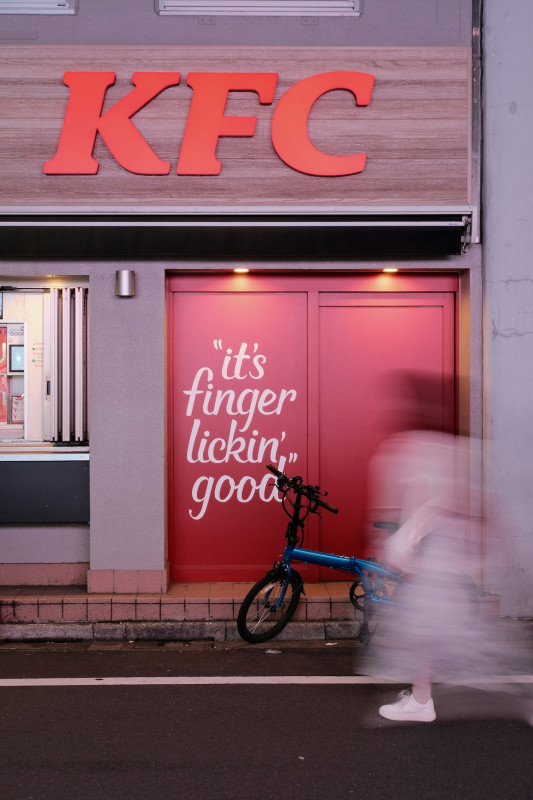
The widely accepted explanation is simple: in 1974, KFC Japan launched a wildly successful ad campaign called “Kurisumasu ni wa Kentakkii!” (“Kentucky for Christmas!”).
Some claim that KFC’s success had no deeper logic and that the campaign simply worked because Christmas in Japan lacked strong historical roots, leaving room for companies to invent new customs. But KFC’s strategy was more thoughtful than many assume.
Sure, Christmas is not a public holiday in Japan and carries no religious meaning for over 90 percent of the population in one of the world’s most secular societies. However, records show that by the 1970s, Japan had already developed a growing habit of eating roast chicken for Christmas. KFC didn’t create the idea from nothing; they offered a reinterpretation of an existing custom: fried chicken that could be picked up quickly from a fast-food counter.
This convenience aligned perfectly with the realities of the era. Japanese women, who traditionally handled most household cooking, were increasingly entering the workforce, and families were busier than ever during the country’s rapid economic growth. Instead of spending hours preparing a festive roast, bringing home something children would enjoy just as much, if not more, became an easy and appealing alternative.
It is also worth noting that deep-fried foods were not as common in Japan then as they are today, so fried chicken didn’t feel like a “cheap” substitute. If anything, it felt novel and special. Similarly, fast-food brands such as McDonald’s had an indulgent and exciting image in Japan. At the time, they were considered an indulgent treat, in contrast to vegetable-centered traditional Japanese food.
A Brief History of Christmas in Japan
KFC’s success was partly because chicken was already associated with Christmas in Japan. But why was it chicken in the first place? To answer that, we need to look back at when Christmas first became a commercial event in Japan, something that actually began around 1900.
Christmas started entering Japanese popular culture in the early 1900s, especially after Meidi-ya opened its Ginza store and launched one of Japan’s earliest Christmas sales campaigns. By the 1910s and 1920s, Christmas themes were appearing in media, with references to European holiday customs.
A major turning point came in 1926, when the Taisho Emperor passed away on December 25. As a result, December 25 became a public holiday during the subsequent Showa years. This unintentionally helped Christmas spread even further. Newspapers in the late 1920s were already describing Christmas as a familiar annual event, fancy restaurants offered special Christmas menus (often roasted meat dishes) and Christmas decorations were common in cities across Japan by the 1930s.
People in Japan knew that in many parts of the world, Christmas was a time to eat roasted meat, whether it was roast turkey in the UK, roast duck in Lebanon or roasted goose in Germany. But eating meat of any kind had not been common in Japan for centuries. After the Meiji era, meat dishes began appearing more in city restaurants but did not immediately become everyday food. In early Showa, the idea of celebrating Christmas with nicer, European-inspired food became a seasonal custom, because the event itself was associated with the West. However, the holiday was not tied to one specific dish.
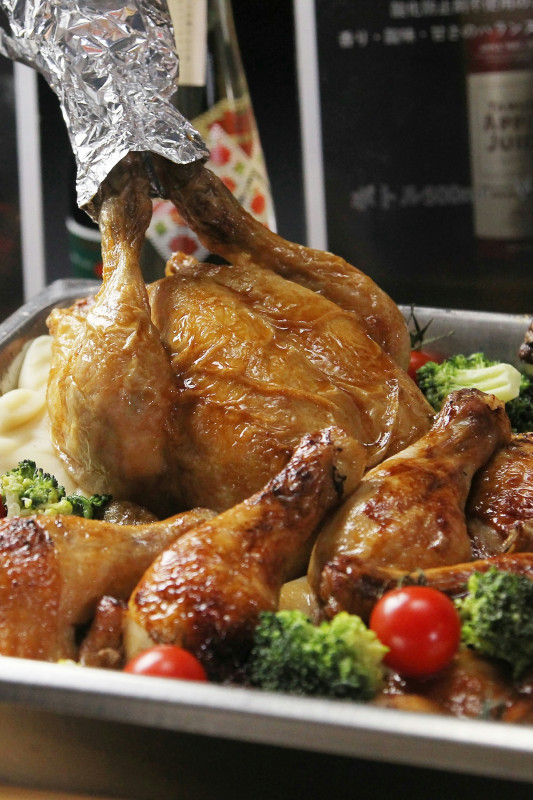
Japan’s shift toward roast chicken was most likely inspired by the Western tradition of roast turkey. In the early 1900s, chicken was extremely expensive in Japan and considered a luxury, often costing as much as domestic beef. It wasn’t until the 1950s, with the introduction of broiler breeds, that chicken became affordable for most households.
Even though chicken eventually became everyday food, the earlier association of “roast chicken for Christmas” stayed intact. This is the context KFC stepped into.
As the tradition grew, convenience stores from Lawson to FamilyMart jumped into the market with their own “Christmas chicken” sets, hoping to nibble away at KFC’s seasonal monopoly. Whether they’ll ever catch up remains to be seen, but then again, the idea of an American fast food chain becoming synonymous with Christmas in Japan once seemed just as implausible.
How to Celebrate Christmas the Japanese Way
So what is Japanese Christmas culture?
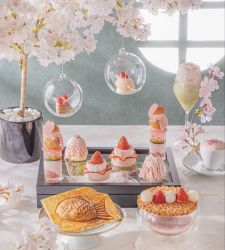
As for food, roast or fried chicken is the best-known choice but it is far from the only one. If you are not eating chicken, roast beef is also common. Sparkling wine (specifically, champagne) is strongly associated with the season, and even children join in with wine-style bottles of non-alcoholic sparkling juice known as Chanmerry. Cakes are the highlight of the celebration, especially the iconic strawberry shortcake with white cream that resembles snow and red strawberries for the Christmas red. Bûche de Noël has long been popular and stollen has become a major seasonal item in recent years.
The cityscape is just as symbolic. Irumineshons (illuminations), often shortened to irumi, turn December into one of the brightest times of the year. The English use of “illumination” to describe winter light displays became more common partly through Japanese usage (and the term avoids the religious specificity of “Christmas lights”). Christmas trees, Santa delivering presents and children opening gifts on the morning of the 25th are also well-established customs in Japan, just like in many other parts of the world.
Japanese Christmas culture is often framed as something peculiar, but that understanding is misguided. Much of what we call “Christmas culture” worldwide is already a blend of pagan European customs, medieval Christian reinterpretations and modern secular invention. A large number of familiar symbols and practices, Christmas trees, wreaths, garlands, mistletoe, holly and Santa Claus (and his equivalents) were not part of Christianity. Even Advent calendars, Christmas cards, carols and nativity plays became standardized much later in European history. Christianity originated in present-day Palestine, and early Christian communities did not celebrate Christmas in anything like the form we know today.
With that in mind, the Japanese way of celebrating Christmas is not an outlier. It is simply another local adaptation, shaped by its own culture, seasons and history.

Discover our curated restaurant picks for Christmas dining in Tokyo:
Festive Christmas and Holiday Dinners in Tokyo
Find the best Stollen in Tokyo this winter.:
Best Stollen for Christmas
Originally written in 2019 by Cezary Jan Strusiewicz, updated and edited December 2025 for accuracy.