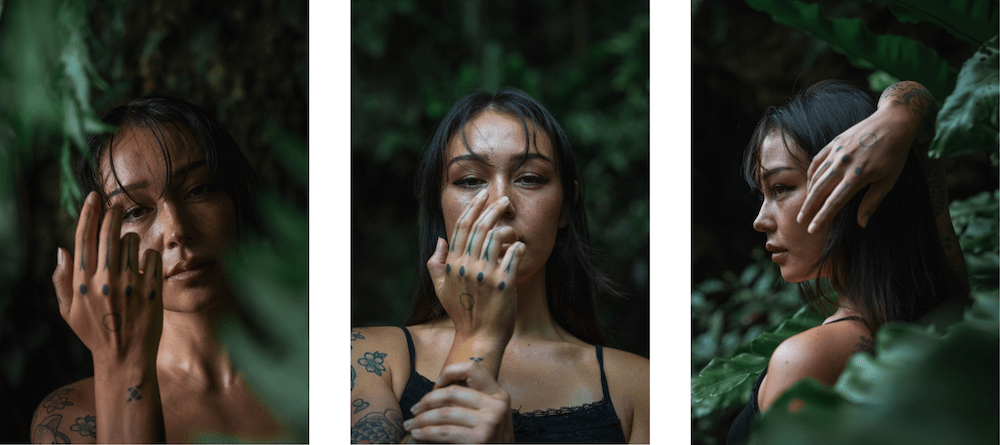
The Women Reviving Hajichi, Okinawa’s Traditional Hand Tattoos
What the hands remember
When I was told to cover my tattoos at a beach in Japan, I felt ashamed, as if I myself were something offensive. I left. I couldn’t do it. There is no line between me and my tattoos; they are one and the same. My ink carries no ancestral weight, just a story I chose to tell on my own skin, and even that small refusal of it stung.
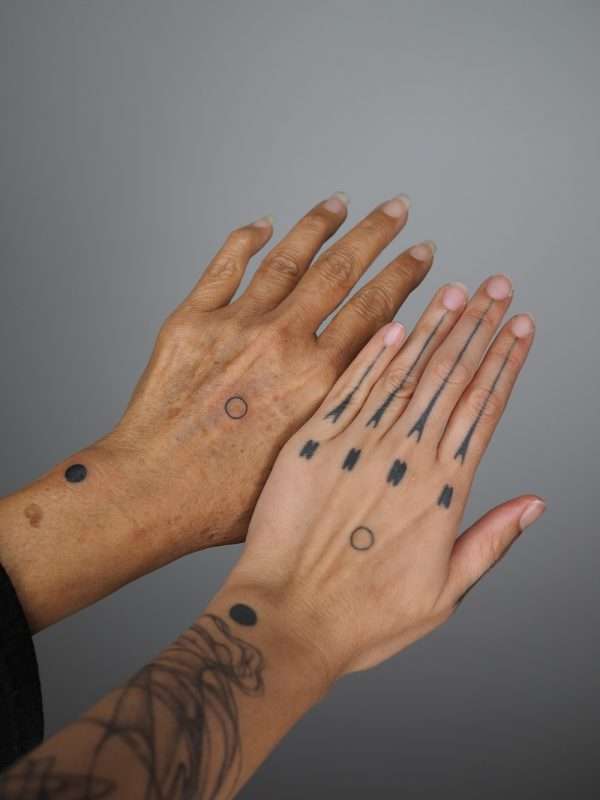
So when I first learned about hajichi, Okinawa’s traditional hand tattoos worn for centuries by Uchinaanchu (Okinawan people), I felt a recognition of something far deeper than my own discomfort. These were not just personal choices but inheritances: tattoos marking a woman’s milestones, her accomplishments, her pride, rooted in a tradition far more meaningful than my own.
I thought about what it must have felt like to have an entire culture’s worth of pride turned into shame. Because hajichi is both sisterhood and something deeply personal. It is the pride of a life, connecting Uchinaanchu women to each other and to themselves.
The History of Hajichi Tattoos in Okinawa
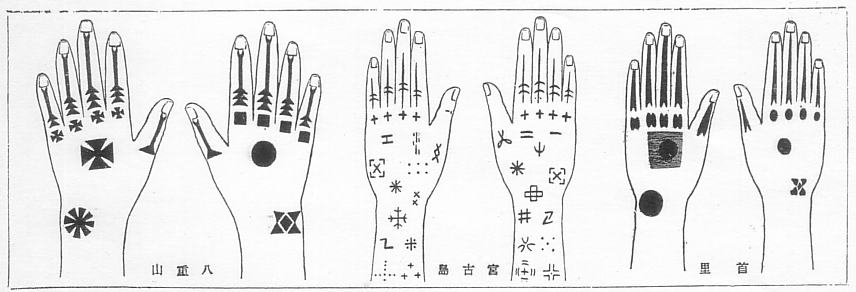
Hajichi lives in relationships, passed woman to woman, island to island, community to community, with no centralized design and no single meaning. Symbols and placements varied by region, by family and by generation. Sakula Costar, who is half New Zealander and Okinawan and based on the Main Island, has been asking elders about it for almost a decade, finding that even the elders give different answers.
She wears hajichi on her hands, small, precise marks drawn from the natural world: a circle of shells found on Okinawa’s shorelines, a moon and a constellation that appears in both Ryukyuan* and Maori mythology, a detail she finds significant.
*Ryukyuan refers to the indigenous people and culture of the Okinawan archipelago and surrounding islands, predating the annexation of the Ryukyu Kingdom by Japan in 1879. The terms Ryukyuan and Okinawan are often used interchangeably today.
“Each island, even each community, can have completely different markings, sizes, shapes and placements,” she says. “But the truth of all the origins isn’t really the point.” It was pride in being a woman, she explains, fashionable, communal and a way of marking life’s passages together.
But it hasn’t always been simple to wear. That experience Costar relayed was systematically interrupted. Banned by the Meiji government in 1899 as part of a broader campaign to assimilate Okinawa into the Japanese state, women were fined and arrested for their tattoos.
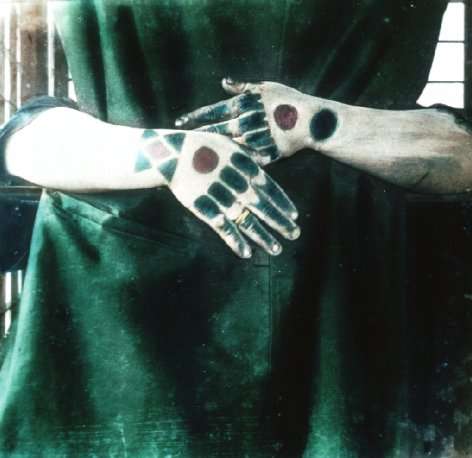
“Anything to do with the old ways was banned and stigmatized. People were made to feel ashamed. They started hiding their hands, tucking them behind their back in photos, and the stories and significance were not passed down to the next generation.” The silence that followed was recent and swift. “It’s actually scary how fast things can fade,” Costar says.
Culture Transcends Time and Space
On the other side of the Pacific, in Long Beach, California, Ava Kvapil was finding her way back to something she had never been handed. Kvapil is yonsei, fourth-generation Uchinaanchu, and grew up without any sense of an Okinawan community outside her own family. Her third-generation mother, raised in Honolulu, had never heard of hajichi. She learned about it online, through a diaspora community of Ryukyuan people pooling resources and stories.
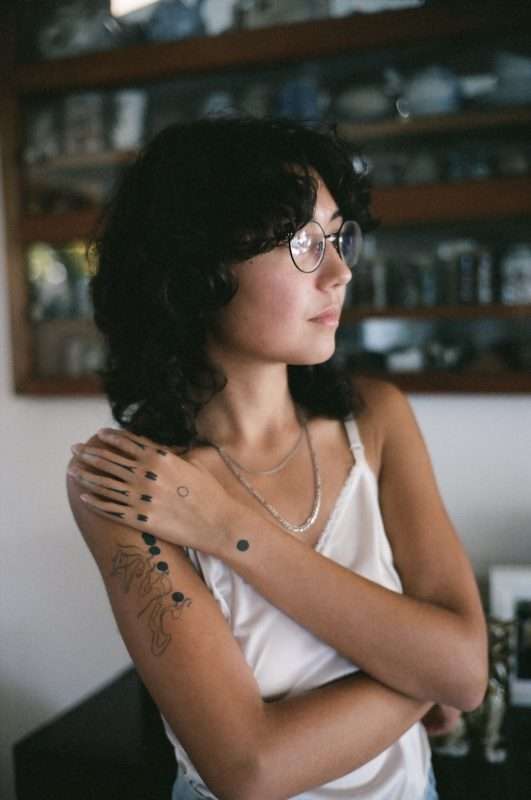
When the pandemic began, Kvapil picked up handpoke tattooing out of curiosity. The same technique, it turned out, as traditional hajichi. “I guess you could say it came about out of community necessity that I began tattooing hajichi for folks,” she says, her second cousin reaching out first, then others.
With few practitioners available, the first hajichi she ever received, she gave to herself. Her entire left hand is in the rare style of Sui royalty, finer and more delicate than typical markings, historically worn by women of the Shuri royal family.
The choice was inspired by a family story of their royal ancestor who was disowned for marrying a commoner. “I’m not sure of the validity of this story, or if it’s just a myth,” she says. “But it did spark my interest in this variant.”
What the Hajichi Session Carries
When someone comes to Kvapil for a hajichi, the first question she asks is about their family’s roots, which island, which town. “Having hajichi was said to help one meet their ancestors in the afterlife. I think it’s important to correlate it to where your family lived.”
From there, the session becomes something closer to an exchange than a transaction. “Generally, we end up sharing a lot of our experiences growing up and how we navigated our identities. The tattooing session is a way to compare notes on what it means to be Ryukyuan for each of us.”
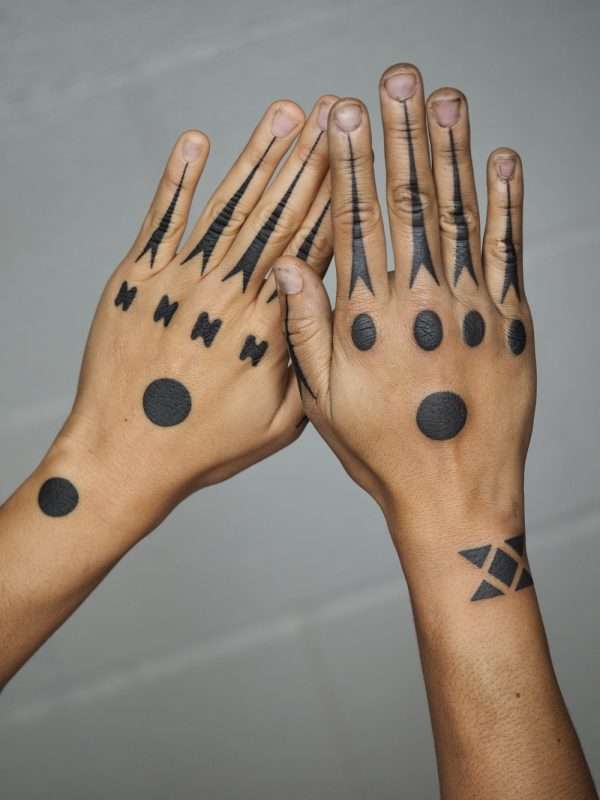
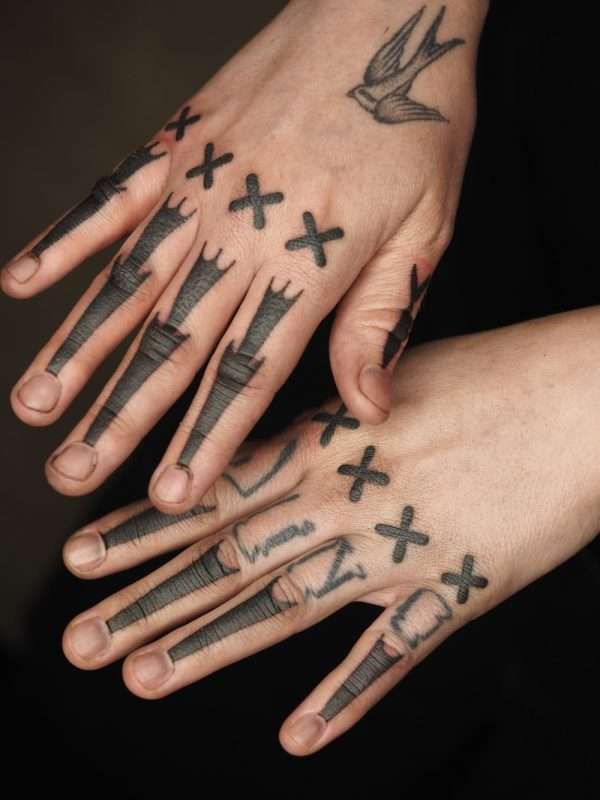
After receiving her own hajichi, something shifted. “It made me feel more visibly Okinawan, a physical identifier of my heritage.” That visibility is affirming and occasionally exhausting in equal measure, she says, but she has relaxed into the responsibility.
Now, hajichi has become a way for Uchinaanchu to recognize each other. Clients strike up conversations with strangers on the street because they spotted the marks on their hands. Kvapil’s mother, who knew nothing of hajichi until her own children introduced it to her, now has one of her own, tattooed by her daughter.
In Okinawa, Costar watches the same momentum build. Elders stop her on the street. “I haven’t seen that for a long time,” they tell her, then they start talking.
Thicker Than Ink
Costar is a bridge. Raised speaking both English and Japanese, she moves between worldviews naturally, questioning dominant narratives and her own assumptions with equal curiosity. She is wary of the so-called “purist” mentality that would close the tradition off to people like her, like Kvapil, like the growing mixed and diaspora community helping to carry the tradition forward.

“There are going to be a lot more people like me in the future who are half this and half that, and if that means they’re no longer allowed to participate in their culture, then it’s going to be the death of culture and the death of tradition.” Anything stagnant and rigid, she says, is going to break.
What I see, having spoken with these two women, is the very opposite of loss. I see hajichi having evolved to carry a new generation while simultaneously returning to what it was always meant to be: women connecting, sharing and building community across distance and difference.
The hands are talking again, and this time no one is hiding them.
You can learn more about Ava Kvapil’s tattoo practice on her website chiruutattuu.com or Instagram at @chiruu_tattuu.
Sakula Costar regularly posts about Hajichi and Okinawan culture and history on Instagram at @sakulacostar.
You might also like our interview with Moeko Heshiki, a Hajichi hand tattoo artist based in Okinawa.
Interested in the broader revival of indigenous tattooing in Japan? Read our feature on the revival of Ainu and Jomon tribal tattoos and the artists bringing them back.