Cycling Japan: Fukuoka to Tokyo by Bike in One Month
One rider's journey from Fukuoka to Tokyo in one month
“So, when did you last ride a bike?”
I was hopeful my self-deprecating friend was exaggerating when she told me it had been a while.
“When I was 10,” she replied.
The nervous laughter began as our night bus sped down the motorway toward Kyushu, Japan’s southernmost main island, and the starting point for our one-month trip cycling Japan from Fukuoka back to Tokyo. Issues that had seemed like minor details in the planning stages had started to rear their ugly heads. But with our own less-than-fresh heads banging from birthday celebrations in Tokyo the night before, we felt more than ready to live the simple life for the next month: cycling in the day and wild camping at night.
Buying a Touring Bike in Fukuoka
The challenge commenced as soon as we set foot in Fukuoka. Arriving with nothing but the clothes on our backs and a good dose of enthusiasm, we headed straight out to buy bikes. The first stop was Sai Sai, a secondhand bike shop. I made a decisive purchase of a Ferrari cross bike for just ¥15,000. Little did we know, buying bikes was the easy part. Panniers (bags or boxes attached to the sides of a touring bike) are much harder to come by, as are the racks to fit them on. That task took us three days.
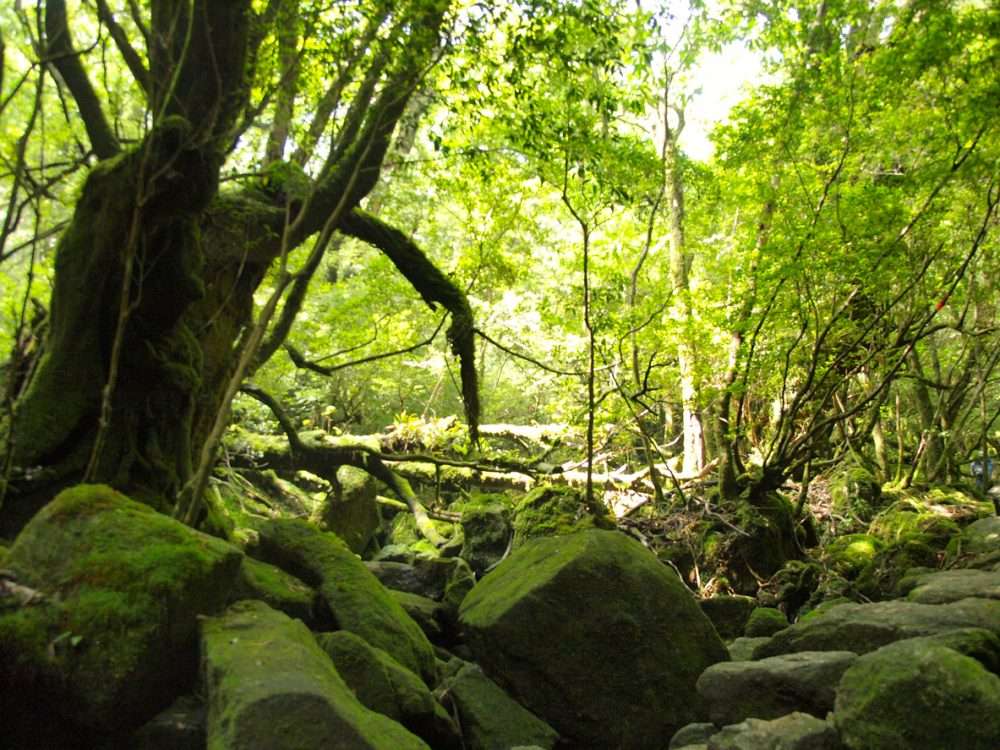
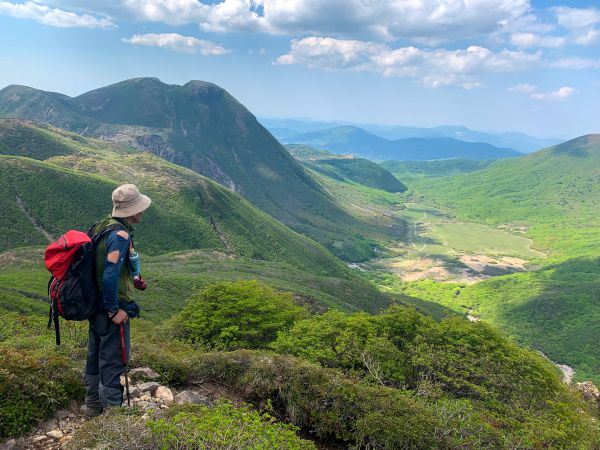
Impatient to start the much-anticipated adventure, we waved goodbye to our couchsurfing host and set off. Pedaling our way out of Fukuoka, we got our first taste of what we would later discover to be the majority of roads through Japan. Valleys cut out against a backdrop of lush mountains, lined with a never-ending stream of eating establishments interspersed with rice paddies.
The euphoria of the first kilometers faded only slightly when trusty Google Maps directed us to a notably less horizontal road up the magnificent mountains we had admired from afar. Our beloved secondhand bikes, it transpired, were lacking on the gear front. It made me think there’s a reason Ferrari is known for making cars and not bikes.
Love Hotels and Lessons in Wild Camping
With the first hill struggle over and the sun teetering on the horizon, we welcomed the deserted onsen that greeted us at the top. After a quick soak, we settled on a bench outside. Smugly munching onigiri, debriefing on the success of our first day and questioning whether we would ever sit comfortably again. The smiles vanished, however, when we went to set up camp and discovered that the nifty pop-up tent we’d bagged for a bargain price at Don Quijote was, in fact, a small, open beach shade.
Begrudgingly returning our sore behinds to our bike seats, we set off into the night feeling like amateurs. The first sign of life on the dark countryside roads was a police station. With presumably very little crime to solve in Iizuka’s little mountain towns, seven excited policemen gathered around us to advise on the best place to stay for the night. The general consensus: love hotels never disappoint. Spending our first night in a huge bed with a bathroom bigger than most Tokyo apartments, we most certainly weren’t.
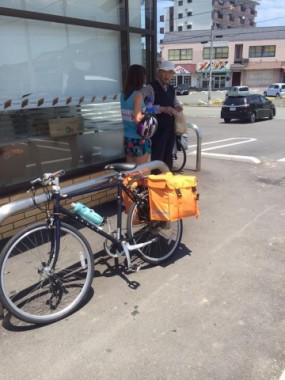
In the following days, we became accustomed to the wild camping lifestyle (in a real tent this time), setting up in parks or next to lakes. Or, when the choices were limited, on any grassy patch we could find at the side of the road. 7-Elevens were our savior on the days that cycling brought little joy. The free Wi-Fi, ATMs that accept international cards and endless snacks gave us the boost we needed to meet our daily distance targets. Frequent breaks at the overly convenient convenience stores aside, we settled into a relatively efficient rhythm and routine. And I couldn’t help thinking it was something I had never quite mastered in everyday city life.
Riding the Shimanami Kaido
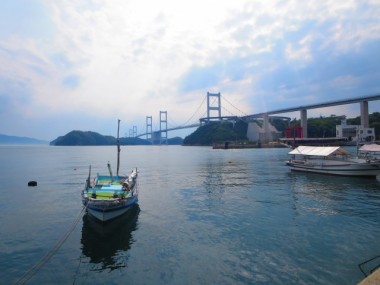
A week into our trip we were gliding along the flat coastal roads of west Shikoku, enjoying the isolated beaches. On reaching the island’s north coast, we found ourselves on an established cycling route: the Shimanami Kaido. The celebrated 70-kilometer expressway joins Shikoku to Honshu, hopping over six islands in a series of spectacular suspension bridges.
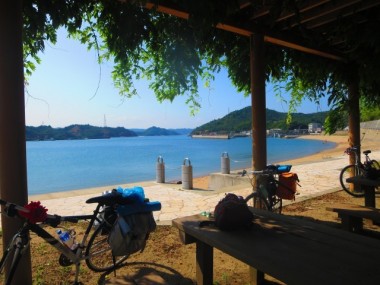
Bearing in mind that we had chosen to cycle Japan in June, in the midst of rainy season, we had been surprisingly lucky up until now. Looking around at the pros in their expensive gear, I felt a sense of wisdom and superiority. My cheap silver panniers bashing against the sides of my bike. We naively assumed the route would be an easy one. Our hope faded fast as the rain began to pelt down, filling our muddy sneakers with puddles and obscuring the allegedly breathtaking views of the bridges I had spent years dreaming of seeing.
Eighty arduous kilometers and six steep bridge climbs later, we were back on Honshu in the small seaside town of Onomichi. With little motivation to return to the rainy road the next morning, we popped out to look for breakfast. We stumbled on a cyclist’s paradise: Onomichi U2. The chic exterior tempted us into a rustic, open-plan space that houses a bike shop, bakery, cafe, restaurant, clothes shop and hotel. While the bike shop gave us a free service, we had no problem spending a long, lazy morning carb-loading on baked goods. Our only regret was not spotting the complex’s Hotel Cycle the night before. Its cozy rooms not only offer views over the channel, but come kitted out with wall mounts for hanging your bikes. It would have been the perfect solution for the daily separation anxiety we felt parking ours outside at night.
Sunrise Over Mount Fuji at Lake Yamanaka
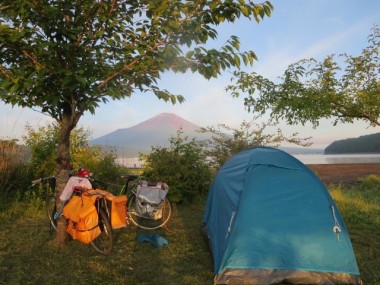
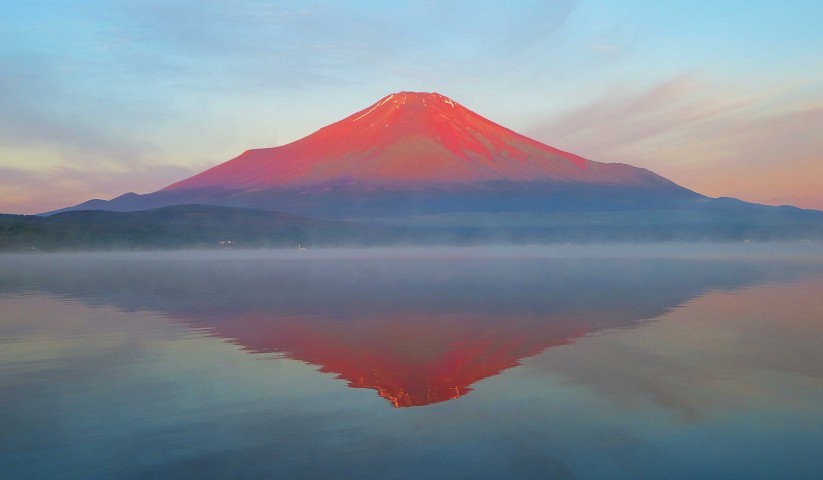
Just days from our final destination, we took a detour up to Lake Yamanaka, the largest of the Fuji Five Lakes. The day started with a hill and ended with a mountain, growing more strenuous as it went on. Once we finally made it to the lakeside, we were exhausted and ready to set up camp as soon as possible. We were told that an early rise was the best way to spot the nation’s beloved mountain. It was currently hiding behind a thick bed of clouds.
The screeching of our 4am alarm interrupted our disturbed dreams. I stumbled out of the tent and was hit by my first ever close-up view of Mount Fuji. An immense creation of nature, the mountain glowed pink in the rising sun, reflected in the calm waters of the lake. Crouched at the water’s edge wrapped in my sleeping bag, I looked on in absolute awe.
I had always found it ironic to call an outdoor life “the simple life.” But as I pedaled those last kilometers into Tokyo, sleep-deprived and aching all over, my thoughts truly felt cleansed. I would be lying if I said that during that month cycling Japan I didn’t worry about everyday life, or check my social media, or miss the comfort of a real bed. But with my thoughts focused predominantly on moving, my mind returned to a simpler state. I couldn’t help feeling it was thanks to the simplicity of overcoming the mountains.
This article was originally published on May 29, 2017 and updated on June 11, 2026 by the Metropolis Editorial Team.
For more cycling adventures, check out: Beginner’s Guide to Bikepacking in Japan