The Asadora Effect
Fifteen minutes to shape a nation
Every morning across Japan, a quiet ritual unfolds in living rooms, cafés and reception waiting rooms. For fifteen minutes, an asadora (contraction of asa, “morning,” and dora for “drama”), NHK’s long-running morning drama series, broadcasts. And it has been doing so almost continuously since 1961.
Officially known as Renzoku Terebi Shosetsu (“serial TV novels”), these should not be confused with taiga drama, NHK’s large-scale historical epics broadcast in prime time on Sunday evenings. Whereas taiga focuses on political power, famous historical figures and grand narrative arcs, asadora prioritizes intimacy, everyday life and emotional continuity.
Modest in length but expansive in scope, they have woven themselves into the rhythms of the real world’s daily life with remarkable persistence. More than a television format, the asadora has evolved into a shared emotional language that reflects how Japan views itself, remembers its past, and imagines perseverance in the face of change.
A Simple Format, Expansive Lives
The structure of an asadora is deceptively simple. Broadcast on weekday mornings, each episode runs just fifteen minutes (with earlier series airing Monday to Saturday). Yet within this narrow frame, asadora unfold entire life stories, most often centering on a female heroine navigating hardship, ambition, family duty and personal growth.
This choice is dictated as much by social context as by narrative strategy. When the format was established in the early 1960s, the morning broadcast slot primarily reached women at home, particularly housewives, who were beginning their day with chores, childcare, and meal preparation. Positioning a woman at the center of the story allowed viewers to see reflections of their own lives and aspirations on screen, and over time, this convention evolved beyond simple audience targeting.
Real historical figures frequently inspire these protagonists, though their stories are often fictionalized for scripts. Moving through eras shaped by war, economic transformation or shifting social norms, they anchor national history in intimate, everyday experience. The heroines are relatable presences (daughters, sisters, workers) whose struggles mirror those of the audience.
Thousands of candidates audition for each lead character, and successfully landing a new asadora role is a career-launching moment for the individual. This is also a cultural milestone, as the lead character embodies the values of reliability, emotional sincerity, and social inclusiveness that NHK represents to the public—qualities that are intended to resonate with all generations.
Evolution and Enduring Appeal
Over the decades, the genre has evolved into a broader exploration of social roles and identities.
Historically, asadora also functioned as a launching pad for new talent. Unknown actresses were selected through nationwide auditions, and their performances became deeply familiar to millions of viewers over the course of six months. While this remains true, recent productions increasingly mix emerging performers with established actors, lending both stability and star power to the cast.
The audience itself has likewise diversified. While older viewers remain a core constituency, asadora now attract multigenerational audiences, including working adults and younger viewers who watch via rebroadcasts or streaming, often as part of a family routine.
Few examples illustrate this enduring appeal better than Oshin (1983-84), a year-long phenomenon. Spanning nearly seven decades, the series followed its heroine from childhood poverty in rural Yamagata through years of labor, marriage, loss, and survival amid war and economic upheaval. Oshin’s life was marked by relentless repetition: hunger, servitude, physical exhaustion, and emotional restraint. This portrayal fundamentally reshaped how the concept of endurance (gaman) was understood on television, with Oshin presenting hardship as something lived daily through domestic work and quiet sacrifice.
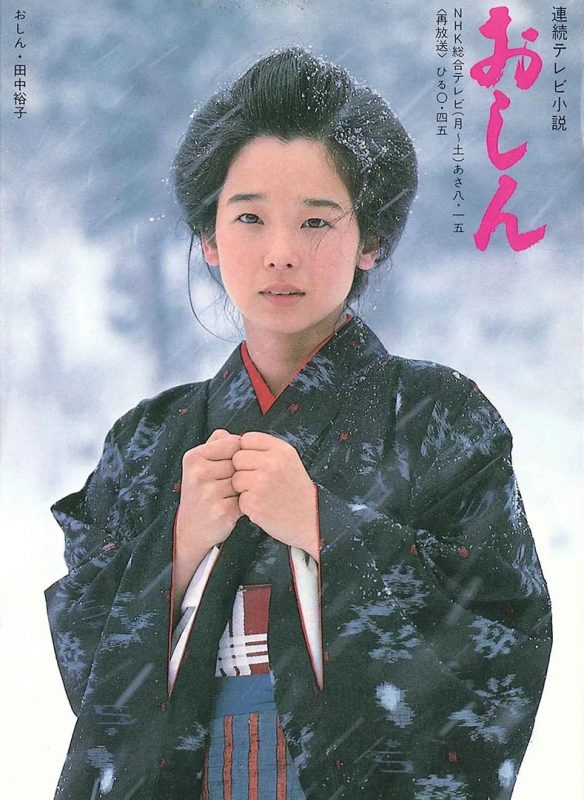
The impact was immediate and far-reaching. Ratings reached unprecedented levels, baby girls were named after the heroine, and the name “Oshin” entered everyday language as shorthand for tireless perseverance. Expressions such as “Oshin no yō na hito” (someone like Oshin) began appearing in newspapers and workplaces to describe overworked employees or single mothers.
The series also marked a turning point in realism with unusual directness for early 1980s television, influencing later asadora and dramas to treat poverty and labor with greater emotional and physical specificity.
A Daily Rhythm
If asadora continue to define Japan’s emotional landscape, it is because they function less as a television program and more as a shared habit. In an era dominated by streaming and binge-watching, the very “inconvenience” of the asadora—fifteen minutes, once a day, at a fixed time—has, almost ironically, become its greatest strength.
The series marks the start of the morning, setting an emotional tone before work, school or housework begins. This habitual viewing has proven remarkably resilient. While overall drama ratings have declined, asadora experienced a resurgence in the early 2010s with Gegege no Nyobo, followed by major successes such as Ama-chan and Asa ga Kita.
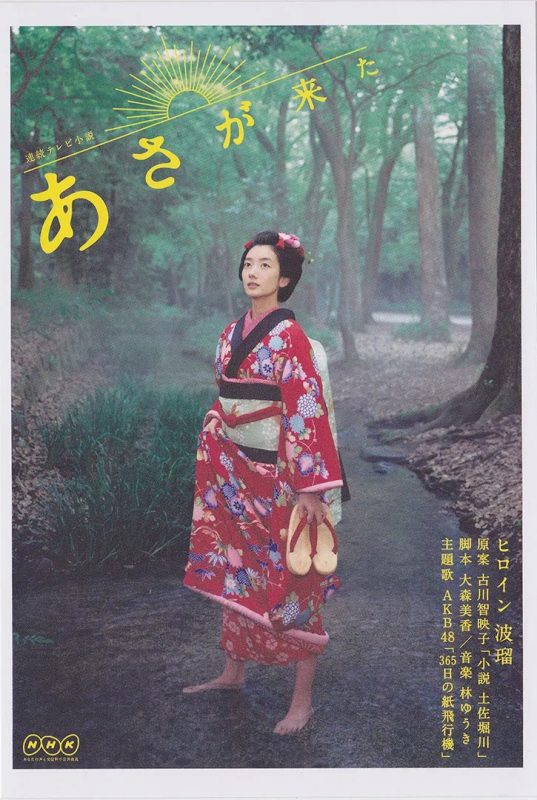
Surveys by NHK’s Broadcasting Culture Research Institute show that more than half of respondents have watched asadora, with many becoming long-term, repeat viewers. What sustains this loyalty is continuity: the comfort of “meeting the same people every day,” even if only briefly.
People Before Plot
Rather than relying on extraordinary heroes or high-stakes twists, asadora invites viewers to stay with characters whose lives unfold through modest, familiar challenges. The dramas unfold at a pace that allows audiences to savor small gestures, conversations and emotional shifts.
Compared to the sharper conflicts and accelerated pacing common in many U.S. drama series, asadora favor subtlety, reflecting a cultural sensitivity wherein meaning is often conveyed through restraint rather than declaration.
The attachment formed is not only to the characters, but to the act of watching itself. The term “Ama-loss,” coined after Ama-chan ended, captured a collective sense of disorientation: mornings suddenly felt incomplete.
Asadora in a Global and Contemporary Context
Today, asadora continue to reflect Japan’s contemporary identity. Their continued relevance lies in nostalgia and national tradition, but also in their ability to offer emotional continuity in a fragmented world. As these series travel abroad, they resonate precisely because they offer an alternative rhythm of storytelling: one that values patience, attentiveness, and the quiet dignity of ordinary lives.
This article was originally published in Metropolis Magazine, “Drama,” Spring 2026. Read the full issue here.