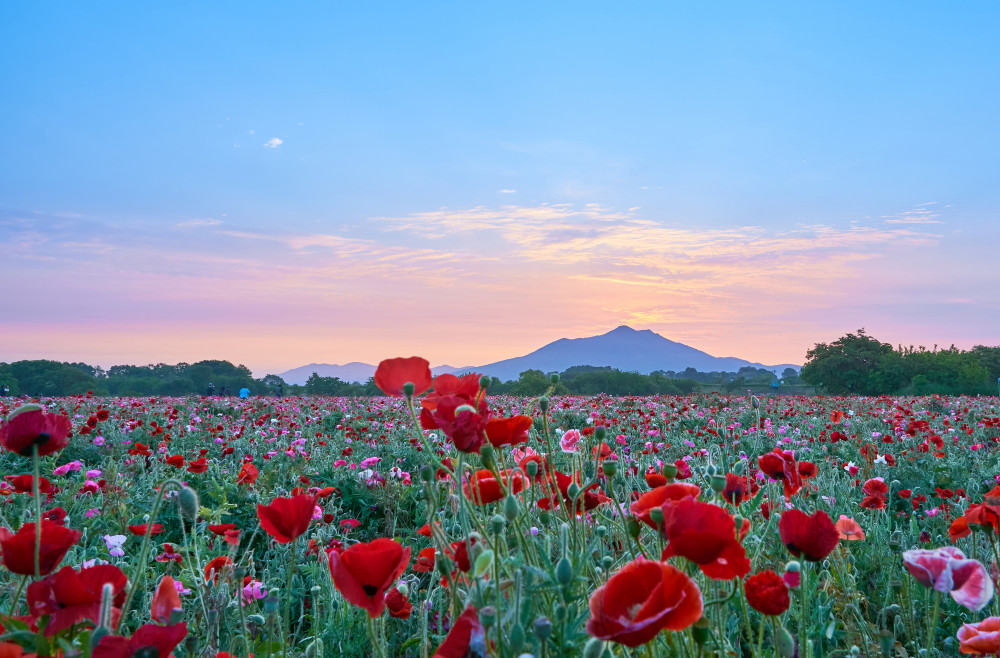
Best Parks for Seasonal Flowers in and Around Tokyo 2026
It's hydrangea season! Tokyo in bloom
Few countries celebrate the changing seasons quite like Japan, and nowhere is that more visible than in Tokyo’s parks and gardens. Each season brings something different — and over centuries, gardeners have shaped these spaces to make the most of every shift in color, light, and bloom.
While most gardens offer something year-round, many are best known for one season in particular. Here are some of the most beautiful parks in and around Tokyo, organized by when they shine brightest.
Tokyo in Bloom: Parks in the City
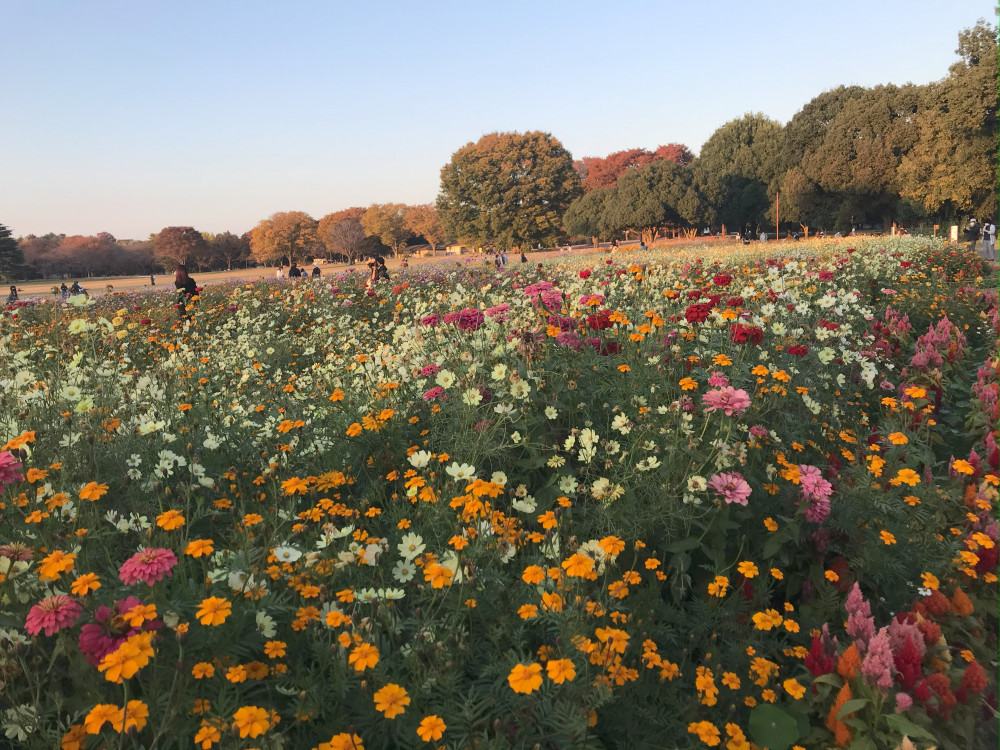
Spring: Showa Memorial Park (昭和記念公園, Showa Kinen Koen)
Offering a little respite after the crazy crowds of cherry blossom season are the spring flowers of Showa Memorial Park, about an hour out of central Tokyo. There is almost always something blooming throughout the year. The tulips in late April and poppies in late May are particularly gorgeous. Autumn offers stunning yellow ginkgo leaves, baby-blue nemophila in April, and rambling wildflowers in early summer.
Hours: 9:30am — 5pm (open until 6pm from April 1 — September 30 on weekends and holidays)
Address: 3173 Midoricho, Tachikawa
Price:
Adults: ¥450
Adults over 65: ¥210
Junior high school students and younger: Free
Nearest Station: Approximately 8min from Tachikawa Kita Station Park Exit
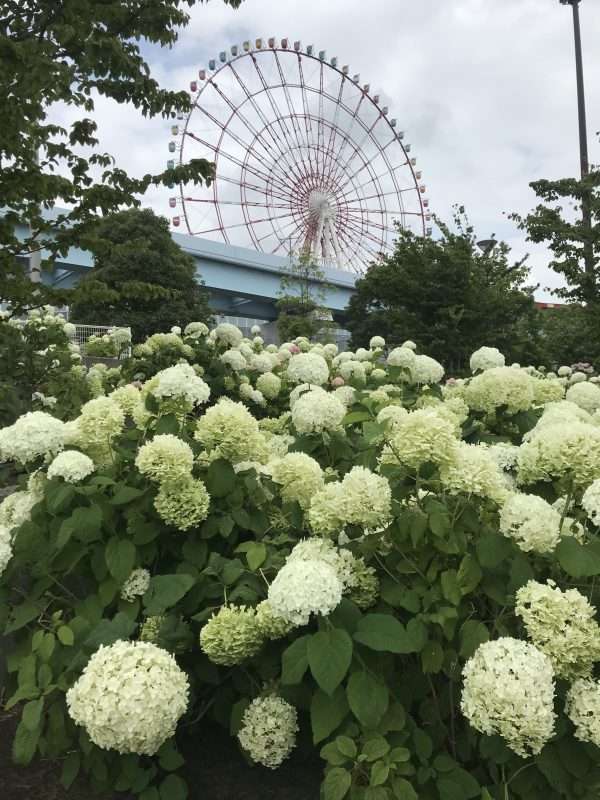
June: Hydrangea Season at Deai Bridge & the Valley of Living Things
Tucked near the Teleport Station intersection, the Annabelle Stairs at Deai Bridge come alive each hydrangea season with cascades of brilliantly white “Annabelle” blooms lining either side of the steps. The climb itself becomes part of the experience — at the top, a special photo spot has been set up to capture the flowers framing the view below. The area also hosts a craft marche.
A short distance away in the Valley of Living Things, the Endless Summer Path offers a completely different palette. Here, the vivid blue “Endless Summer” hydrangeas line the walkway in deep, saturated tones that contrast beautifully with the surrounding greenery. The variety is known for its long blooming period, so visitors often catch it in peak color well into the season.
Both spots are worth visiting in a single trip — the white Annabelles and the blue Endless Summers complement each other nicely, and the walk between them passes through some of the most scenic stretches of the area.
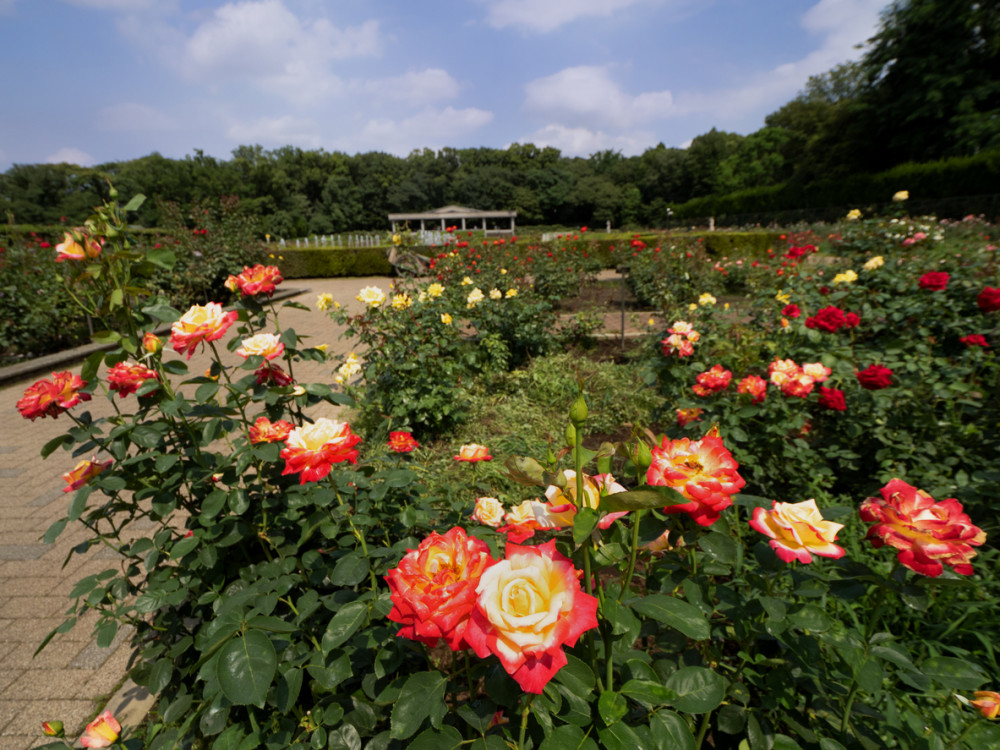
Summer: Jindai Botanical Gardens (神代植物公園, Jindai Shokubutsu Kōen)
Tucked into the western suburbs of Tokyo, the Jindai Botanical Gardens (神代植物公園) are home to one of Japan’s largest rose collections — around 5,200 roses in every imaginable species, second in scale only to Chiba’s Keisei Rose Garden. Roses bloom twice a year here: a generous flush in mid-to-late May, and a second, more delicate bloom in mid-October. Both seasons are celebrated with a rose festival featuring guided tours and seasonal events.
Hours: 9:30am — 5pm (closed Mondays)
Address: 5-31-10 Jindaiji Motomachi, Chofu-shi
Price:
Adults: ¥500
Adults over 65: ¥210
Junior high school students: ¥200
Junior high school students who live or go to school in Tokyo and younger: Free
Nearest Station: 10min walk from Jindaiji Bus Stop
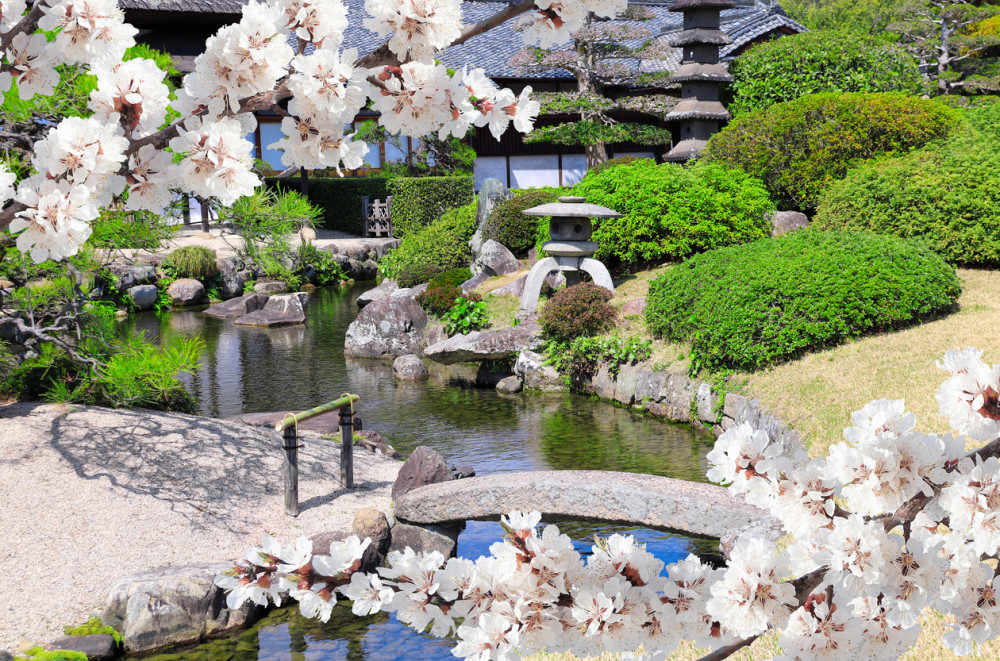
Autumn: Koishikawa Korakuen Garden (小石川後楽園, Koishikawa Korakuen)
Closer to the city center, Koishikawa Korakuen is one of Tokyo’s oldest surviving gardens — a quiet, walled retreat hidden in the shadow of Tokyo Dome. Built in the early Edo period, it was designed to recreate famous landscapes from across Japan and China in miniature: a stone bridge modeled on Kyoto’s Tōgetsukyō, a tiny replica of Mount Lu, a wooded path standing in for the Kiso road. Autumn is when it comes into its own. From mid-November through early December, the maples turn deep crimson and the ginkgo trees flare bright yellow, reflected in the central pond — a slow, painterly version of autumn you won’t get in the busier parks.
Hours: 9am – 5pm
Address: a-6-6 Koraku, Bunkyo-ku
Price:
Adults: ¥300
Adults over 65: ¥150
Junior high school students who live or go to school in Tokyo and younger: Free
Nearest Station: 3min walk from Toei Oedo Line “Iidabashi” (E06) C3 exit
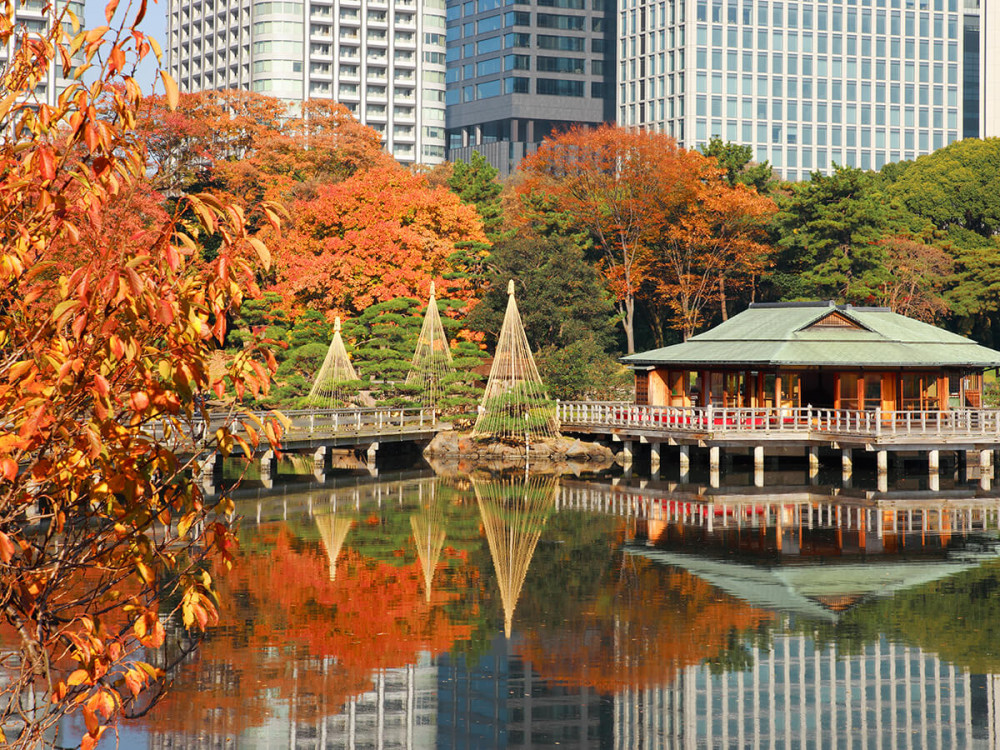
Winter: Hamarikyu Gardens (浜離宮恩賜庭園, Hamarikyu Onshi Tei-en)
Long before the cherry blossoms arrive, Tokyo’s winter is quietly lit up by plum blossoms (ume), which bloom from mid-February through early March. They look a lot like cherry blossoms at first glance, but the resemblance ends there — ume flowers are richer in color, ranging from deep crimson to soft pink to crisp white, and carry a sweet, almost spiced fragrance that sakura don’t have. There are bigger, more famous plum gardens further out, but this spot is the easiest way to catch them without leaving the city — and if your timing is right, you’ll see them alongside the first yellow nanohana (rapeseed flowers) of the year, a combination that feels like the first real glimpse of spring.
Hours: 9am – 5pm
Address: 1-1 Hama-rikyo Garden, Chuo-ku
Price:
Adults: ¥300
Adults over 65: ¥150
Junior high school students who live or go to school in Tokyo and younger: Free
Nearest Station: 5min walk from Shiodome (Exit 10) on the Toei Oedo Line
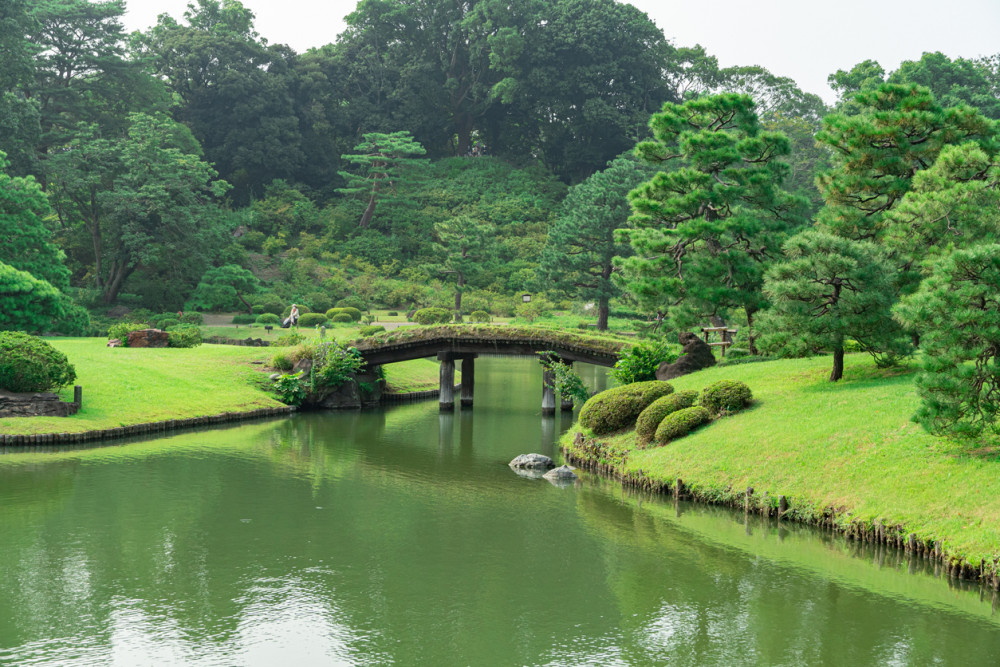
Year-round: Rikugien Gardens (六義園, Rikugien)
Rikugien Gardens is one of Tokyo’s most refined Edo-period gardens, built around an unusual concept: 88 miniature landscapes, each recreating a scene from classical Japanese and Chinese poetry. Wandering the paths feels like walking through a literary anthology in three dimensions — small hills, ponds, and stone arrangements stand in for places that exist only in verse. The garden rewards visits in every season, with azaleas in late spring, weeping cherries in early April, fiery maples in late November, and plum blossoms in February, but the layout itself is the real draw — quietly intricate, and unlike anything else in the city.
Hours: 9am – 5pm
Address: 6-16-3 Honkomagome, Bunkyo-ku
Price:
Adults: ¥300
Adults over 65: ¥150
Junior high school students who live or go to school in Tokyo and younger
Nearest station: Tokyo Metro Namboku Line “Komagome” (N14)
Parks Near Tokyo
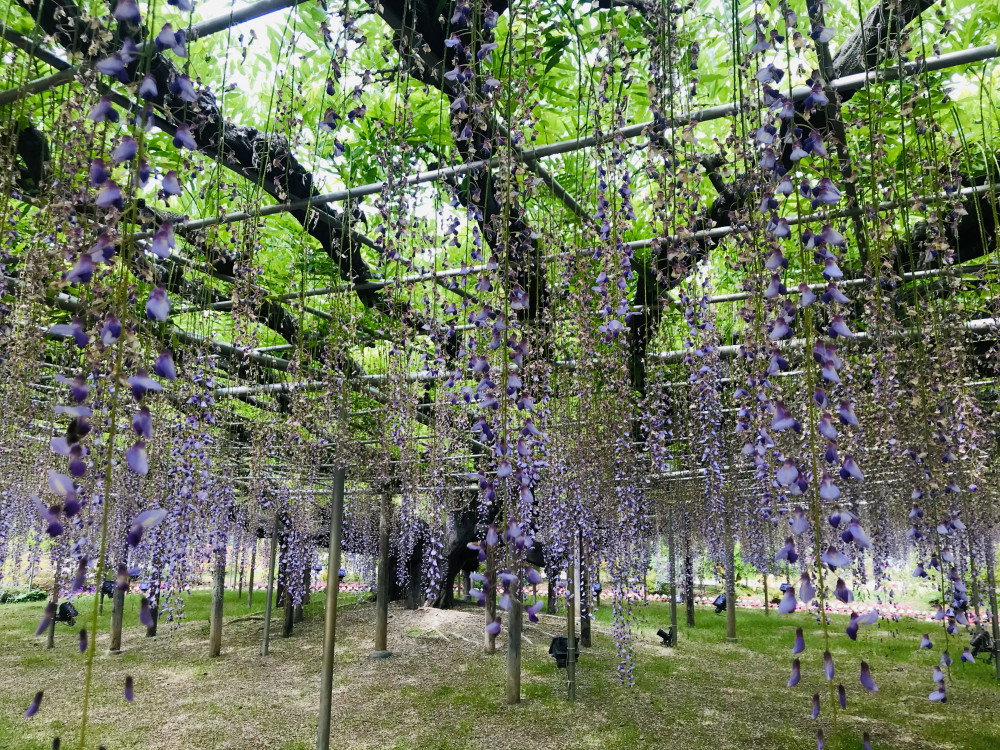
Spring: Ashikaga Flower Park (あしかがフラワーパーク, Ashikaga Flower Park)
Wisteria (fuji) is one of Japan’s most striking spring blooms — long, dripping curtains of flowers most famously in deep purple, but also white, pink, and pale yellow. The best place to see it within reach of Tokyo is Ashikaga Flower Park in Tochigi, about two hours north of the city. The park is home to over 350 wisteria trees, including a legendary 160-year-old “Great Wisteria” whose branches are trained across a sprawling overhead trellis, turning the area beneath it into a softly glowing canopy of purple. Peak bloom runs from late April through mid-May, coinciding with the park’s hugely popular Wisteria Festival — well worth the trip, but plan ahead, as it draws crowds from across Japan and overseas.
Hours: 10am – 5pm
Address: 607 Hasama Town, Ashikaga City, Tochigi Prefecture
Price: Admission fees vary depending on how the flower blooms: from ¥500 to ¥2,300
Nearest station: Ashikaga Flower Park station
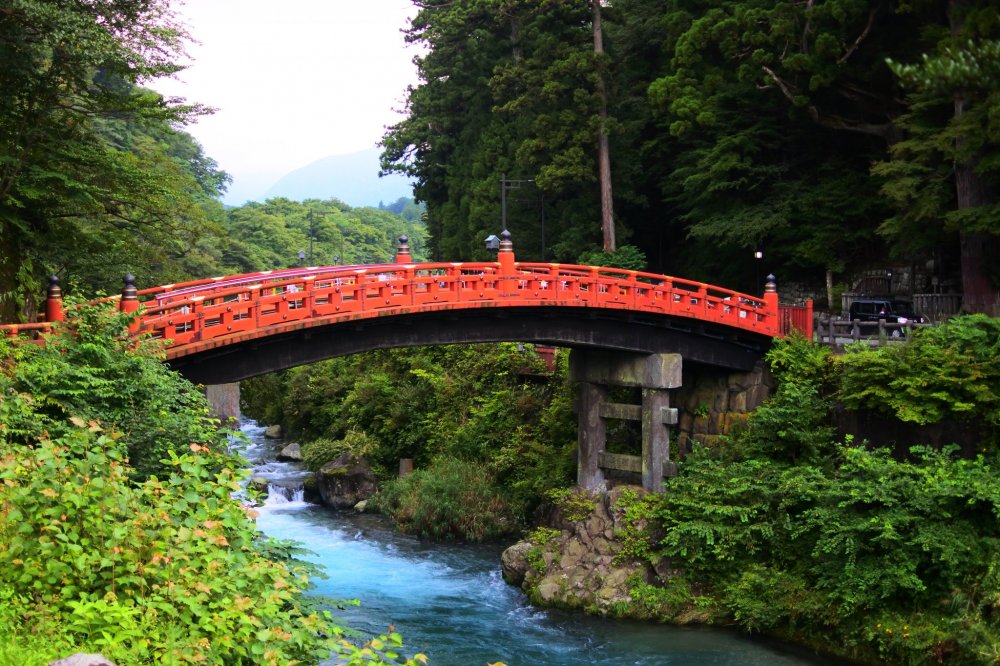
Autumn: Shinkyo Bridge and Nikko Toshogu (神橋, shinkyo) (日光東照宮, Nikko Toshogu)
A popular autumn day trip destination to visit from Tokyo is the small city of Nikko (read more in our travel article about Nikko). One of the main reasons for its popularity is its beautiful autumn colors alongside traditional Japanese architecture. The red Shinkyo Bridge pops against the vibrant autumn leaves, a calmness in the air fills the temple grounds of Nikko Toshogu. The peak foliage-viewing time is usually October.
Hours:
8:30am – 4:30pm (April to October)
9am – 4pm (November to March)
Price: ¥300
Address: Kamihatsuishimachi, Nikko, Tochigi
Nearest station: It can be accessed from JR or Tobu Nikko station by a bus which stops at Shinkyo bus stop (5 min, ¥220 one way) or in about 20-3min on foot.
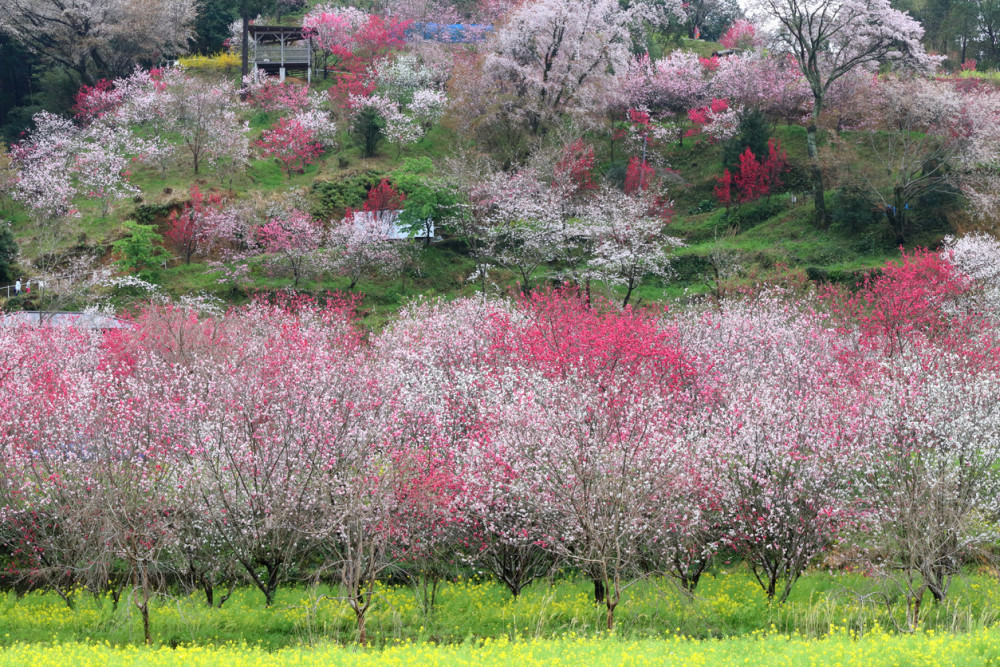
Winter: Kogesawa Plum Grove (木下沢梅林, Kogesawa Bairin)
Technically still within Tokyo’s borders, the Kogesawa Plum Grove (木下沢梅林) sits tucked into the mountains near Takao, about two hours from central Tokyo — far enough that it’s worth treating as a full day out rather than a quick stop. Because of the higher elevation, the plums here bloom a few weeks later than those in the city center, peaking through mid-to-late March. Around 1,400 plum trees in varying shades of white, soft pink, and deep rose blanket the hillside, and the setting — quiet, forested, and framed by mountains — makes it one of the prettiest first-bloom spots of the year, with far fewer crowds than the famous central Tokyo plum gardens.
Hours: 10am – 4pm
Price: Free
Address: 1288-3 Uratakaomachi, Hachioji, Tokyo
Nearest station: From JR Takao Station’s North Gate, take the Kobotoke-bound bus to Oshimo, then walk 7-min to the Grove.
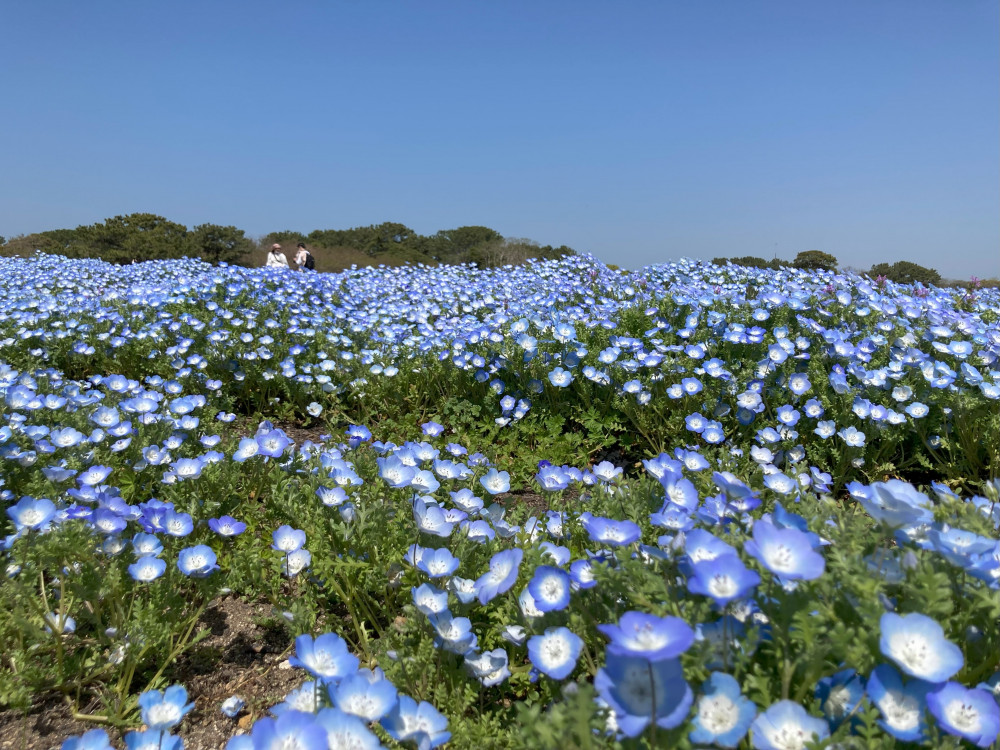
Year-round: Hitachi Seaside Park (国営ひたち海浜公園, Kokuei Hitachi Kaihin Kōen)
Hitachi Seaside Park has grown popular in recent years for its incredible hills of blue nemophila flowers, also known as baby blue eyes. The flowers usually bloom around the same time as Golden Week at the beginning of May. However, the 350-hectare park is also home to other plants year-round, such as the fuzzy pink koicha in autumn. Within the park, there are a lot of activities to keep you occupied, including bike rentals to explore the grounds.
Hours:
9:30am – 5pm (March 1–July 20, September 1–October 31)
From 9:30am – 6pm (July 21–August 31)
Starting from 9:30am – 4:30pm (November 1–February 28).a
Closed on Tuesdays (or the next weekday if Tuesday is a holiday), December 31, January 1 and from the day before the first Tuesday in February to the following Friday.
Address: 605-4 Onuma-aza, Mawatari, Hitachinaka, Ibaraki
Nearest station: Closest station is Katsuta Station, about 15min to the West Gate or 20min to the South Gate by bus from the East Exit (Bus Stop No. 2).
If you are already in the area enjoying Tokyo in bloom, you should visit the nearby Mito Hydrangea Festival in June: Hydrangea for a Gloomy Day.