Tokyo Summer Festivals & Fireworks Guide 2026
Here's the complete guide to Tokyo's summer festivals and fireworks in 2026.
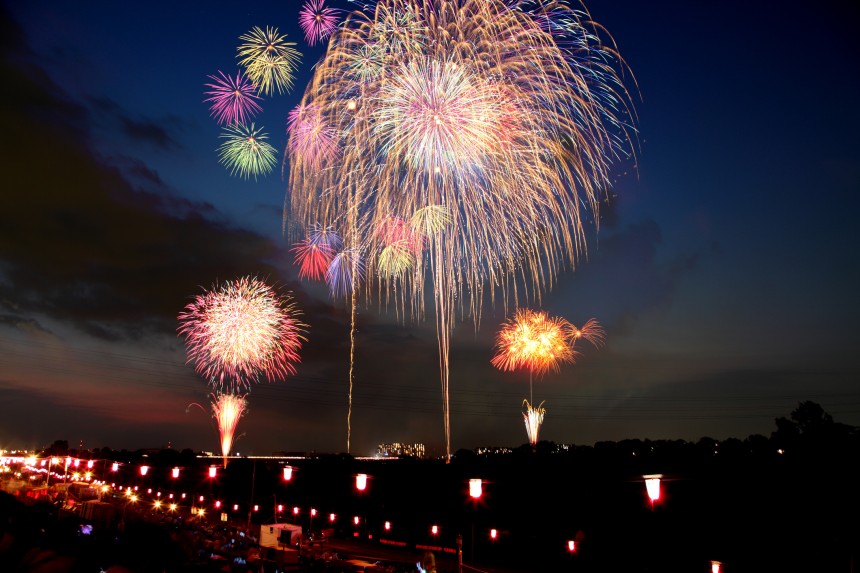
Tokyo’s matsuri (traditional festivals) and hanabi (fireworks) season technically starts each year with the Adachi Fireworks Festival, held in late May as an early-bird show along the Arakawa River. However, the core season, the one locals mean when they talk about “natsu matsuri,” runs from early-to-mid July through the end of August, peaking in the six-week stretch from late July into early August.
Around this time, the city is filled with paper lanterns, portable shrines, dance parades, river-side fireworks shows and people wearing yukata.
Here’s a comprehensive list of all the festivals that happen every year.
Note: Fireworks festivals might be cancelled in bad weather.
Upcoming Events
| Date | Festival | Location |
|---|---|---|
| Aug 8 19:30–20:30 | Jingu Gaien Fireworks Festival | Shinjuku/Minato-ku |
| Aug 12–16 Main procession Aug 16, starts ~7:30 a.m. | Fukagawa Hachiman Matsuri | Koto-ku |
| Aug 22–23 Evening (TBA) | Azabu-Juban Noryo Matsuri | Minato-ku |
| Aug 29–30 17:00–20:00 | Koenji Awa Odori | Suginami-ku |
| Aug 29 13:00–17:00/18:00 | Asakusa Samba Carnival | Taito-ku |
Full Events Calendar
July
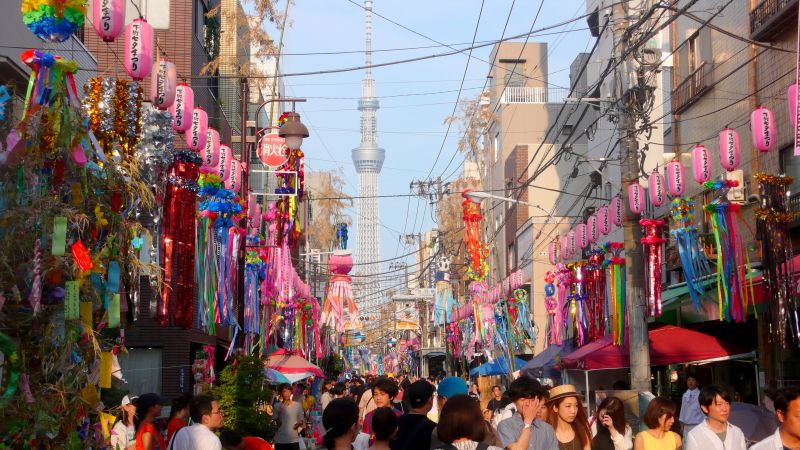
Shitamachi Tanabata Matsuri
- Date: July 3–7
- Parade and stage performances: July 4–5, 10:00–19:00
- Location: Kappabashi-dori, Taito-ku
- What it is: A traditional Tanabata (Star Festival) street event held every year along Kappabashi’s kitchenware-shop street. Colorful bamboo streamers and lanterns decorate the shopping arcade, with food stalls, folk performances and a parade.
Iriya Asagao Matsuri (Morning Glory Fair)
- Date: July 6–8, 5:00–23:00
- Location: Iriya Kishimojin (Shingen-ji Temple) and Kototoi-dori, Taito-ku
- What it is: Said to be Japan’s largest morning glory market, running since the Edo period. Around 120 nursery stalls sell potted asagao (morning glory) plants along the temple approach. It’s best seen at sunrise when the flowers are freshest, though the food stalls and crowds pick up later in the day.
Asakusa Hozuki-ichi (Ground Cherry Fair)
- Date: July 9–10, 9:00–22:00
- Location: Sensoji Temple, Asakusa, Taito-ku
- What it is: A centuries-old fair held at Tokyo’s most famous temple, selling potted hozuki (Chinese lantern/ground cherry) plants with their distinctive orange husks. Falls on the “46,000-day” visit date, when a single visit to Sensoji is said to carry the merit of 46,000 ordinary visits.
Mitama Matsuri
- Date: July 13–16, 6:00–21:30
- Location: Yasukuni Shrine, Kudanshita, Chiyoda-ku
- What it is: Tokyo’s grandest Obon-season event. Around 30,000 glowing paper lanterns line the pathway leading up to the shrine, alongside bon-odori dancing and a beautifully atmospheric night-time setting.
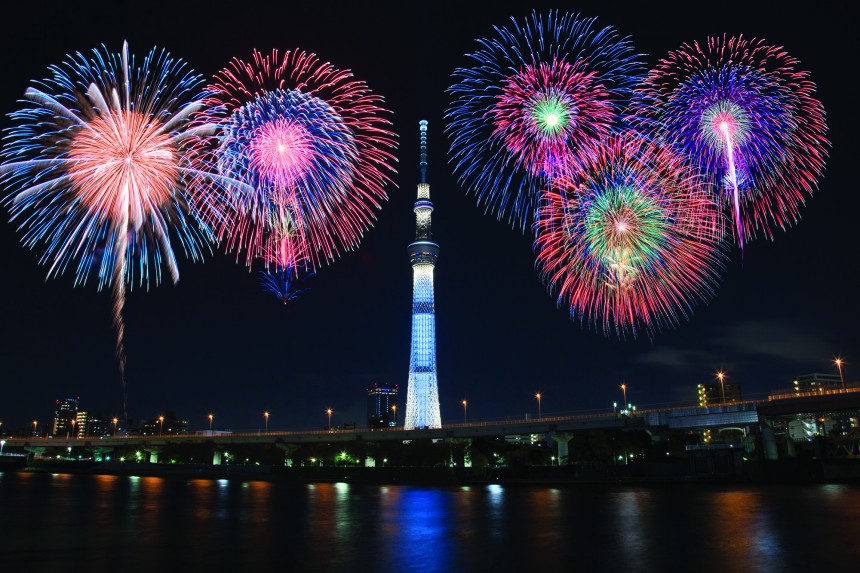
Sumida River Fireworks Festival
- Date: July 25, 19:00–20:30
- Location: Sumida River, between Asakusa and Mukojima, Taito-ku/Sumida-ku
- What it is: Dating back to the Edo period, this festival fires roughly 20,000 shells in 90 minutes from two launch sites near Asakusa. It’s the oldest and most famous fireworks display in the city, with Tokyo Skytree as a backdrop, drawing close to a million spectators. Free viewing along the riverbanks.
Katsushika Noryo Fireworks Festival
- Date: July 28, 19:20–20:30
- Location: Edogawa riverbed, Shibamata, Katsushika-ku
- What it is: This year’s show launched around 20,000 fireworks combined with a synchronized 1,300-drone light performance. A more local, less crowded alternative to Sumida, with the launch site unusually close to spectators.
Tsukiji Honganji Bon Odori
- Date: July 29 – August 1, 19:00–21:00 (18:00–20:30 on the final day, August 1)
- Location: Tsukiji Honganji Temple, Chuo-ku
- What it is: An international Bon Odori event, mixing traditional Japanese dance circles with world music. Newcomers are welcome to join the dance.
Kecha Matsuri
- Date: July 29 – August 2, 14:00–21:00 (hours vary by day and the festival opens and closes earliest on the final day)
- Location: Shinjuku Mitsui Building 55HIROBA, Nishi-Shinjuku, Shinjuku-ku
- What it is: An annual free festival organized by Yamashiro-gumi, a Japanese performing-arts group that researches and performs folk-music traditions from around the world. Staged among Shinjuku’s high-rises, the festival is built around a full performance of Balinese kecha (a ritual chant-and-dance), alongside Bulgarian and Georgian choral singing, Indonesian gamelan, Tohoku shishi-odori (deer dance), and a live performance of the group’s Symphonic Suite Akira.
August
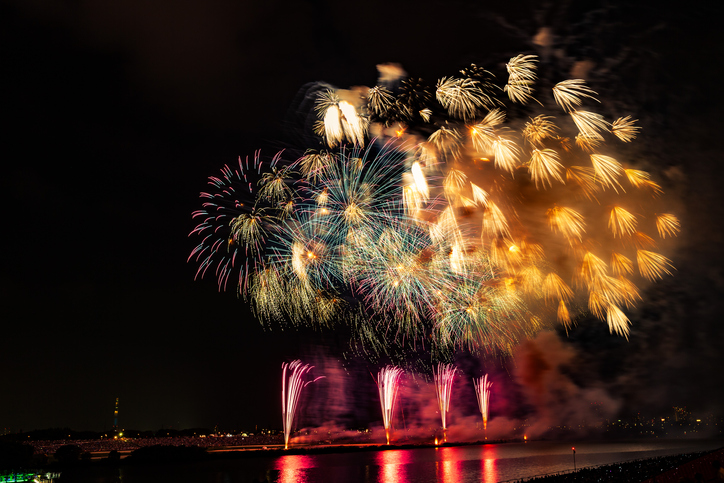
Yukata de Ginbura
- Date: August 1, 16:00–20:00
- Location: Ginza, Chuo-ku
- What it is: Held along the pedestrian-friendly Chuo-dori, around Ginza Six, Yukata de Ginbura (roughly translated to “Strolling Ginza in Yukata”) highlights include the Dai Ginza Bon Odori, the Ginza Famous Shops Stalls serving food from local businesses and the return of the Ginza Cool Breeze Project, where traditional water sprinkling (uchimizu) and ice pillar displays help cool the streets.
Edogawa Fireworks Festival
- Date: August 1, 19:15–20:20
- Location: Edogawa River, Edogawa-ku (Tokyo/Chiba border)
- What it is: Famous for firing roughly 1,000 shells in its first five minutes, one of the fastest, most intense openings of any Tokyo fireworks show. Launched simultaneously on the Tokyo and Chiba sides of the river.
Itabashi Fireworks Festival
- Date: August 1, 19:00–20:30
- Location: Arakawa River, Itabashi-ku
- What it is: A large-scale show on the Arakawa riverbank paired with the Toda-bashi festival across the water in Saitama, known for a giant shell and a roughly 300-meter “Niagara Falls” cascade effect.
Note: for 2026, the free viewing area has moved upstream to a new spot accessible from Takashimadaira Station. The area near the launch site by Hasune Station, previously free, is now a ¥2,000 paid seating zone. Advance tickets can be purchased online or at 7-eleven stores.
Jingu Gaien Fireworks Festival
- Date: August 8, 19:30–20:30 (if rain, date move to August 9)
- Location: Meiji Jingu Gaien, near Jingu Stadium and Chichibunomiya Rugby Stadium, Shinjuku/Minato-ku
- What it is: A fusion of fireworks and live music in the middle of the city, around 12,000 shells paired with live performances by Japanese artists.
Note: This is a fully ticketed event. Reserve ticket through the official website.
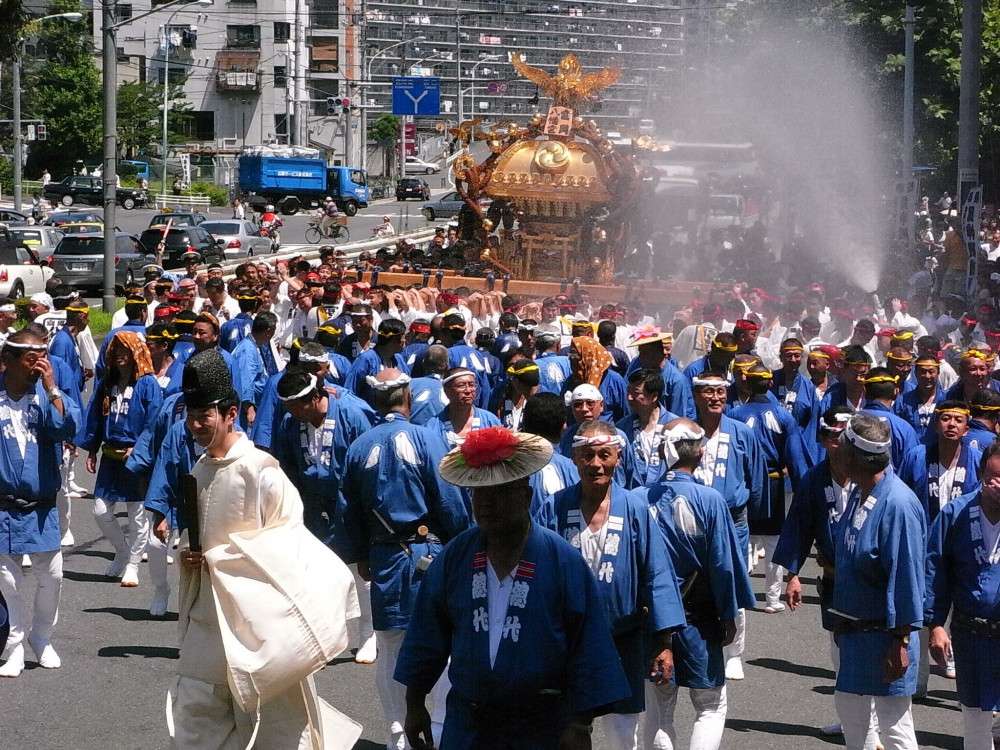
Fukagawa Hachiman Matsuri
- Date: August 12–16 (TBA, times vary by day)
- Mikoshi procession: August 16, around 7:30 a.m.
- Location: Tomioka Hachiman Shrine, Fukagawa/Kiyosumi-Shirakawa, Koto-ku
- What it is: Known as the “water-throwing festival,” where spectators douse the mikoshi (portable shrine) bearers as they pass. This year, 2026, is a “hon-matsuri” (main festival) year, the full-scale version held once every three years. Every neighborhood’s mikoshi joins in the procession of 54 mikoshi alongside the shrine’s own palanquin.
Azabu-Juban Noryo Matsuri
- Date: August 22–23, evening hours (TBA)
- Location: Azabu-Juban, Minato-ku
- What it is: A neighborhood summer festival known for its food stalls and lively, central-Tokyo atmosphere.
Koenji Awa Odori
- Date: August 29–30, 17:00–20:00
- Location: Koenji, Suginami-ku (JR Chuo Line)
- What it is: One of Japan’s largest Awa Odori (a traditional Obon dance style from Tokushima Prefecture) dance festivals outside of its birthplace. Around 10,000 dancers from roughly 100 dance troupes (ren) perform traditional steps through the shopping streets over two evenings, watched by millions of spectators.
Asakusa Samba Carnival
- Date: Saturday, August 29, 13:00–17:00/18:00
- Location: Umamichi-dori to Kaminarimon-dori, Asakusa, Taito-ku
- What it is: Tokyo’s most colorful street parade: a Brazilian-inspired samba carnival with elaborate costumes, floats, drummers and dancers. Held in the daytime and afternoon rather than at night.
Quick planning tips
- Fee: Most river fireworks shows are free, so arrive early to get the best spot. Jingu Gaien is the one show that is ticketed only, with no free-viewing option, while Itabashi Fireworks festival has both paid and free options.
- Weather: Fireworks shows are typically cancelled outright in bad weather rather than rescheduled. Jingu Gaien is the exception, sliding to the next day.
- Outfit: Wear a yukata if you like. It’s welcomed, not just for locals.
- Payment: Bring cash, as food stalls are usually cash-only.
- Trains: Expect serious crowding at stations right after a fireworks show ends; locals often linger 60–90 minutes before heading home.