Your Japanese Summer Reading List 2026
Our best new recommendations from Tokyo’s literary scene
This reading list brings together a mix of new releases and recent standouts, reflecting Japan’s growing appetite for introspective “healing fiction” alongside more experimental, boundary-pushing narratives—and a wider reading culture that continues to thrive across the city, from independent shops to 10 Lesser-Known Secondhand Bookstores in Tokyo that Sell English Books.
The City and Its Uncertain Walls
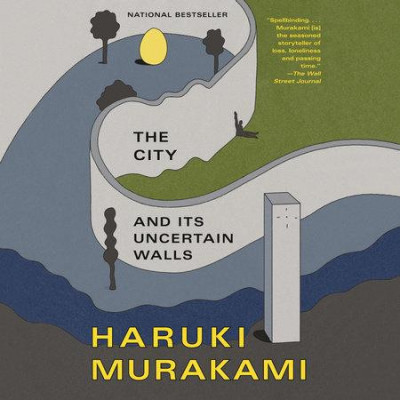
Haruki Murakami returns to familiar territory with The City and Its Uncertain Walls, a novel that revisits the liminal spaces between memory, identity and imagination. At its center is a man searching for a lost love within a mysterious, walled city—one where shadows appear to live separate lives and reality slips quietly out of reach. As with much of Murakami’s work, the plot unfolds less as a linear journey and more as a slow immersion into atmosphere, a quality that also shapes recent Japanese fiction, including works like The Memory Police.
The novel draws on earlier ideas from Murakami’s own unpublished writing, giving it a recursive quality that long-time readers will recognize. Themes of absence, longing and the fragility of selfhood surface repeatedly, while the narrative resists any clear resolution. Instead, it invites readers to linger in uncertainty.
For summer reading, it’s not the most conventional choice, but that’s precisely the appeal. This is a book best read slowly, in quiet moments, where its subdued rhythms and reflective tone can fully settle in.
Hunchback
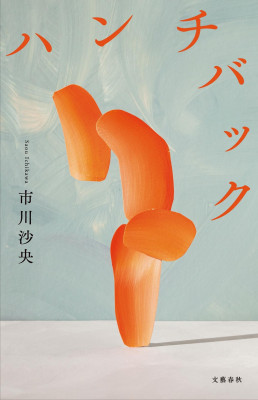
Winner of the Akutagawa Prize, Hunchback announces Saou Ichikawa as one of the most distinctive new voices in contemporary Japanese literature. The novella follows a severely disabled narrator navigating life through online spaces, where anonymity allows for a freedom that physical reality often denies. What unfolds is a sharp, often confrontational exploration of desire, agency and the limits society places on bodies deemed “abnormal.”
Ichikawa’s prose is direct and unflinching, cutting through sentimentality with moments of dark humor and discomfort, echoing the unsettling tone found in recent works like Vanishing World. The narrative challenges readers to reconsider assumptions around independence, sexuality and visibility, particularly in a society that often prefers to look away.
Brief but potent, Hunchback feels deliberately uncompromising. It’s the kind of work that sparks conversation long after it’s finished, making it one of the most essential recent reads in Japan.
Tokyo These Days
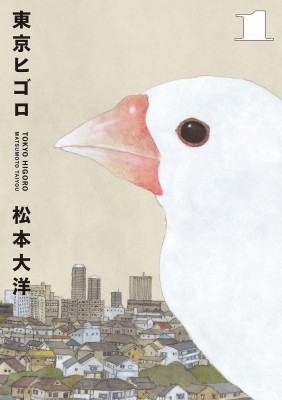
Creative burnout and quiet perseverance sit at the heart of Taiyo Matsumoto’s Tokyo These Days, a reflective manga that turns its gaze inward on the publishing industry itself. The story follows Shiozawa, a veteran editor who, after leaving his long-time role, attempts to reconnect with the artists he once championed. What unfolds is less a traditional narrative and more a series of encounters that capture the uncertain space between relevance and redundancy.
Matsumoto’s depiction of Tokyo feels lived-in and subdued, trading spectacle for intimacy. Offices, cafés and small apartments become settings for quiet introspection, where characters wrestle with questions of purpose and creative identity.
More than anything, the work functions as a meditation on making things—why people continue to create, even when recognition fades. It’s a fitting addition to this list, offering a different perspective on what it means to engage with art in the present moment.
Strange Pictures
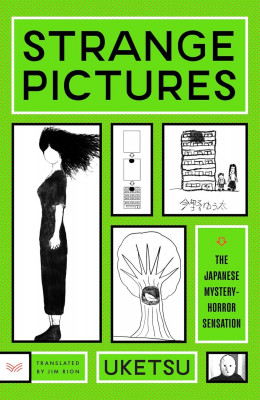
A breakout hit in Japan, Strange Pictures by Uketsu blends mystery with visual storytelling in a way that feels both playful and deeply unsettling. Structured around a series of seemingly unrelated illustrations, the novel invites readers to piece together hidden connections that gradually reveal a darker underlying narrative.
Rather than relying solely on prose, Uketsu uses images as narrative devices, turning the act of reading into something closer to solving a puzzle. The result is an experience that feels interactive, as readers begin to notice details that might otherwise go overlooked.
What starts as curiosity quickly gives way to tension, with each revelation adding another layer of unease. It’s an ideal choice for those looking for something gripping and unconventional—perfect for breaking out of a typical summer reading routine.
Butter
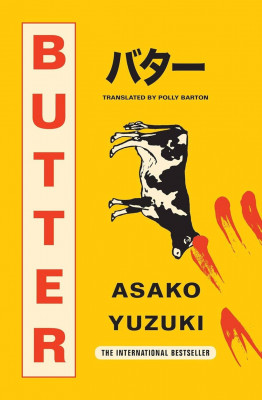
Inspired by a real-life case, Asako Yuzuki’s Butter begins as a crime story but gradually expands into something far more layered. The novel follows a journalist investigating a woman accused of manipulating men through food, using meals as both seduction and control. As their relationship deepens, the focus shifts away from the crime itself and toward broader questions of gender, desire and societal expectations.
Food plays a central role throughout, with detailed descriptions of rich, indulgent dishes that contrast sharply with the emotional restraint of the characters. These moments of consumption become symbolic, reflecting both pleasure and power in subtle ways.
At once unsettling and deeply immersive, Butter captures the tension between appearance and reality. It’s a novel that lingers, offering more with each passing chapter.
What You Are Looking For Is in the Library
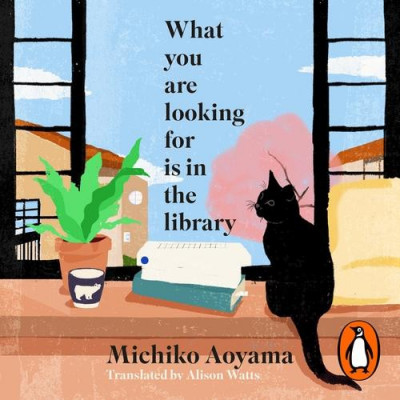
Michiko Aoyama’s What You Are Looking For Is in the Library leans into the enduring popularity of “healing fiction” in Japan, offering a series of interconnected stories centered on a quietly perceptive librarian. Each visitor arrives with a different problem—career uncertainty, personal doubt, lingering regret—and leaves with an unexpected recommendation that sets them on a new path.
The structure is simple but effective, allowing each chapter to stand on its own while contributing to a larger sense of gentle transformation. Aoyama avoids heavy-handed sentimentality, instead focusing on small, believable shifts in perspective.
There’s a quiet comfort in its predictability, but that’s part of its appeal. In a reading landscape often drawn to extremes, this novel offers something softer—a reminder of the value of small changes and quiet moments of clarity.
Find more book recommendations on our literature page.
Originally published in July 2024, and updated in April 2026.