All Time Best Japanese Fiction Books
From untouchable classics to the severely underrated
Ask ten people to name Japan’s greatest novels, and you’ll probably get the same five answers in the same order of “essential reading.” As an avid reader of everything from Dostoevsky to Ali Hazelwood, here’s a roundup of what has actually moved copies here in Japan and abroad.
After all, a good read is not just about what won a prize or was assigned in a seminar somewhere, or even which books people bought in numbers. It’s also about which books were re-read, and pressed into a friend’s hands, and whose quotes live rent-free in readers’ heads long after they turn the last page.
Writing style, wisdom, and originality are what make a book worth the hours it takes to read. Nobody wants the same recycled plot in a new coat of ink — an author has to find a voice of their own, or the reader checks out before the story even unfolds. The best writing doesn’t just tell you a story. It pulls you under, until you’re not reading about the characters’ lives so much as living alongside them.
By that measure, a teen death-game thriller could beat a Nobel laureate. Murakami, the one name every casual reader can spell, doesn’t necessarily crack my top five. And a few of the “untouchable classics” propping up every other list floating around social media are, frankly, overrated in my book.
The Top Tier
1. No Longer Human — Osamu Dazai
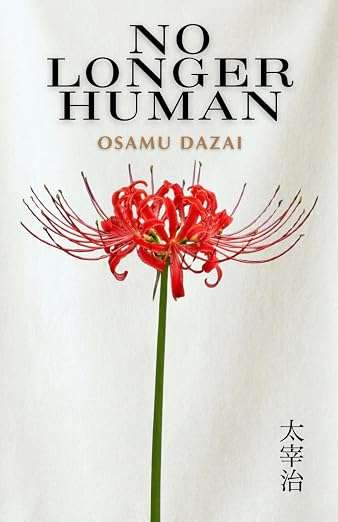
Published in 1948, this is still the rawest thing on this list, and nothing in the eight decades since has matched it. Dazai wasn’t dramatizing despair for readers — he wrote himself into the book while actively dying by it, and was gone within weeks of finishing the manuscript.
The alienation at its core isn’t invented. Dazai was raised by an aunt and household servants inside his own wealthy family’s estate, feeling like a stranger in the house he grew up in — the exact estrangement his narrator Yozo describes as being “disqualified from being human.” His father, a politician largely absent from his upbringing, died when Dazai was just thirteen, cementing that distance permanently. Weeks after finishing the manuscript, Dazai died by suicide. The book reads less like fiction and more like a man narrating his own diagnosis in real time.
2. Battle Royale — Koushun Takami
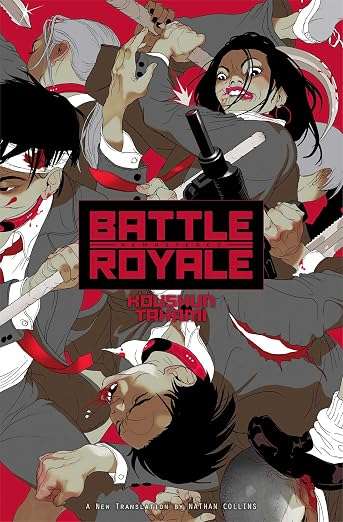
Strip away the movie and the Hunger Games comparisons and what’s left is a ruthlessly efficient dissection of how fast institutional control collapses into pure survival instinct. Takami isn’t interested in heroism — his forty-two students turn on each other with a speed that indicts the systems that raised them, not just the handful of psychopaths among them.
Takami spent five years as a police and politics reporter for a regional newspaper before writing it, and when he entered the manuscript in a major new-writers’ award, the judges reportedly called it the strongest work on craft alone and still declined to give any prize that year. The institution built to reward new voices chose silence instead. Takami has never published another novel since.
3. Snow Country — Yasunari Kawabata
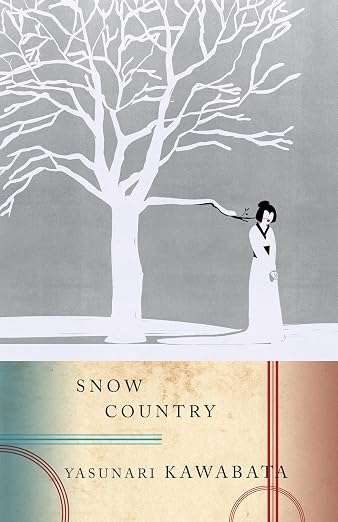
Kawabata doesn’t write scenes, he writes cold, precise, and quietly inhumane about the distance between people. His father died when he was two, his mother when he was three. By age fifteen, after his grandmother, his sister, and finally his blind grandfather had all died as well, Kawabata had no immediate family left at all. He later described himself, without irony, as an expert in attending funerals. Every silence in his prose is a room he learned to sit in alone as a child. He won the Nobel Prize in 1968, the first Japanese writer to do so, and died four years later in an event widely reported as suicide — though he left no note, and some biographers still argue it was accidental.
4. The Tale of Genji — Murasaki Shikibu
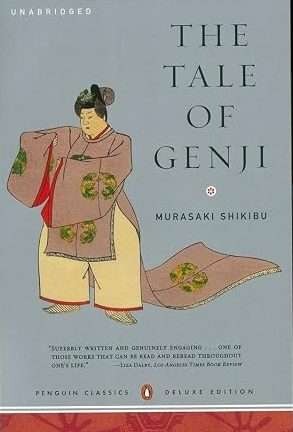
Written around 1008 by a woman whose real name nobody actually knows — “Murasaki Shikibu” is a nickname lifted from a character in her own book, since court women of Heian Japan weren’t formally recorded by their birth names. She wrote it while serving as a lady-in-waiting to Empress Shōshi, and what’s remarkable isn’t just that it’s frequently called the world’s first novel, but that it already reads like one: interiority, psychological nuance, a structure that tracks one man’s romantic and political rise and fall across generations. A thousand years on, most “classics” feel like homework. This one still feels like someone actually trying to understand desire, status, and regret.
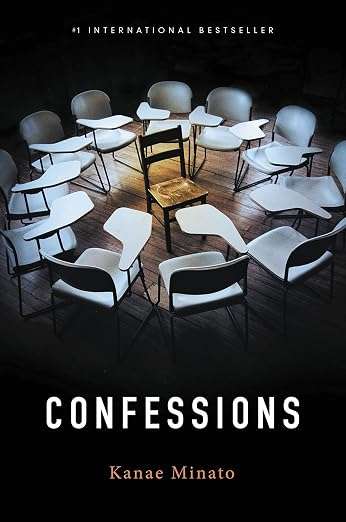
A revenge novel structured like a grenade with the pin already pulled. Minato gets zero credit internationally because “thriller” and “domestic fiction” get filed in different rooms of the bookstore, and critics only visit one of them. This should be taught next to Dazai, not shelved next to airport paperbacks.
6. The Temple of the Golden Pavilion — Yukio Mishima
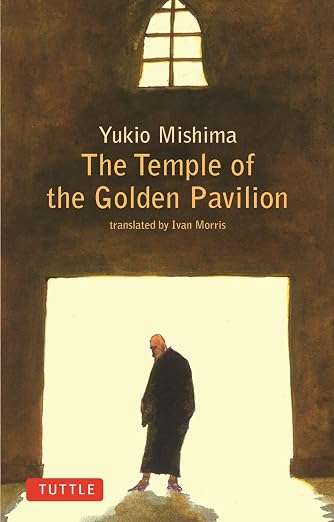
Mishima was a fascist who attempted a coup and disemboweled himself live in front of a room full of soldiers — and somehow that’s not even the most unsettling thing about him. This novel, about a monk who burns down the temple he’s obsessed with because its beauty offends him, gets closer to the psychology of that kind of obsession than almost anything else written by making you feel the logic from inside his head.
7. The Memory Police — Yoko Ogawa
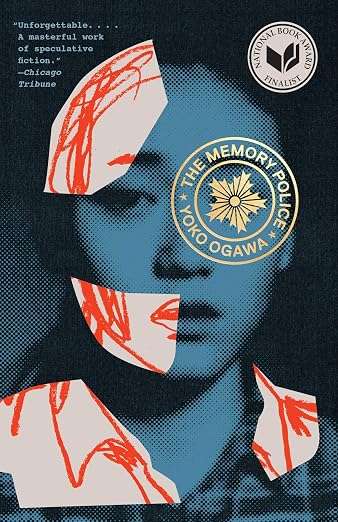
Published in 1994, it sat on shelves for twenty-five years before Stephen Snyder’s translation finally reached English readers in 2019 — then promptly picked up a shortlisting for the International Booker Prize and a finalist spot for the National Book Award. The premise is simple and merciless: on an unnamed island, objects disappear one at a time — hats, ribbons, birds — and once they’re gone, the entire population forgets they ever existed, except for a handful of people who can’t forget and have to hide it from the state. Ogawa isn’t interested in explaining the mechanism; she’s interested in what it does to a person to watch their own mind get erased in real time, and to watch everyone around them insist nothing was ever there. The book invites the inevitable comparison to George Orwell’s 1984 — and like Orwell’s novel, it’s frequently cited by readers who see its themes of surveillance and enforced forgetting playing out in the present day.
The Overrated-But-Important Middle
8. The Wind-Up Bird Chronicle — Haruki Murakami
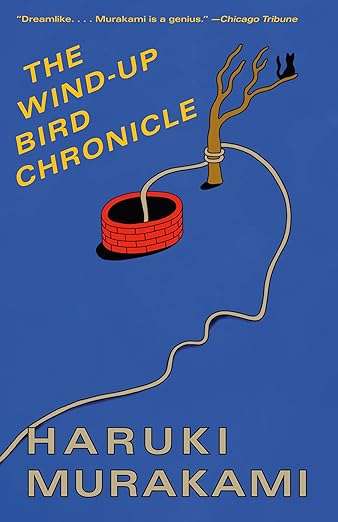
Let’s be honest about why Murakami became “the Japanese novelist” for so many English readers: he’s easy. Easy to translate, easy to recognize, easy to hand to someone who’s never read a Japanese book and say “start here.” His narrators like jazz and pasta and could just as easily be living in Portland. Japanese critics have noted this for years, usually more politely than they mean it — that his style reads as though it was built to travel well in translation. Meanwhile, English-language publishers needed one name to put on the cover of “Japanese Literature,” and he was the friendliest option on the shelf.
None of that is really an insult, and it’s certainly not a knock on this book, which is genuinely his best — strange, sprawling, and stranger the longer you sit with it. The problem is just labeling. “Murakami’s best novel” and “the best Japanese novel” are two different sentences, and most lists happily blur them into one, mostly because he’s the only name the list-maker is confident spelling correctly.
9. Kokoro — Natsume Sōseki
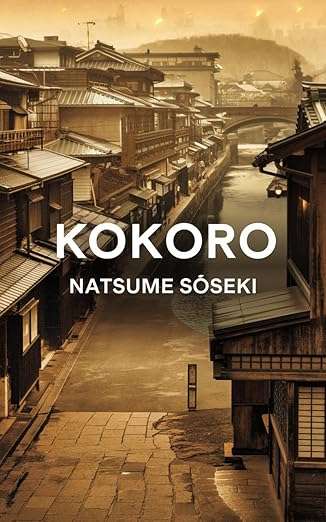
This book is genuinely great, genuinely important, and taught in almost every class for good reason — and that’s exactly the problem. Kokoro isn’t overrated because it’s bad. It’s overrated because it’s the only old novel most readers have even heard of, so a dozen writers just as good never get mentioned.
The story centers on a suicide, and Soseki understood the kind of instability that leads to one. As a baby, he was given away to foster parents, and only came back to his real family after that arrangement fell apart. He grew up knowing he’d been unwanted twice. Years later, the government sent him to London to study English literature, and being alone there, broken, without friends, people found him strange. He spiraled into a breakdown bad enough that the embassy thought about sending him home early. In the book, “Sensei” carries a guilt he can’t admit until the day he dies, and picks that day to match the death of the Emperor and a general’s ritual suicide — a man who never worked through his isolation, just built his whole life hiding it.
10. Norwegian Wood — Haruki Murakami
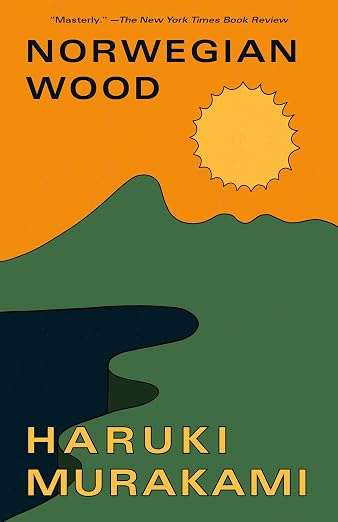
This is the book that actually launched his literary career, not just the one most people start with. Murakami had already published several novels to modest, cult-sized audiences when Norwegian Wood came out in 1987 and sold in the millions almost overnight, turning him from a niche writer into a genuine national celebrity. He hated it. The sudden fame was so disorienting that he left Japan not long after, spending much of the following decade living in Europe and the United States partly just to get some distance from the book that made him a household name.
Strip away the reputation and it’s a fairly simple story: Toru Watanabe, looking back from adulthood, recalls his college years in late-1960s Tokyo, torn between Naoko — the fragile girlfriend of his best friend, who died by suicide as a teenager. Midori, a blunt, alive, and far more grounded classmate who represents everything Naoko can’t offer him. Student protests and campus unrest hum in the background, but the novel isn’t really about the era. It’s about a young man caught between grief and the pull to keep living, unsure which woman represents which.
11. Ring — Koji Suzuki
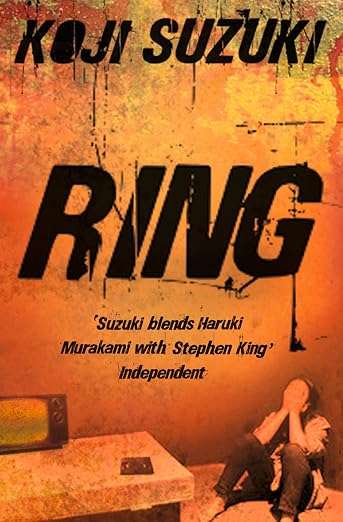
Better than the movie, scarier than the movie, and still left out of “literary” conversations because horror doesn’t get taken seriously.
Before Ring, Suzuki cycled through odd jobs, including a stint teaching at a cram school and working as an outdoorsman. He held a first-class yachting license and once rode a motorcycle solo across the United States, from Key West to Los Angeles. By the time he actually wrote Ring, he was a struggling writer and a stay-at-home father. A story about a curse that only spares you if you pass it on to someone else isn’t a hard book to read as a warped version of parenthood itself — an obligation handed down to save the next person, whether they asked for it or not.
12. Convenience Store Woman — Sayaka Murata
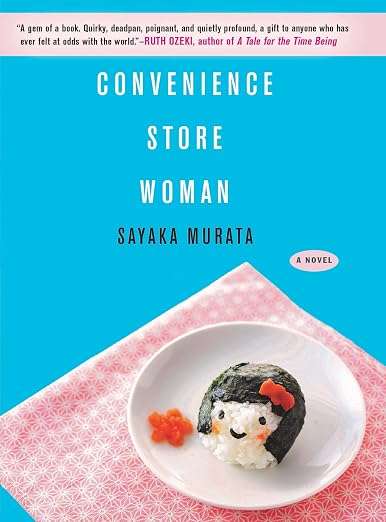
The most important recent Japanese novel in English — not because it’s flawless, but because it’s the first modern Japanese book that got taken seriously by Western critics without a Murakami comparison plastered on the cover. It’s also one of the sharpest pieces of feminist fiction Japan has published in decades.
Keiko, unmarried and childless at 36, isn’t punished by the plot for refusing marriage and motherhood — she’s punished by everyone around her for refusing to perform the anxiety she’s supposed to feel about it.
The line between Murata and her narrator is thinner than most authors would admit to. She worked part-time behind a convenience store register for eighteen years, well past the point where she’d already won major literary prizes for other work, and has said she never had an easy relationship with the idea of “normal” even as a child. Keiko’s total, almost devotional absorption into the store’s script — the scanning, the greetings, the manual dictating her tone of voice — isn’t satire from a safe distance. Murata was still clocking in at the register while readers were being told the character wasn’t real.
13. Out — Natsuo Kirino
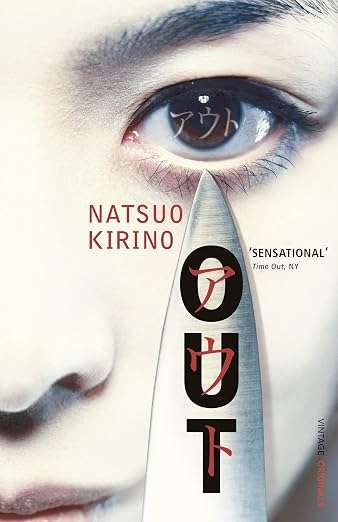
Better plotted than anything Murakami’s written since 1994. Four women pulling the night shift at a Tokyo boxed-lunch factory end up covering for one of their own after she strangles her abusive husband — and what starts as reluctant solidarity spirals into loan sharks, a chop shop, and Tokyo’s criminal underbelly. These are exhausted, broke, ordinary women making one bad decision at a time, and that’s exactly what makes the escalation of the plot feel inevitable rather than convenient.
The backlash tells you Kirino hit a nerve. She spent over a decade grinding out unsuccessful romance novels before Out became her breakout in 1997, published right in the middle of Japan’s “Lost Decade” of economic stagnation. A Japanese radio host reportedly refused to interview her on the grounds that a woman shouldn’t be writing about a wife murdering her husband. Kirino researched the book’s infamous dismemberment scene by interviewing a pathologist rather than softening the procedural detail. It won Japan’s top mystery prize and made her the first Japanese author ever nominated for an Edgar Award, the genre’s most prestigious American honor.
You might also be interested in reading 10 Lesser-Known Secondhand Bookstores in Tokyo that Sell English Books
Honorable Mentions
14. Pachinko – Min Jin Lee (not written by a Japanese national, but as good as half the books on this list that were)
15. Breasts and Eggs – Mieko Kawakami Full review here
16. The Setting Sun – Osamu Dazai
18. Kafka on the Shore – Haruki Murakami
19. Earthlings – Sayaka Murata
20. Kitchen – Banana Yoshimoto
21. Coin Locker Babies – Ryu Murakami
22. In the Miso Soup – Ryu Murakami
23. The Diving Pool – Yoko Ogawa
24. I Am A Cat – Natsumi So
25. Territory of Light – Yuko Tsushimaseki
26. Tokyo Ueno Station – Yu Miri Full review here
27. Almost Transparent Blue – Ryu Murakami
28. The Factory – Hiroko Oyamada
29. Heaven – Mieko Kawakami Full review here
You might also be interested in The Best Japanese Mystery Novels to Read.