September 9, 2025
Hungary Pavilion: A Calming Forest in the Middle of Expo 2025
Hungary’s pavilion stood out with folk music, food and craft at Expo 2025
Hungary’s pavilion had a very clear message: nature and culture. Instead of projecting a metallic, machine-driven future, it embraced a theme of folk. With an emphasis on music, craft and nature, it stood out to me among the pavilions we visited. It was the calmest space we entered at Expo 2025, and an immersive one where we felt that we could learn without having to read a single word.
Architecture That Speaks Two Languages
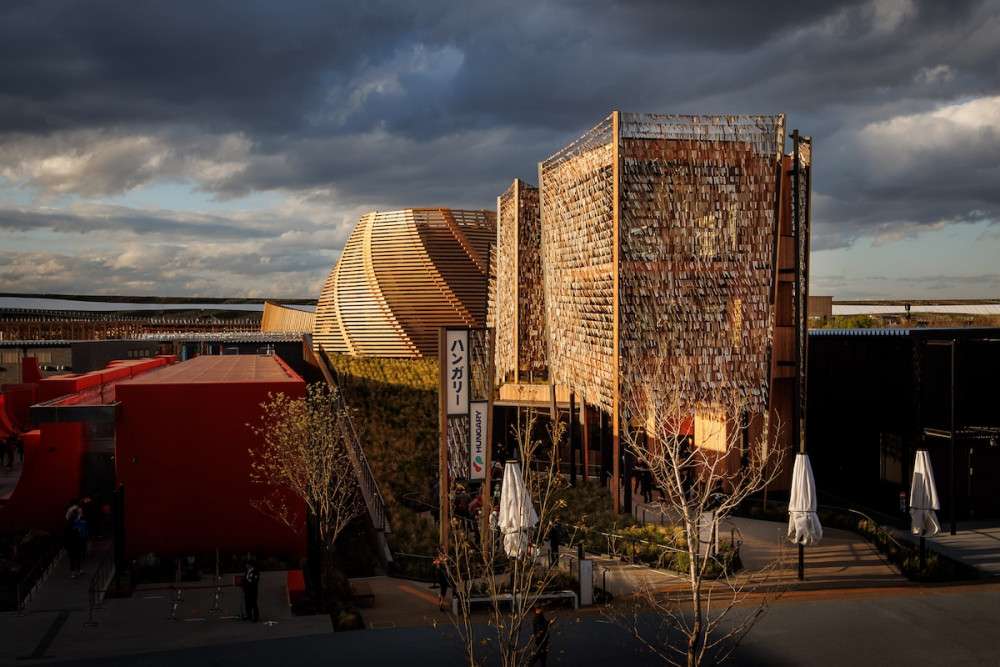
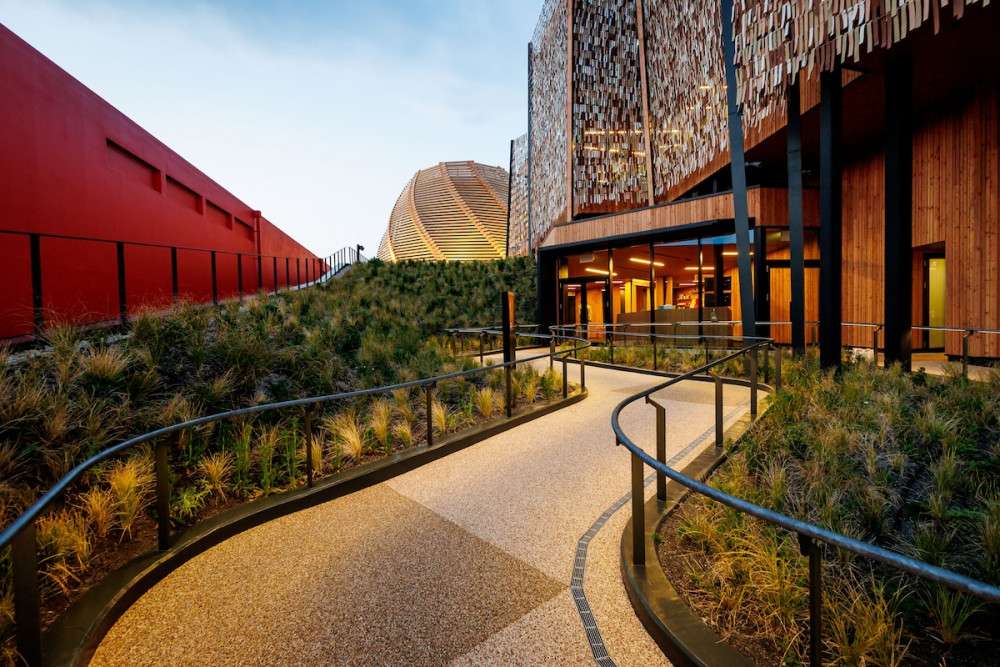
The pavilion, designed by Hungarian architect Zoboki Gábor, took inspiration from the mystical forests of the Carpathian Basin. Set on an artificial mound of earth, it gave the impression of a small hill rising from the expo grounds, with vegetation blending into the landscape.
The design thoughtfully bridged Hungarian and Japanese architectural traditions, drawing on both cultures’ deep connections to nature and their shared use of natural building materials. At the center rose a spiraling wooden dome, with a terraced wing where long strips of cloth swayed in the wind. The pavilion also incorporated timber sourced from Fukushima Prefecture, a symbol of Japan’s recovery and resilience.
The pavilion really stood out on the expo grounds for its almost rustic, bucolic aesthetic.
A Musical Journey Through Hungarian Culture
Walking inside from Osaka’s 35-degree summer heat, the pavilion opened into a cool space filled with the gentle scent of lily-of-the-valley. It was as if I had stepped into a shaded forest in spring.
(We later learned that the fragrance had been created especially for the pavilion…. would happily buy it as a room scent if it were available.)
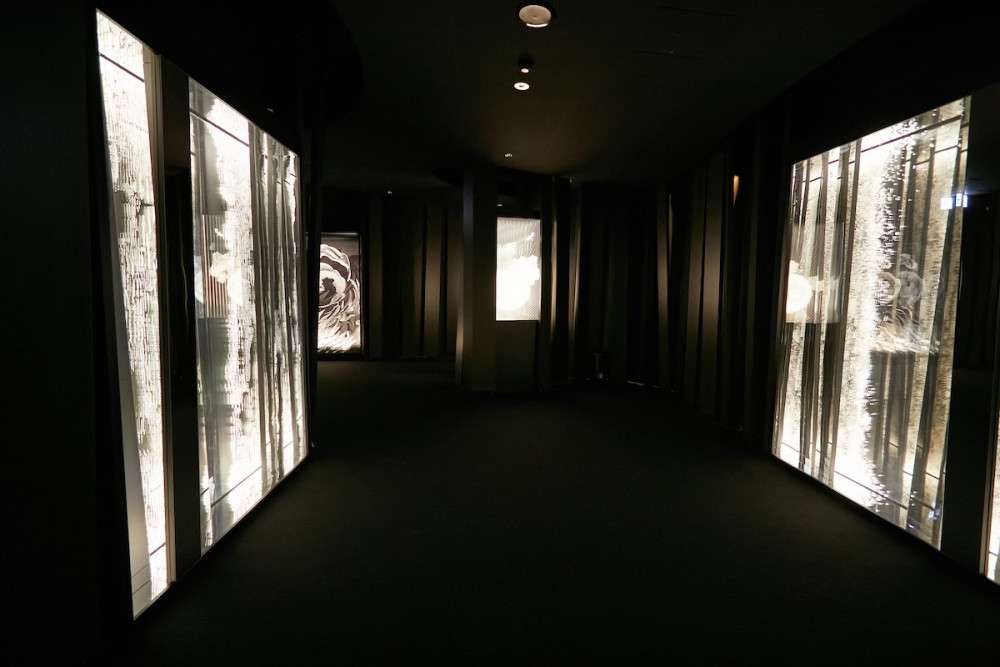
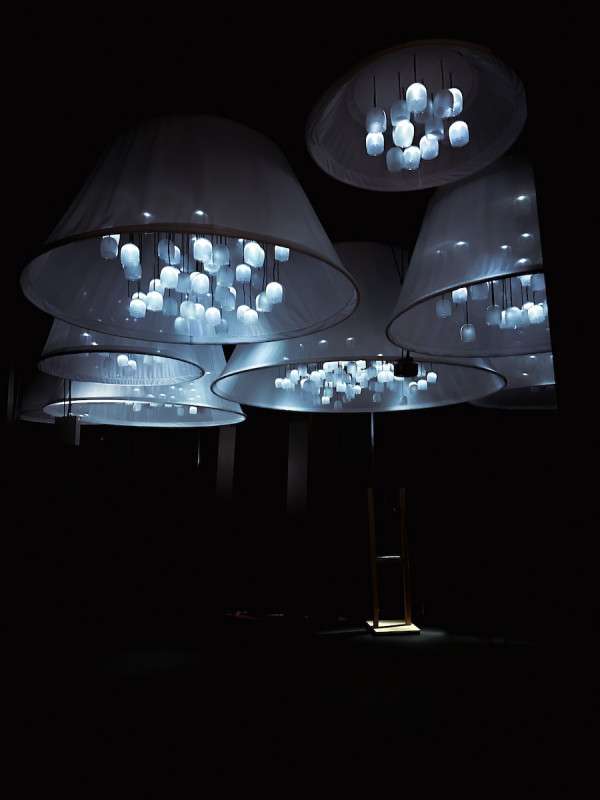
The pathway led through a corridor where layered glass panels projected botanical imagery and Hungarian poems. Just before the next space, lily-of-the-valley–shaped lanterns glowed overhead. Hungary has long been associated with glass artistry and this installation carried that heritage. The space was ethereal, like a mythical forest.

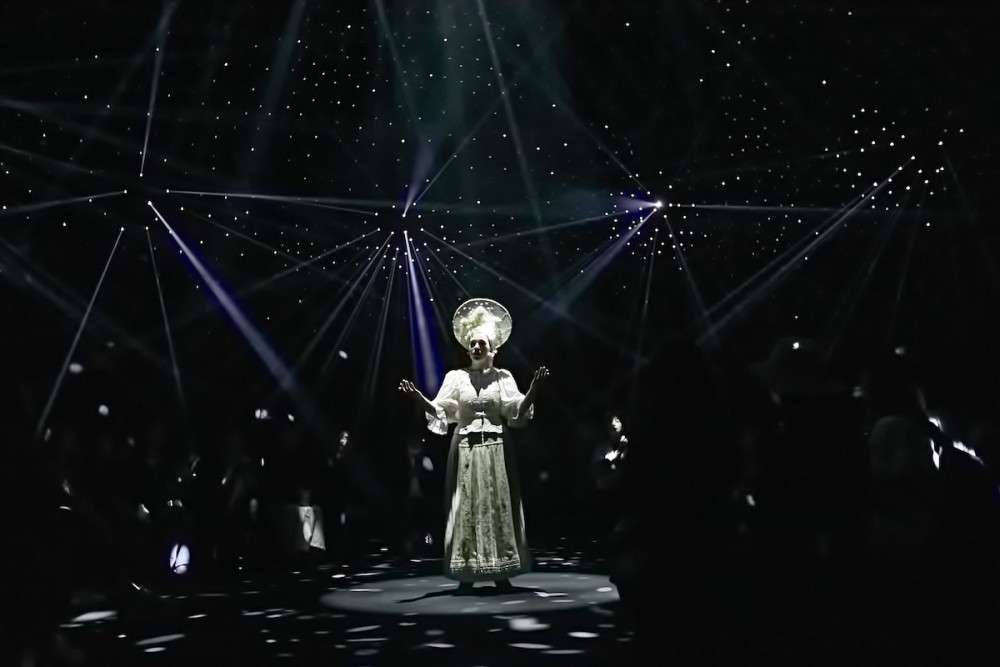
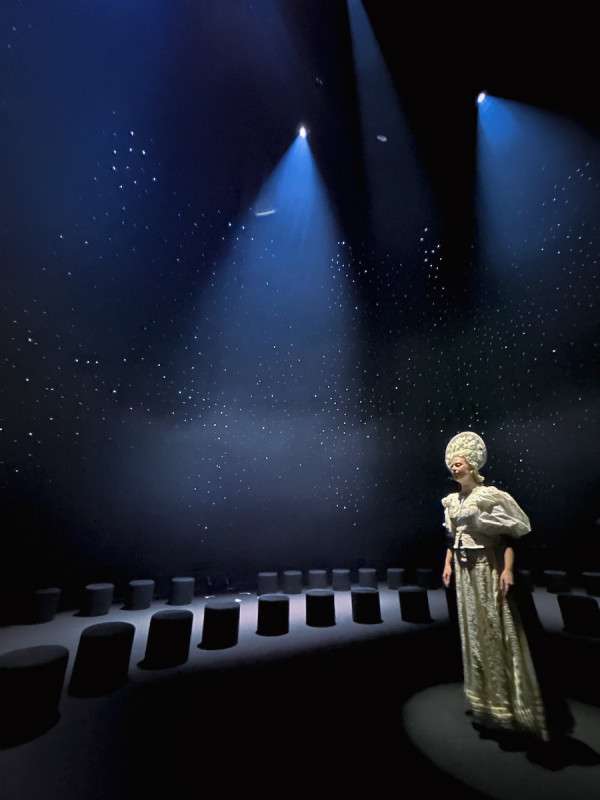
Finally, the path opened into the main theater, a tall, dark chamber dotted with shimmering lights. In the center stood a woman in traditional dress. Visitors were seated in a circle around her, waiting in silence. As her voice rose, the darkened hall came alive.
Unlike many pavilions relying on projection mapping or digital immersion, the Hungarian Pavilion placed a real performer at its center. One of the songs was Tavaszi szél vizet áraszt, a folk song celebrating spring and the season of love. The staff told us it is a folk song every Hungarian knows, and once famously covered by Queen during their Budapest concert. In the finale, the audience joined in singing.
Experience Hungary
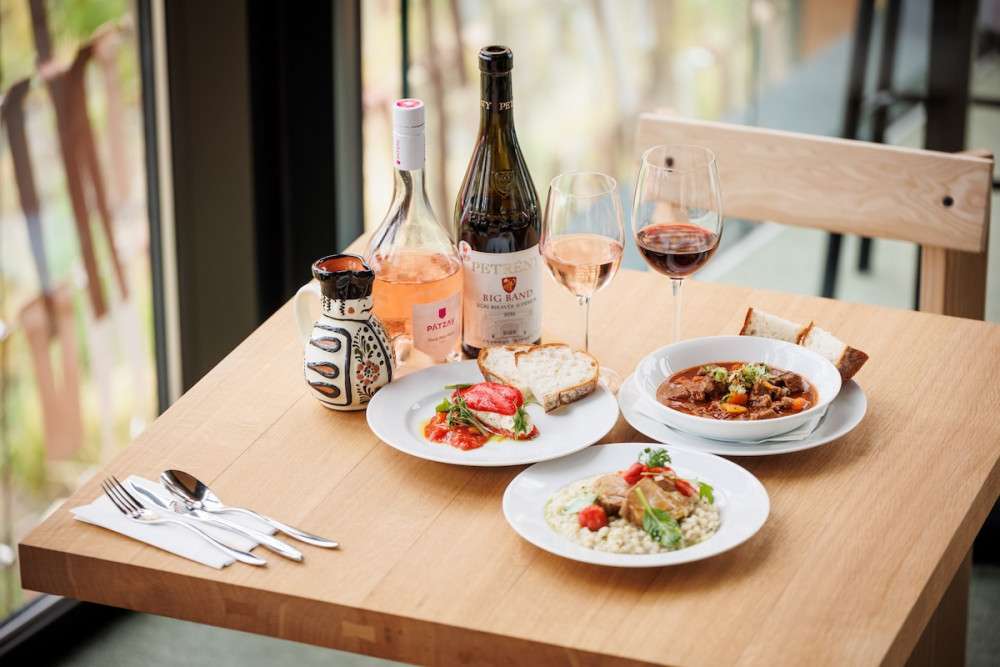
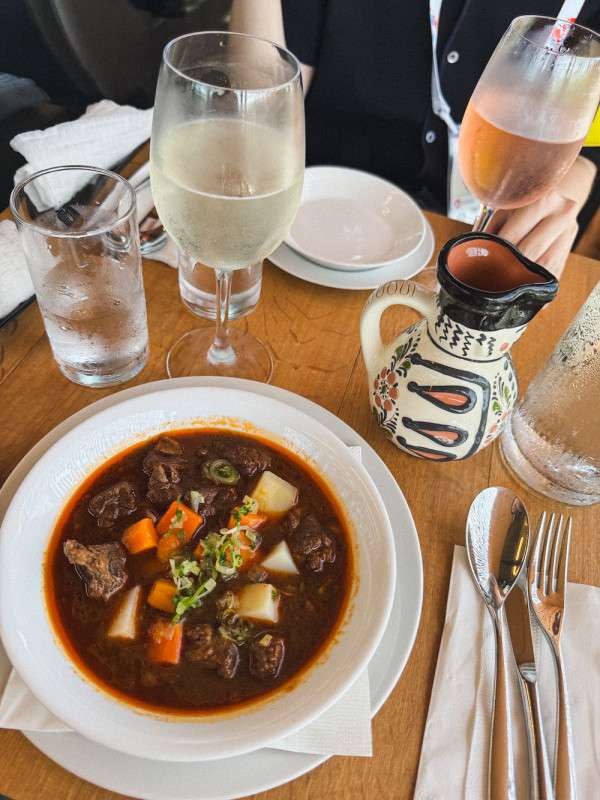
On the second floor, the pavilion had a restaurant with a terrace draped in cloth strips that swayed in the breeze. The menu included famous dishes such as gulyás (goulash), served alongside wines from different regions, including the world-famous Tokaji. It was an elegant, calm space where we almost forgot we were inside the busy expo grounds.

Above that, a multi-purpose area for business and events often hosts workshops inspired by Hungarian folk crafts such as embroidery and lace-making. When I visited, I met a local Osaka girl chatting with the Hungarian staff. They told me she comes almost every day to the craft section, creating piece after piece, and had become such a regular presence that she was basically part of the staff.

Beyond Expo: Japan–Hungary Connections
Hungary’s presence at Expo 2025 also carried the weight of a long, if sometimes unexpected, history of exchange with Japan.


Fun Facts:
- ●One of the earliest links came through Bernard Jean Bettelheim, born in what was then the Kingdom of Hungary. In 1846 he arrived in the Ryukyu Kingdom (Ruuchuukuku, present-day Okinawa) as a Church of England missionary, later serving as a translator for Matthew Perry’s expedition. During one tense incident, a U.S. sailor attempted to rape a local woman. The locals intervened, and the sailor was killed in an intense fight. The American fleet threatened retaliation, and the Ryukyu court panicked. Bettelheim advised officials to present the case as an act of personal defense by his household guard protecting his own “wife,” though he was unmarried. This diplomatic improvisation helped defuse the crisis.
*Read more (Japanese) - ●In the early 20th century, a wave of pseudoscientific theories such as Turanism and the now-abandoned Ural–Altaic hypothesis speculated about connections between Hungarian and Japanese. Though these ideas have long been disproven, they sparked cultural curiosity on both sides. On June 1, 1924, the Magyar–Nippon Társaság (Hungarian–Japanese Society) was founded to promote exchange, followed by a formal Japan–Hungary Cultural Agreement signed on November 15, 1938. While the linguistic theories are no longer accepted, Hungarian’s position as a non–Indo-European language with ties to Asia (Siberia and Manchuria) has continued to invite comparison. Even today, small parallels catch the imagination. For instance, in both countries, surnames come before given names.
*Read more
Today, these historical and cultural connections are paired with strong economic links. More than 180 Japanese companies currently operate in Hungary, representing approximately ¥500 billion in capital investment and employing 32,000 people. The pavilion underscored Hungary’s role as a key Central European partner for Japan, while giving visitors the chance to experience these affinities firsthand.
Expo 2025 Hungary
Open until October 13, 2025
Yumeshima Island, Osaka, Japan
You might also be interested in these articles:
Taste of Hungary in Tokyo: Az Finom
Bar Pálinka: Hungarian Fruit Spirit Reimagined in Kagurazaka