October 28, 2025
Red Roofs of Iwami: Historic Townscapes, Preserved and Evolving
Picturesque red-roof villages of Japan—but more than just beautiful
Japan is often described as a country where history is everywhere. Yet I’ve always felt it preserves ideas and traditions more than physical places. Similar to how festivals continue, but often in towns that have been rebuilt many times.
Elsewhere, entire old towns stand as intact time capsules, like the coastal villages along the Adriatic Sea or the water towns of Jiangnan, China.
That’s why I was surprised while traveling through Shimane Prefecture’s Iwami (石見) region, mainly known for its former silver mine and kagura. I hadn’t planned to find historic streetscapes there, yet as I traveled through the area, I realized there must be many charming villages in Japan waiting quietly, outside the spotlight.
Iwami: A Silver Mine and Its World
The Iwami region is best known for the Iwami Ginzan Silver Mine, a UNESCO World Heritage Site. First opened in 1526, the mine produced high-grade silver that became famous across Asia and Europe. Portuguese and Dutch traders carried it overseas, where it was considered a premium brand. It is said that many European maps of East Asia even labeled Japan with variations of “Islas Plateras,” such as “kingdom of silver,” “island of silversmiths” and so on.
The mine didn’t just bring wealth, it shaped the landscape around it. Villages, port towns, hot spring resorts for weary travelers and trade routes that connected inland valleys to the sea all grew from its influence. That’s why the site is officially registered as “Iwami Ginzan Silver Mine and its Cultural Landscape.” Omori remains one of the best preserved of these historic towns.
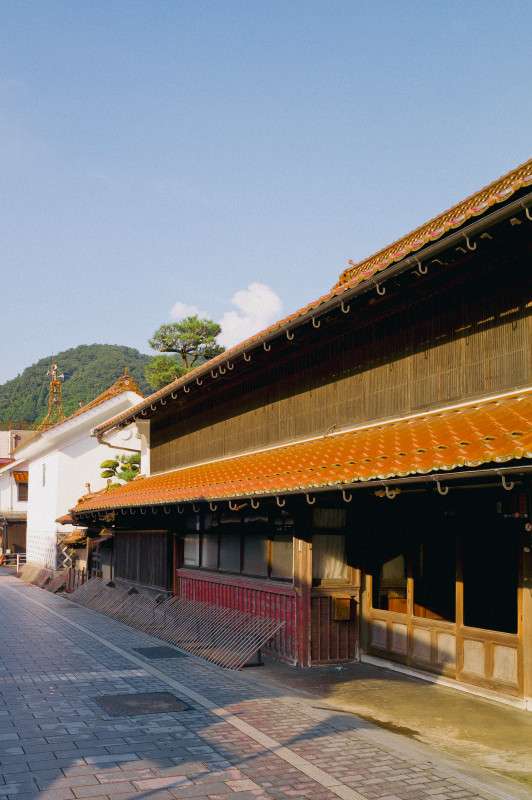
Long before UNESCO recognition, Omori was designated as an Important Preservation District for Groups of Traditional Buildings. Its streets today still carry the atmosphere of 200 years ago.

The Red Tile Rooftops
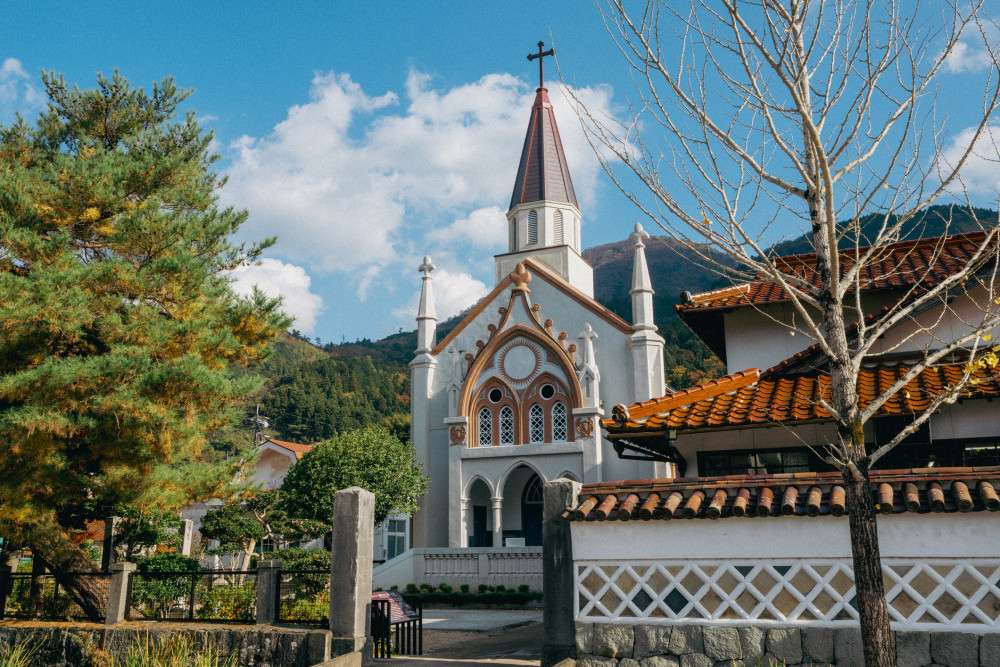
One of the first things I noticed in Iwami was the sea of shiny reddish-brown rooftops. These are Sekishu tiles, a craft unique to western Shimane. The Sekishu tiles are, therefore, common in the larger San’in region (Shimane and Tottori), as well as the adjacent areas of Western Yamaguchi, Northern Hiroshima and Okayama.
Produced since the 17th century, they combine local clay with glaze made from Kimachi stone, creating durable tiles able to withstand heavy snow, salt-laden winds and frequent typhoons. Seeing them spread across villages, especially near the coast where the roofs meet the deep blue of the Sea of Japan, felt almost Mediterranean. The contrast of red against water and sky is striking, but it is also deeply rooted in the region’s climate and geology.
This tradition has also been reimagined in contemporary architecture. Grand Toit, a cultural complex housing the Shimane Prefectural Art Museum and theater, was built with some 280,000 Sekishu tiles. They cover not only the roof but also parts of the walls, turning a traditional craft into a bold modern statement for the Iwami region.
Omori is only one example of a preserved townscape in this area. Nearby, Yunotsu, a hot spring town by the sea, also retains much of its old charm as part of the silver mine landscape. The onsen itself is known for its high mineral content, and I had the opportunity to bathe in the charming Taisho-era spa of Yakushiyu.

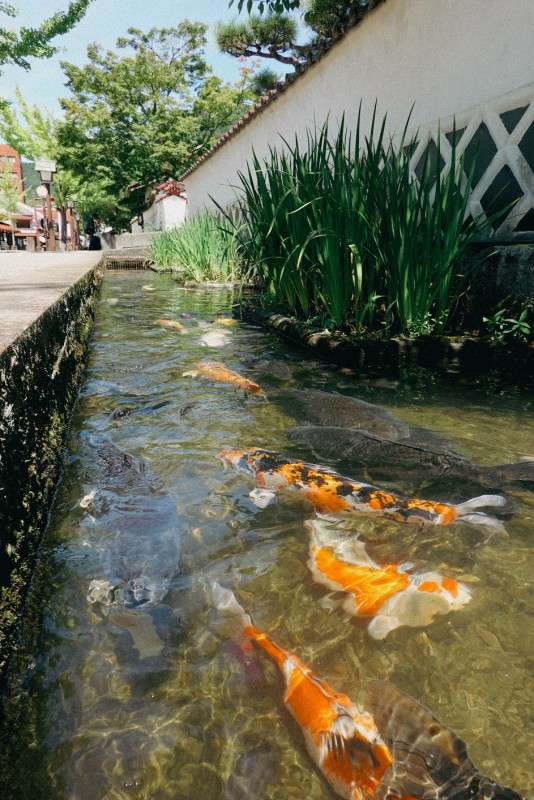
The town of Tsuwano, further west, is often called “Little Kyoto” for its samurai residences and white-walled storehouses. The city of Gotsu, the main production center for Sekishu tiles, has several preserved districts, such as Hashi-cho, Tsunozu-cho and Kuromatsu-cho. Gotsu’s Honmachi district is home to the Iraka Kaido (“Rooftile Road”), a scenic route lined with retro and traditional architecture.
A Day in Omori, Iwami
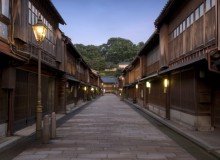
The town is beautifully preserved, yet it feels lived-in rather than staged (Meaning, most are actual homes of locals, so visitors should be mindful). Between these houses, I found small shops, cafés and spaces clearly designed with intention.
The first place I stepped into was Gungendo Store & Café. It’s part of a lifestyle brand that started here and now has branches across Japan. The space was a beautifully renovated kominka (traditional wooden house). Above the entrance, swallows darted in and out of a nest. Inside, the space opened into a light-filled renovation of a traditional house, the courtyard covered by a glass skylight. The design choices felt so refined and sophisticated, something you wouldn’t usually expect in a rural area.


I ordered a seasonal parfait flavored with kuromoji, a common tree in Japan used as a herb in San’in—something I didn’t even know was edible. Despite its elegance, the café functioned like a neighborhood spot, not a destination overrun with tourists.
That same spirit ran through the town. Omori didn’t feel hollow; it was active, with a community center, a library and businesses occupying restored buildings. This vitality is not accidental. Much of it comes from Nakamura Brace, a local medical device company that channels a part of its profits into restoring traditional houses. These renovations become homes, shops and cultural spaces. About 80 of the town’s 400 residents are employees or families connected to the company, creating a self-sustaining link between preservation and daily life.
Examples of their work are everywhere. The old post office was transformed into Omori-za, an opera house with just 100 seats. Once demolished in the 1960s, it was revived half a century later with careful carpentry and local materials. I also visited the community library, created in a former merchant’s house. With input from Shimane Prefectural University, it became a hybrid space: part reading room, part coworking hub. Books are displayed thematically, with lantern-shaped shelves and playful corners for children, while a café serves local sweets.
For me, the coworking area was a welcome surprise. Not only is it convenient for visitors like me, but it also helps locals who work remotely on their laptops, many of whom leave big cities in search of a quieter lifestyle
Later that day, I stopped at Bäckerei Konditorei Hidaka, a German-style bakery run by a Japanese baker who trained in Germany and earned a Meister qualification. He chose Omori as the place to open his own shop, taking over a closed family bakery that had been restored by Nakamura Brace. The pretzels were excellent, but what stayed with me was the sense that even new arrivals here become part of the town’s ongoing story.


Preserve and Evolve
Japan is home to the world’s oldest company, oldest inn and oldest restaurant. Yet the buildings housing them have often been rebuilt many times. Earthquakes, fires and humidity make permanence difficult. Wood, the material most suited to Japan’s climate, is also impermanent.
Of course, there’s a beauty in that as well. Heritage here is not only about preserving ruins for a thousand years. A 200-year-old house might stand where an even older one once stood. Shrines like Ise Jingu are ritually rebuilt every two decades, yet their identity remains continuous. The structure is new, but the spirit is old.
At the end of the day, cities are not museums. Even the heritage buildings we preserve stand on ground that once held something else. Still, it seems almost universal that we’re drawn to places that make us feel as if we can travel through time.
Traveling through the Iwami region, you’ll see many shuraku (hamlets) with stunning red roofs. Most aren’t intentionally preserved as tourist sites; the tiles were chosen simply because they are the most suitable material for the region, produced locally for centuries.
Omori represents a perfect balance between preservation and evolution. It hasn’t slowed down its evolution for the sake of nostalgia. The town incorporates modern design while utilizing preexisting structures and design. It’s been redeveloped for its community while maintaining appeal to travelers, without turning into a theme park.
Of all the historic towns I’ve visited in Japan, Omori felt the most intact. Yet it doesn’t freeze itself in time. It evolves through thoughtful design, local effort and a sense that the past can still guide the present.
Wanna learn more about the San’in region?
Visiting San’in: Japan’s Sacred and Slightly “Pagan” Region
Read about the largest city in Shimane, east of Iwami
Matsue: A City in the “Shade,” Full of Stories
Love architecture?
Dami Lee on the Organized Chaos That is Tokyo
Places in Shimane to See Sekishu Roof Tiles
・Tsuwano
・Oda City


–Yunotsu-cho
–Omori-cho
・Gotsu City


–Hashi-cho
–Kakushi-cho
–Tsunozu-cho
–Kuromatsu-cho
–Honmachi
Home to the Iraka Kaido Road, known for its retro Meiji-era giyofu architecture.
–Arifuku Onsen
・Mihonoseki, Matsue City
(Located in the Izumo region of Shimane, east of the Iwami region)