Night Photography: Capturing Tokyo’s Nocturnal Beauty
Featuring Matthieu Bühler aka @mattdreamsneon
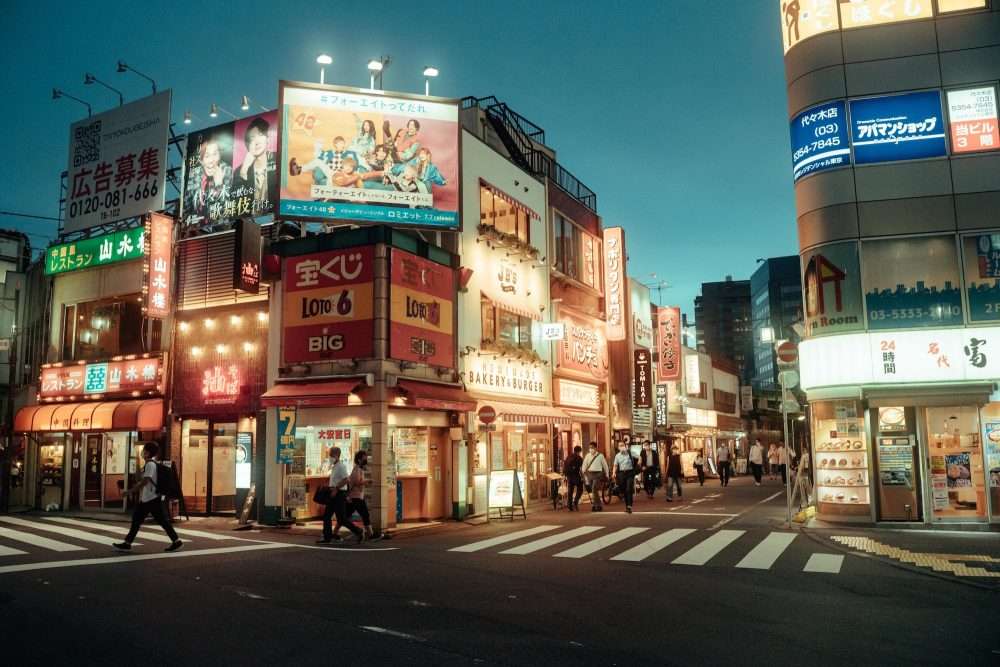
Capturing the urbanscape at night: Tokyo somehow became the mecca of it. Bright neon lights in the dark, alleys with glowing vending machines and street lights gleaming off the clean pavement. All topped off with the saturated tones of color grading. It has become a genre of photography, and talents from all over the world come to Tokyo to shoot the city in this aesthetic. On YouTube, night walk videos of Tokyo, POV footage of literally walking through different areas of the city, color grading included, boast millions of views.
In a way, urban night photography became synonymous with Tokyo, along with other East Asian cities, and subsequently with this specific aesthetic of neon lights and saturated colors, which can often be described as cyberpunk.
What is this genre of capturing Tokyo at night? What is their thought process? I turn to Matthieu Bühler, a French-German photographer who started shooting Tokyo at night as a resident and now splits his time between Tokyo and Europe. Better known as @mattdreamsneon on Instagram, his works often center on the beauty of the night in the city.
Arrival
Bühler arrived in Japan around 2016. While photography was his passion, he did not move there to shoot neon. What struck him first was simply the “quality” of the lights Tokyo had at night. It immediately inspired him to capture that feeling of Tokyo’s glowing lights.
He was first and foremost a cinephile, and that was his entry into photography. The initial spark was seeing Drive in a theater. He wrote his bachelor’s thesis on Gregory Crewdson and the connection between film and photography, lists Neil Krug as an influence and cites Wong Kar-wai as a formative one. He walked out into the streets of Tokyo to capture the cinematic beauty the city has to offer.
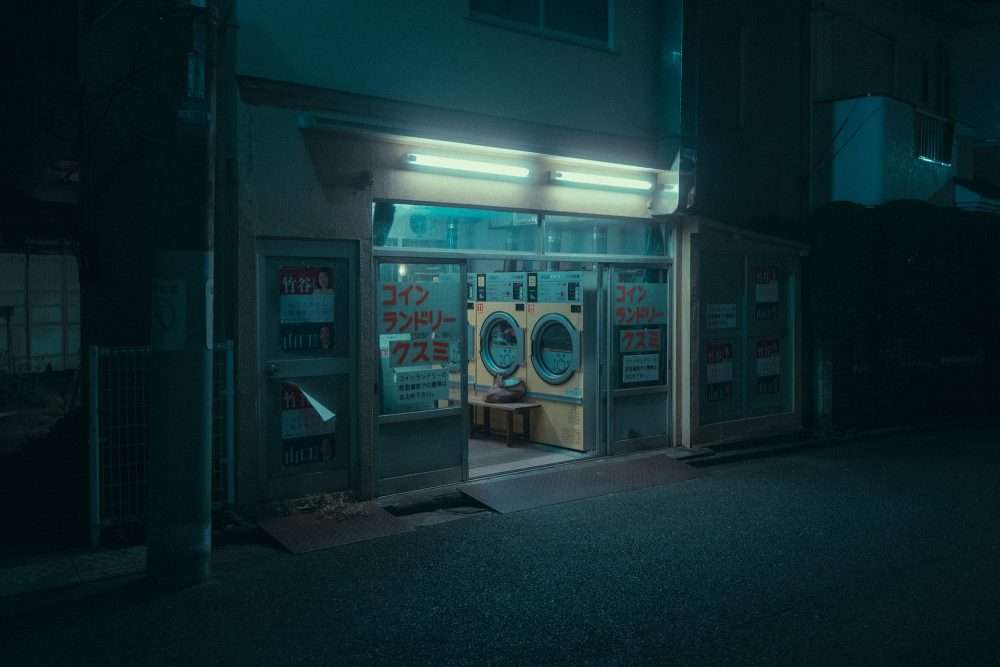
He would leave the house at night with his camera, and in post-production he was bumping up, pushing the levers to recreate the vibrant nightscape he saw in his mind. It was not a signature editing style he arrived with but rather what Tokyo inspired him to do. Some left comments saying they had been to Tokyo and it did not look like that, but he was recreating the feeling he got from walking around his new home of Tokyo. The early vibrant work set his signature neon-lit night aesthetic in concrete.
The timing was interesting as well. It was when the vibrant cool-toned night aesthetic started to trend on social media, the years when neon-lit East Asian cities became a genre unto themselves through artists like Liam Wong, who cites Blade Runner, Akira and Ghost in the Shell as inspirations. Bühler started posting what spoke to him, and his works became part of this growing body of Tokyo’s nocturnal beauty shared online.
In 2017, one image went viral: a woman crossing Shibuya in the rain, the wet asphalt and the composition combining into something that looked almost like a video game render. He suspects that sci-fi quality is exactly why it traveled. Though he never thought of his work as being of that genre, it reached the audience who appreciated that angle of Tokyo.

Cyberpunk Tokyo?
On the internet, there is a way Tokyo is supposed to look at night. Shibuya Crossing slicked with rain, Kabukicho neon stacked to the sky, everything graded toward electric blue and pink. It is almost the default preset for Tokyo, a cool-toned high-saturation filter, like Hollywood’s infamous Mexican Filter but more grassroots.
The result of this filter is very close to the cyberpunk genre, regardless of the individual photographer’s intention. It becomes something of a chicken-or-egg question: did the aesthetic of the literature and films inspire the photography, or did the same city that inspired that genre of fiction simply inspire photography to arrive at the same look? Either way, the popular art of capturing Tokyo at night often seems to share the goal of producing cyberpunk imagery, whether its makers agree to the label or not.
East Asian cities like Tokyo are the template of “exotic” urban futurism that inspired cyberpunk. The genre was born in the 1980s, when Western anxiety about Japanese economic power produced a specific fantasy. Scholars explain this with the framework of techno-orientalism. In the style of the Yellow Peril, the West feared the future might no longer be Western, and since simply acknowledging Asian progress was not an option, it portrayed Asian futurism as dystopian, punk, as in slowly falling into disrepair. Inorganic and ultraexotic, chaotic, modern but bleak, in contrast to the sleek futurism that was allowed to look optimistic.
Most of those who apply this cyberpunk filter are simply following the template and trend. However, the literary and cinematic genre that inherited this tone has greatly influenced what we project on cities like Tokyo. It so often focuses on the dark side, for the aesthetic but also for the framing of the society as a whole. Tokyo, or Japan, becomes this dystopian background that artists project their fantasies on.
Not Dystopia
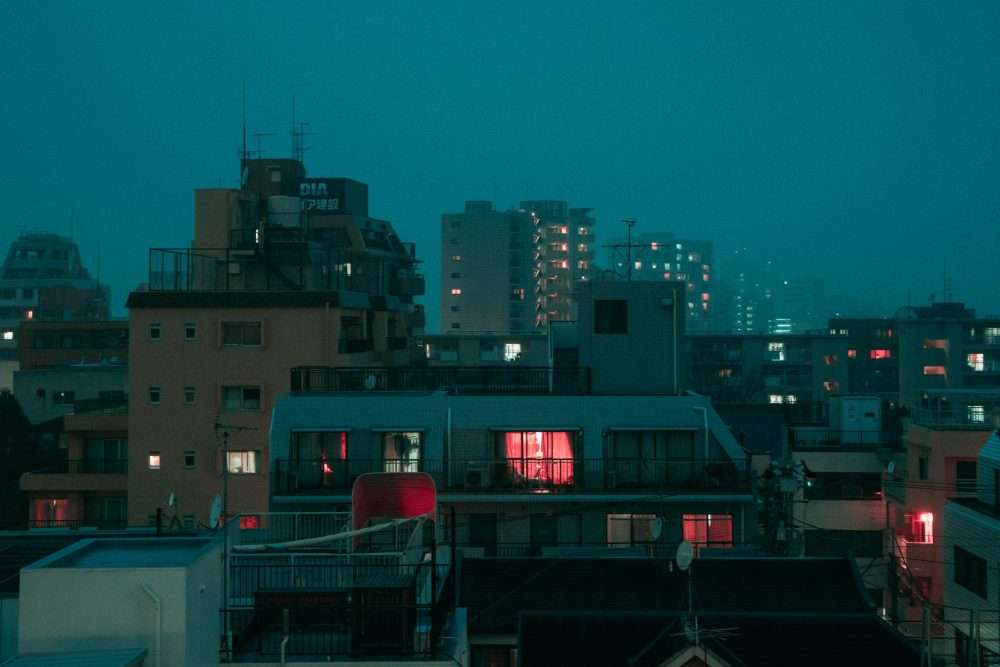
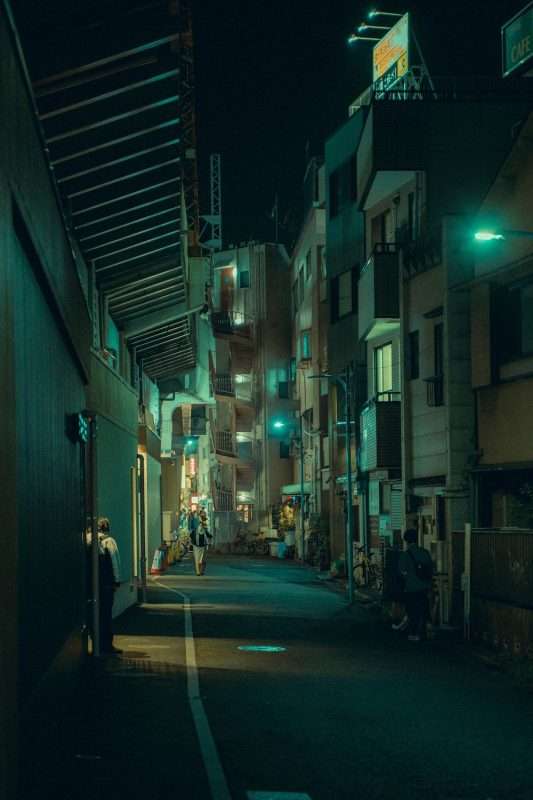
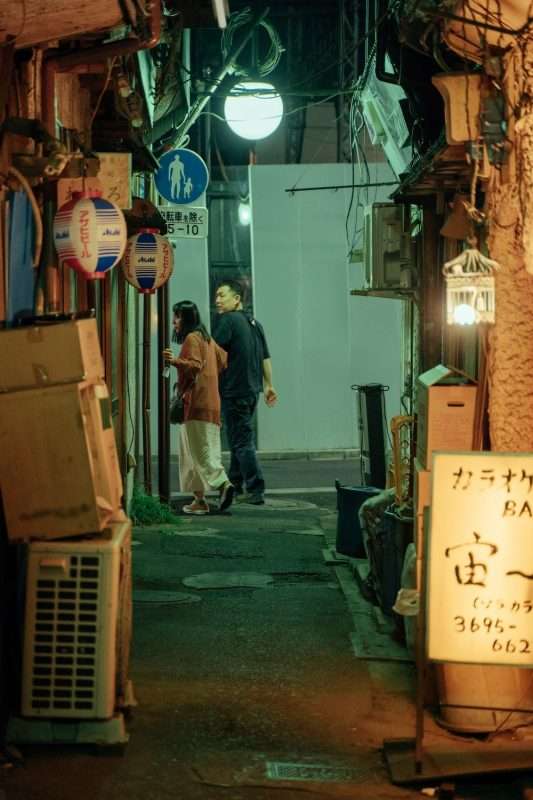
Bühler shoots the same city at the same hour, and his photographs do something different. He wants to show the everyday, or “everynight,” life of this neon-lit city, one that is not a dystopia or utopia. He shows peaceful residential areas in Eastern Tokyo, ordinary moments of locals by the river, storefronts of a Showa-era izakaya.
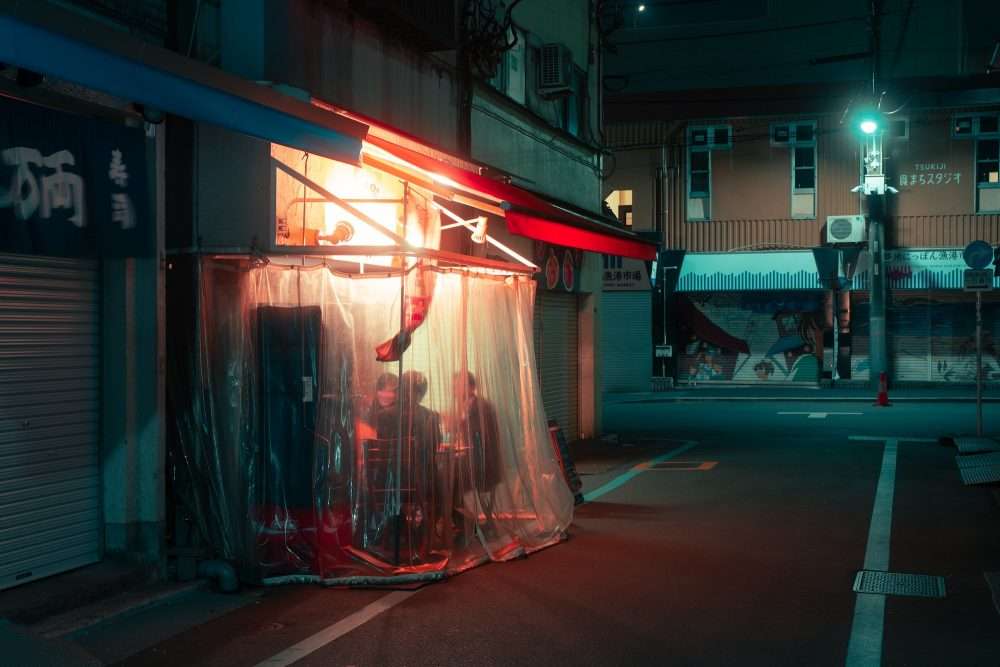
His shots are not meant to capture the vastness or loneliness of the metropolis but the eye-level life that is surprisingly ordinary yet beautiful.
While he goes by @mattdreamsneon, neon in a strict sense is optional. Some of his work might be described as a neon aesthetic without neon, the glow of the city carried into quiet alleys and residential streets with no gas-filled tubes that light up. Around 2020 and 2021, he began experimenting more with human subjects and some daytime and nature shots as well, but all through his neon-filled aesthetic. His photos celebrate a nocturnal beauty that is vibrant and dreamy, but humanizes the landscape. It reminds us that it is an actual place where people live and have lives.
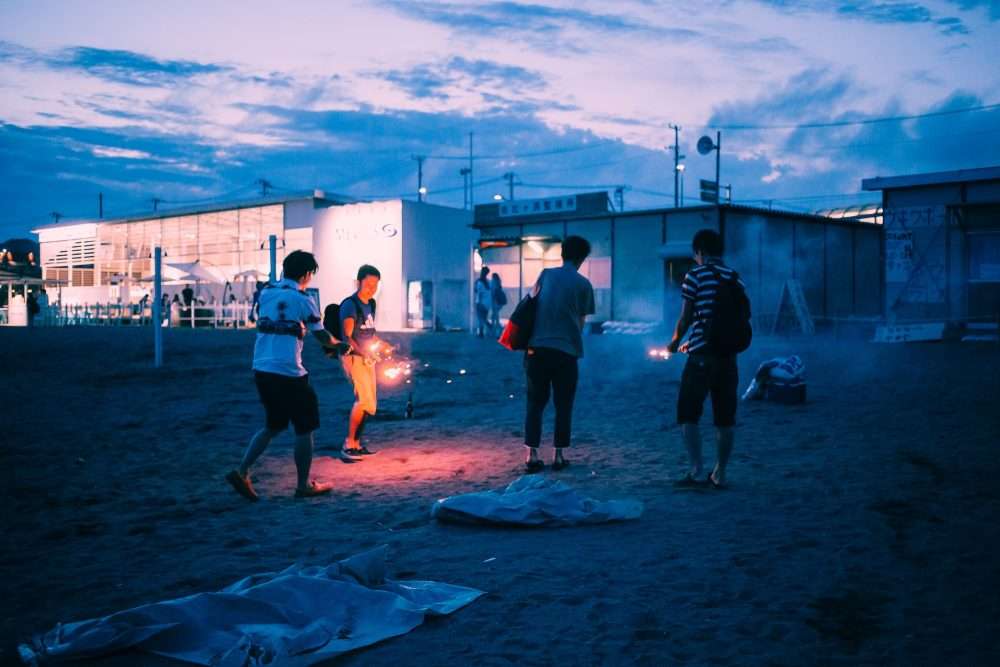
His style of shooting has become different as the years in Tokyo went by. Instead of going out to shoot the urbanscape, he carries a small camera daily, so many of the shots come from his everyday life rather than leaving the house intentionally to capture something. It was never speculative fiction to begin with. It is the neon-filled reality of Japan, delivered to people who came for the fantasy.
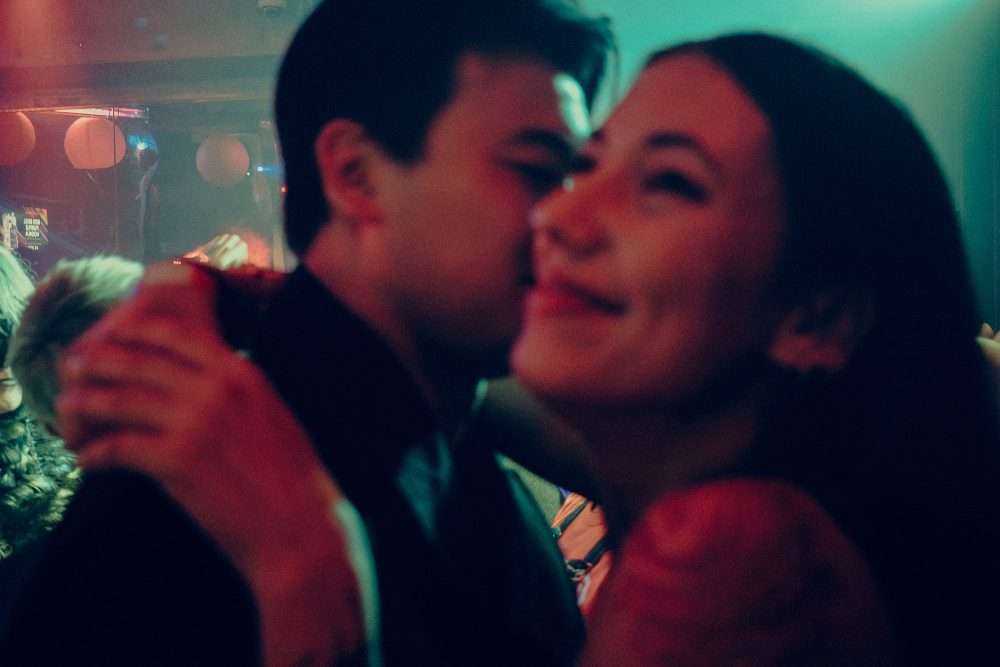
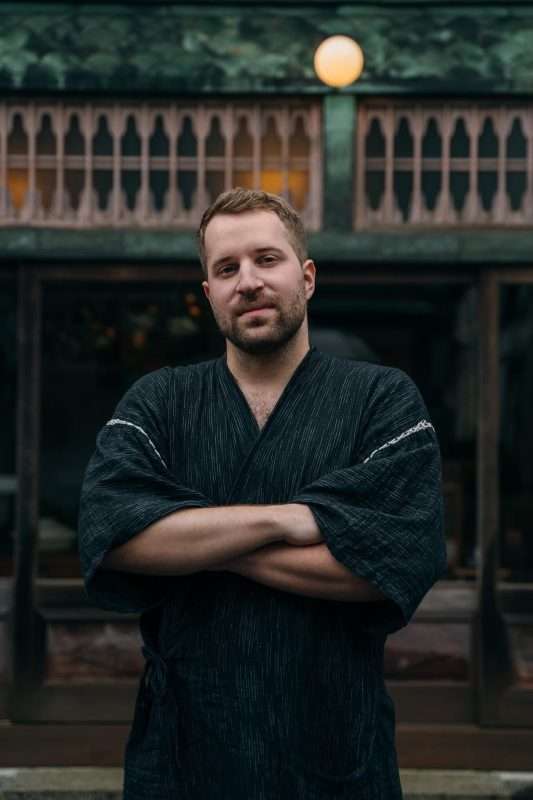
Along with peaceful streets or bustling areas with crowds, more shots of his close friends started to appear. The neon city of Tokyo was captured and presented as a lived experience.
New Light
Tokyo is a city of multiple centers, and life there tends to complete itself within whatever area you happen to live in. Where you live determines what you see, and therefore what you shoot frequently. Bühler has lived across the city, from the waterfront shitamachi of the east to the residential west. I asked which areas he would like to explore more, and he answered the Tokyu suburbs south of Shibuya, the Koiwa end of Edogawa and Katsushika, and Hachioji out west where the city thins into nature.
Bühler now splits his time between Tokyo and Europe. After nearly a decade of shooting Japan, he looks at his home continent differently. For example, he talks about early 20th-century German apartment buildings at blue hour, warm orange interiors glowing through the windows. Tokyo’s night inspired his photography style today, but his scope is not limited to the city.
Meanwhile, Tokyo will still attract many visitors for its gleaming lights and the neon-filled fantasy. But what Bühler’s photography shows is this: Tokyo at night is not anyone’s dystopian future. It is somebody’s evening.
Here are a few more stories to explore:
Dami Lee on the Organized Chaos That is Tokyo
Where is Downtown Tokyo? Finding the Real Center of the City