Japan Tourist Rules & Fines 2026: What To Know
Japan's tourism crackdown comes with real fines. Here's what to know before visiting
Japan has always had a reputation for order and etiquette. However, with the country welcoming a record 47 million international visitors in 2025, not everyone showed the same respect for local rules.
That surge of tourist misconduct has prompted several cities and prefectures to tighten enforcement of existing laws while introducing a handful of new restrictions. It has also led to plenty of online confusion about what actually gets tourists fined.
Here’s what the rules actually mean, where they apply and what could happen to those who break them.
Photographing geiko and maiko in Kyoto’s Gion district: up to ¥10,000
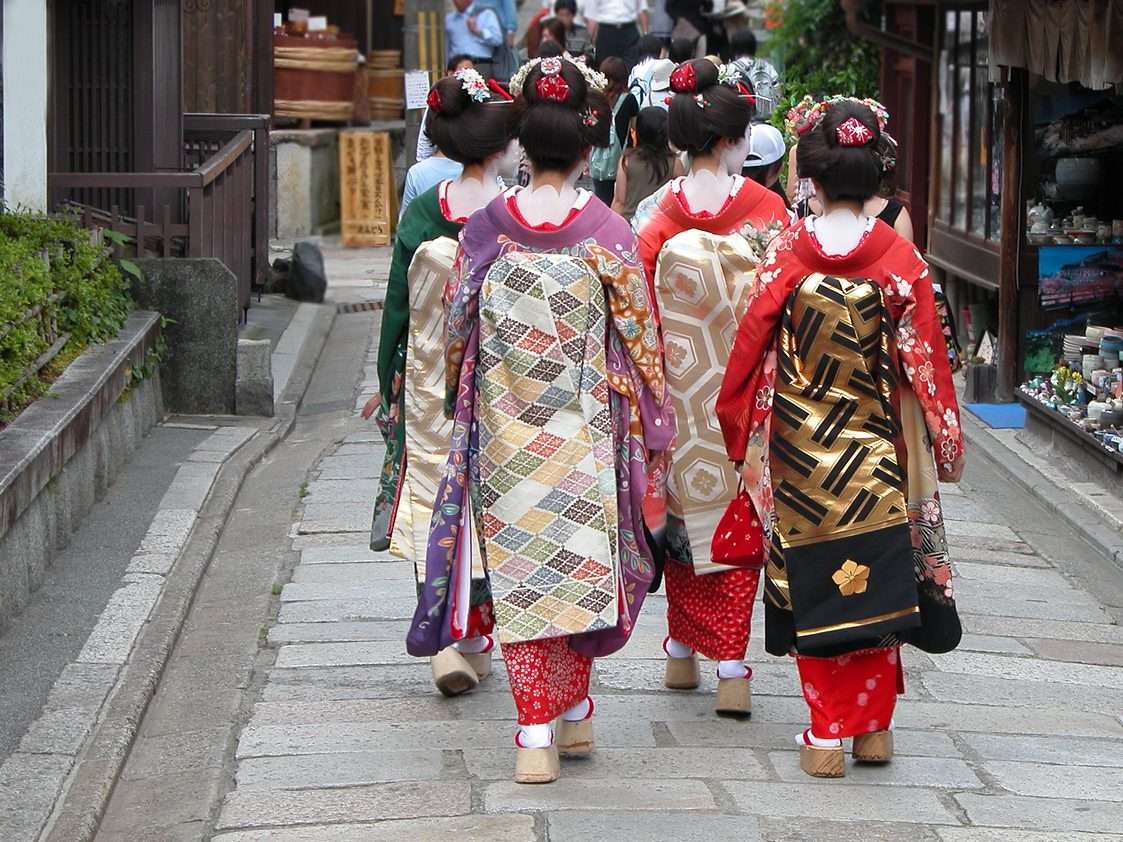
The misconception: photographing geiko (Kyoto’s term for geisha) and maiko (apprentice geisha) is banned across Kyoto, or even throughout the Gion district.
The truth: It applies only to designated private streets in Gion. A local council made up of Gion residents and shop owners introduced the rule. It’s a response to years of tourists chasing, grabbing and cornering geiko and maiko to get photos.
It’s a private-property rule enforced by the council rather than a city or national law. However, Kyoto city has shown its support with official notices.
Signs warn of a ¥10,000 fine for photographing geiko and maiko, or entering designated private side streets without permission.
The ban does not cover public roads such as the main Hanamikoji Street, though it’s still good etiquette to ask before photographing anyone.
Harming protected animals: up to ¥1,000,000 or imprisonment
The misconception: this law covers all wildlife in Japan, or that it protects a species wherever it’s found.
The truth: The fine applies specifically to animals that Japan’s Cultural Properties Protection Act designates as national natural monuments. Notable species on this list include Nara’s sika deer, Okinawa’s Iriomote cat, the Japanese giant salamander, Sado Island’s crested ibis (toki), and Hokkaido’s Steller’s sea eagle and Blakiston’s fish owl.
Deliberately injuring or killing one of these animals can carry a fine of up to ¥1,000,000 or a prison sentence.
Although this rule only covers designated species, separate wildlife laws protect other animals, each with its own penalties.
This protection is also tied to specific designated populations, not species broadly. For example, Nara’s governor has confirmed that deer are only legally treated as natural monuments while inside Nara’s designated protected zone. Those outside it, even in a neighboring prefecture, fall under general wildlife rules instead.
In April 2025, Nara Prefecture amended its urban park ordinance to also ban kicking or hitting, even though these acts fall short of the serious injury needed to trigger the national law.
The practical takeaway for travelers is simple either way: treat Nara’s deer, and any protected animals, with distance and respect. Feeding, grabbing or provoking them is not the harmless photo op it might look like. And while harassing other wildlife may not carry the same fine, it’s still worth avoiding as a matter of basic manners.
Bicycle, e-bike and e-scooter violations: ¥3,000 to ¥12,000
The misconception: minor bicycle infractions in Japan still just get a verbal warning.
The truth: As of April 1, 2026, Japan introduced an on-the-spot fine system, known as the “blue ticket,” covering 113 specific bicycle violations.
Fines depend on the infraction. For example, using a phone while riding costs ¥12,000, running a red light or riding against traffic costs ¥6,000, and riding side by side costs ¥3,000. Most of these previously drew only a verbal warning.
In addition to this new system, other existing rules are also worth keeping in mind.
Since 2023, Japan has allowed e-scooters with speed capped at 20 km/h, such as those from rental services like Luup, to be ridden without a motorcycle license.
However, riding a faster or modified scooter that exceeds these limits without registration or insurance is considered a criminal offense and can carry up to a year in prison or incur a ¥500,000 fine.
Alcohol limits apply regardless of vehicle. Since November 2024, Japan has extended the same 0.03% blood alcohol limit used for motor vehicles to ordinary bicycles and e-bikes. Police can now breathalyze cyclists directly. The penalty can run up to three years in prison or a ¥500,000 fine.
Read up on the traffic rules, whether app-specific or general, before riding.
Littering: ¥2,000 to ¥30,000
The misconception: not littering in Japan is mostly a cultural norm people follow out of politeness, rather than something with real legal consequences.
The truth: Individual cities and wards have their own rules. Tokyo’s Shibuya Ward, for instance, now collects a ¥2,000 cash fine on the spot, reinforced with multilingual staff on patrol all day. Fines elsewhere can range from ¥2,000 to ¥30,000 for repeat or flagrant offenses.
Flying drones without registration and permission: up to ¥500,000 or imprisonment
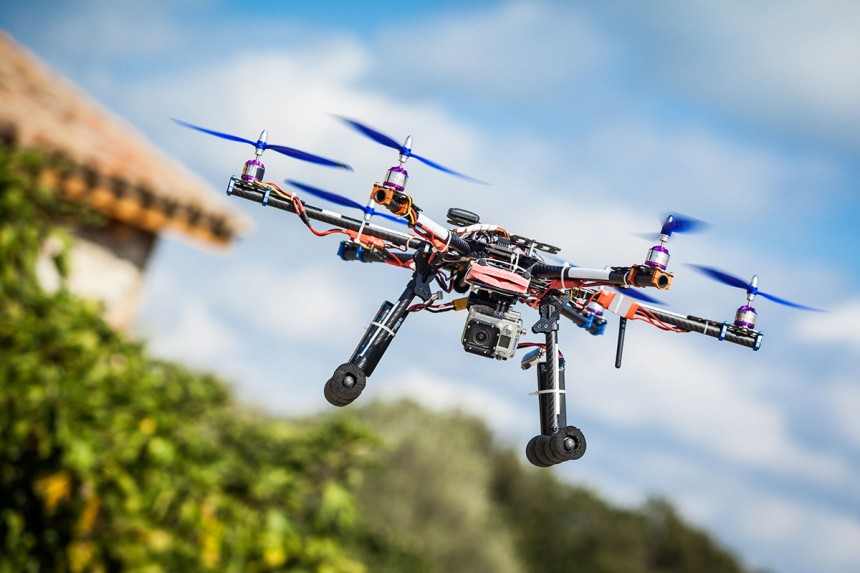
The misconception: Japan’s drone laws, covering registration and no-fly zones, work as they do in many other countries, restricted to specific sites like airports or government buildings, and open everywhere else in a city.
The truth: Any drone intended for flight in Japan weighing 100 grams or more, including consumer drones marketed as registration-free elsewhere, needs to be registered with Japan’s Ministry of Land, Infrastructure, Transport and Tourism (MLIT).
Registration can be done online through the MLIT Drone Portal. It requires a Japanese address (a temporary accommodation such as a hotel or Airbnb is acceptable) and a Japanese phone number. It typically takes three to five business days to process.
On top of registration, permission from MLIT must be obtained in advance to fly in restricted zones.
- Broad urban zones: Nearly all of central Tokyo, Osaka and Kyoto fall under Densely Inhabited District (DID) status. These zones, along with areas near airports, are off-limits by default regardless of whether any specific site is nearby. Permission can be requested through MLIT’s DIPS 2.0 portal. It typically takes a minimum of 10 working days, so plan ahead.
- Government and security sites: the Imperial Palace, the Diet Building, foreign embassies, nuclear plants and military facilities each carry a 300-meter no-fly buffer. Flying there legally requires both the consent of the facility’s own administrator and advance notification to the local police. This is mostly reserved for authorized inspection or media work, not casual tourist photography.
- Cultural heritage sites: temples, shrines, castles and UNESCO World Heritage sites, like Kinkaku-ji, Fushimi Inari or Kiyomizu-dera, are usually the closest thing to a ban. Most are private property whose administrators refuse drone use outright (look for posted “no drone” signage). Kyoto’s city-managed urban parks separately prohibit drone flights by ordinance, with narrow exceptions for authorized professional filming or official events.
Skipping registration or flying in any restricted area without authorization carries the same penalty range: up to ¥500,000 or imprisonment.
For anyone planning to fly a drone, checking local regulations regarding the specific site beforehand is far easier than dealing with the consequences afterward.
Climbing Mt. Fuji off-season: ¥300,000 or imprisonment
Mt. Fuji’s official climbing season generally runs from July 1 to September 10. Outside that period, trails close, mountain huts shut down, and emergency support becomes extremely limited.
The misconception: That this fine applies to climbing Mt. Fuji in general.
The truth: The penalty relates specifically to entering closed trails or restricted areas during the off-season, not to climbing the mountain itself. Violations can carry penalties of up to ¥300,000 or six months in prison, though enforcement depends on the circumstances.
During the official season, climbers must pay a mandatory ¥4,000 fee, register in advance and cannot enter between 2pm and 3am unless they have a mountain hut reservation.
Restricted substance violations (THC): prison and severe penalties
The misconception: all CBD products are banned in Japan.
The truth: Cannabis, the plant itself, is banned in Japan, with no legal threshold.
However, CBD (cannabidiol), one of many compounds found in cannabis, is legal on its own and has no limit on how much a product can contain.
THC (tetrahydrocannabinol), the psychoactive compound, is the substance Japan actually restricts. Since December 2024, Japan’s Ministry of Health, Labour and Welfare has enforced strict residue limits on THC specifically:
- Oils and powders: 10 ppm
- Liquid solutions: 0.10 ppm
- Other products, such as gummies or creams: 1 ppm
In other words, a product’s legality in Japan depends on its THC content, not its CBD content.
Crossing that threshold, or possessing cannabis itself, can lead to seizure by Japanese customs, or even arrest, depending on the circumstances.
Under Japan’s 2024 amendments to its Cannabis Control Law, the penalty for either can run up to seven years in prison.
When in doubt, don’t bring it.
Smoking on the streets: ¥2,000 to ¥20,000
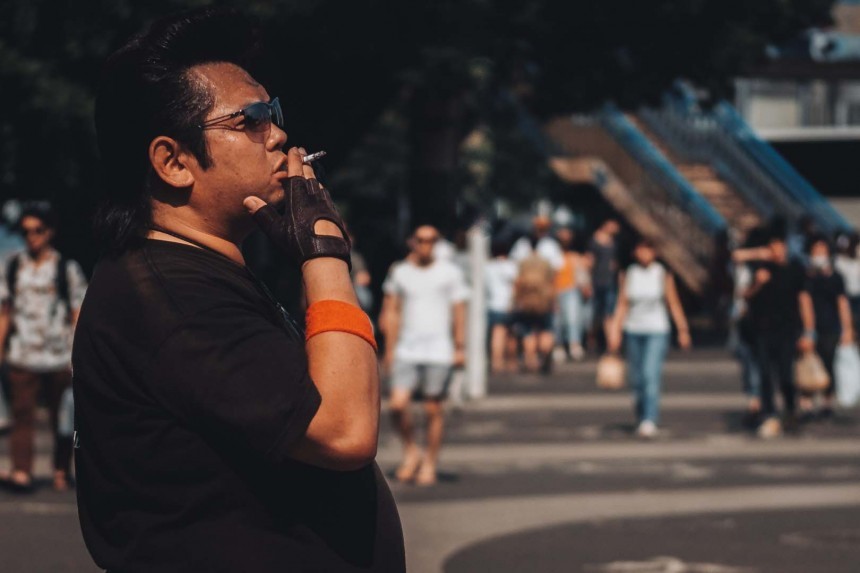
The misconception: If smoking is prohibited indoors somewhere, stepping outside solves the problem.
The truth: Many Japanese cities, including central Tokyo wards such as Chiyoda and Shibuya, ban smoking on public streets outside designated smoking areas.
There’s no single nationwide rule. Each city or ward sets its own ordinance, and fines vary accordingly, commonly falling between ¥2,000 and ¥20,000.
There are apps and websites, like Japan Smoking Area, that aggregate public data from ward offices in Tokyo, Osaka, Kyoto and Kanagawa to show designated smoking zones, making it easier to find a legal spot instead of guessing. Here are a few options:
- Japan Smoking Area (Google Play): free app available for both iOS and Android, in 12 languages including English, covering 10 Tokyo wards, Osaka, Kyoto and parts of Kanagawa Prefecture.
- Smoking Area Info Sharing Map: Free app for Android, available in English. Users share smoking-area pins, covering most of Japan.
- Club JT (Japanese only): official nationwide smoking-area map from Japan Tobacco, the country’s dominant domestic tobacco company.
- MottoSuitai: English-language web guide that links directly to each ward’s official smoking ordinance and area list.
The bottom line:
Most of these rules aren’t new. What’s changing is how closely authorities are enforcing them. It’s largely a response to a few years of high-profile bad behavior at overcrowded sites.
Respecting the rules, most of which come down to common courtesy, goes a long way toward keeping Japan’s tourist hotspots pleasant for everyone, visitors and residents alike.
Traveling to Japan soon? Here are some ideas on what to do:
Things to Do in Tokyo in August 2026
Tokyo Summer Festivals & Fireworks Guide 2026
Best Parks for Seasonal Flowers in and Around Tokyo 2026