March 31, 2026
Shuna’s Journey: Miyazaki’s Forgotten Masterwork
The 1983 illustrated story that helped shape Miyazaki’s later films
A Story Miyazaki Couldn’t Film
In 1983, Hayao Miyazaki had a story to tell. Miyazaki had already directed his first feature film, The Castle of Cagliostro, and was still working on the manga of Nausicaä of the Valley of the Wind, which would later become a foundational work for Studio Ghibli. However, Miyazaki had another story in mind, and this one was much simpler.
Based on a Tibetan folktale, the narrative followed a prince searching for a legendary grain that could feed his starving people. The premise proved too modest for potential backers. Miyazaki reportedly said that Japan’s current climate would never allow such a modest project to be approved. Instead of turning it into an animated film, he created a watercolor illustrated story, published in 1983 as Shuna’s Journey. The work was published in English for the first time in 2022.
The Journey West
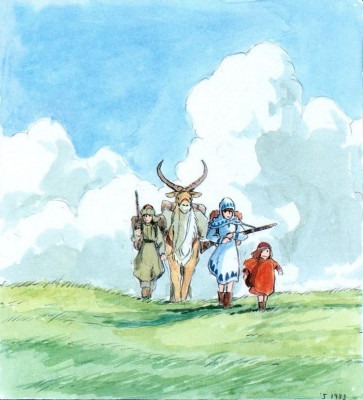
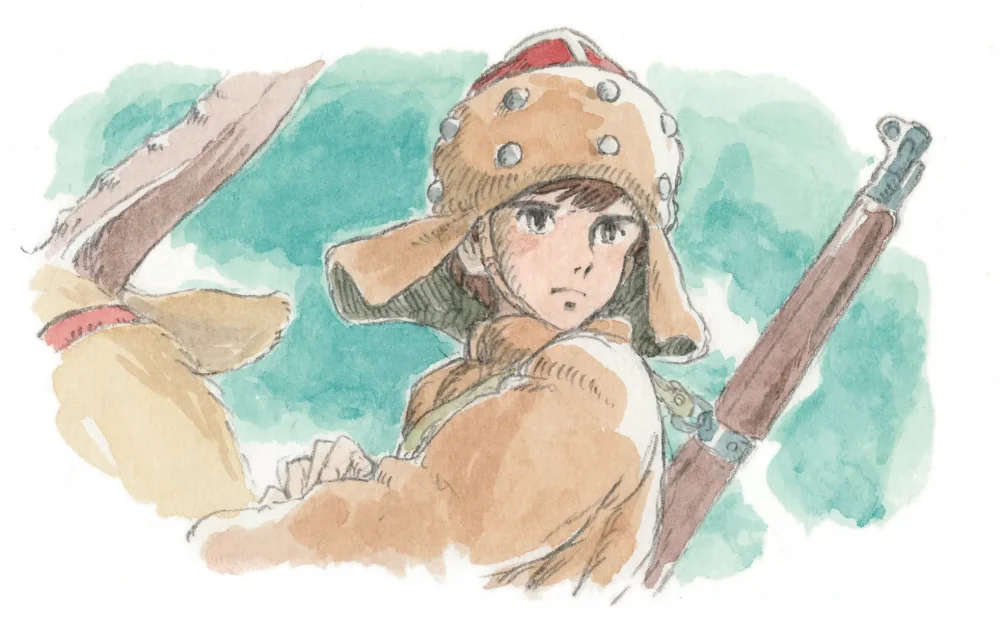
Shuna’s Journey tells the story of Prince Shuna and his deer-like steed, Yakkul. After hearing of a mythical golden grain said to grow far to the west, Shuna sets out to save his famine-stricken homeland.
Along the way he encounters bands of slave traders who capture people and trade them for the golden grain Shuna seeks. Across a turbulent western sea, a strange living tower serves as the source of the grain, where towering giants cultivate and harvest it.
Shuna saves a woman and her sister from slavery during his travels, and after a violent encounter with the harvesters they later nurse him back to health. Despite the hardships involved, Shuna ultimately succeeds in stealing some of the grain and brings it home, saving his people from famine.
Echoes of Future Worlds

The themes of Shuna’s Journey are simple, and that simplicity drives their lasting impact. Along his journey, Shuna encounters slave traders who capture people from impoverished regions and transport them west to work in fields cultivating the coveted golden grain.
The system reduces human lives to commodities, trapping them in a brutal cycle of trade and labor. It echoes real-world conditions where survival pushes people into exploitation.
Shuna moves through a harsh and unforgiving world, confronting slave traders, monstrous hags and towering harvesters in a selfless attempt to save his people. He faces overwhelming odds and deeply rooted systems, yet continues because he chooses to help others along the way.
His decision to save the woman and her sister becomes a quiet but powerful act of compassion, reflecting the empathy people are capable of even in the darkest conditions.
Early Signs of Miyazaki’s Signature Themes
Shuna’s Journey also foreshadows ideas that would later define Studio Ghibli and Miyazaki’s filmography.
The story of a young royal setting out to save his people mirrors themes explored in Nausicaä of the Valley of the Wind, which Miyazaki was developing around the same time.
Shuna’s journey across harsh landscapes on a deer-like mount also recalls Prince Ashitaka from Princess Mononoke.
Even the darker elements of the story, including slavery and exploited labor, anticipate themes explored in later works connected to the Ghibli world, such as Tales from Earthsea.
In a world shaped by conflict and uncertainty, these recurring themes of resilience and compassion remain strikingly relevant. Even a lesser-known work like Shuna’s Journey carries enduring ideas about perseverance and heroism.
You May Also Be Interested In: