Ogasawara: The Tokyo Islands With Their Own Secret Language
Shaped by sailors, whalers, and decades of American rule, these islands ended up with a language found nowhere else in Japan.
Imagine asking someone in Tokyo how they were doing and hearing the reply, “Me wa genki-daja, you wa?”
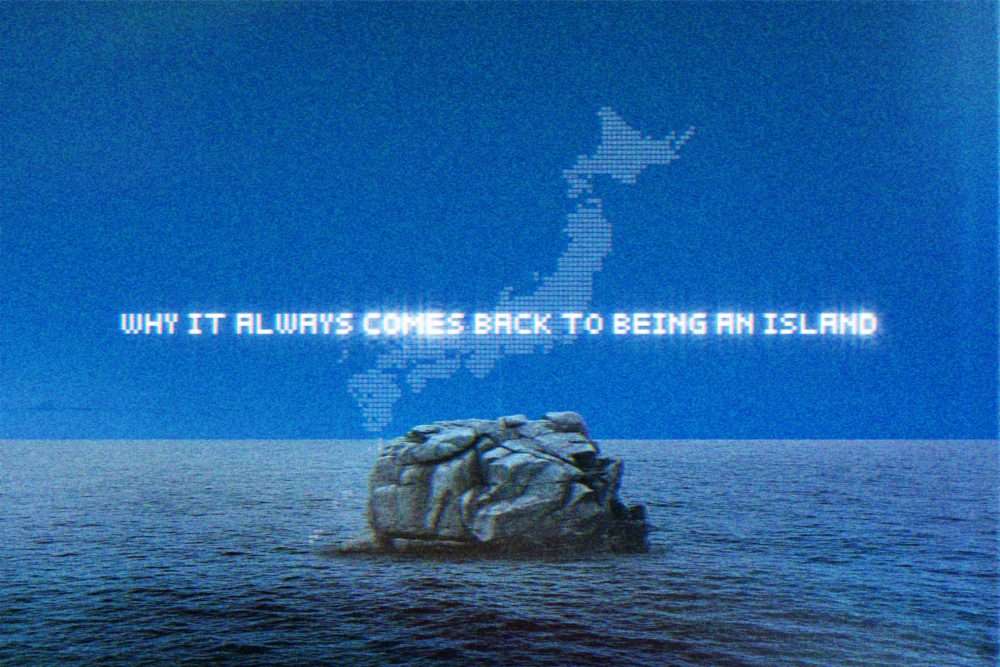
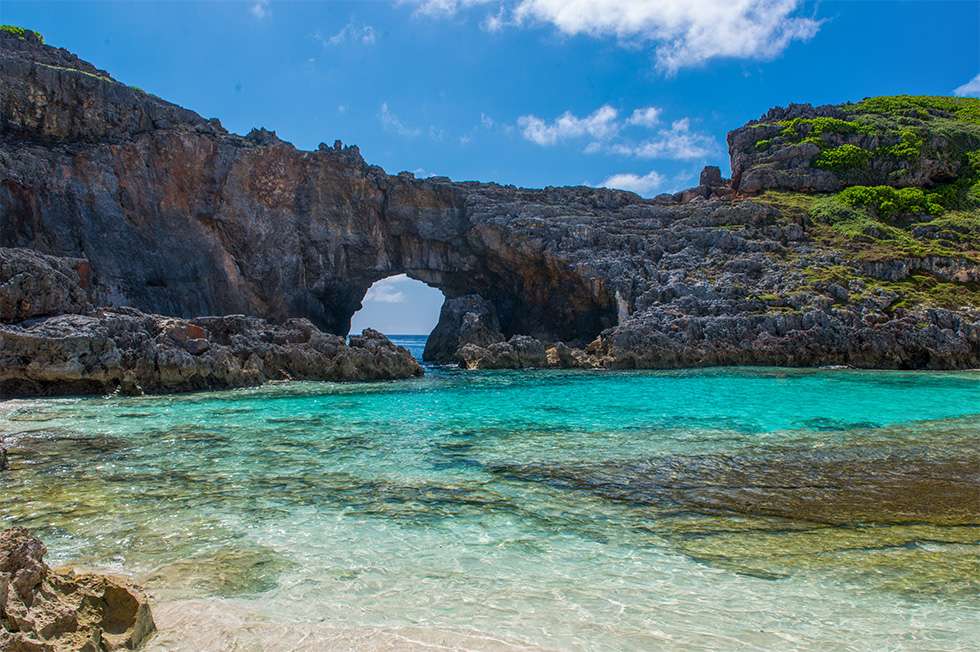
About a thousand kilometers south of central Tokyo, past the Izu Islands, lie the Ogasawara Islands. It is not just the distance or the nature that makes it feel surreal to call this place Tokyo, but its history, the history that explains how a rare creole language was born and almost disappeared.
Records of the islands appear in European sources from the 16th century, the Muromachi period, when European colonists were “exploring” the Asia-Pacific and assigning names to whatever they saw. Ruins on North Iwojima, Chichijima and elsewhere suggest human presence as early as the 1st century BC.
The first modern record of a landing comes from 1670, when a group of men from present-day Wakayama were shipwrecked on their way to Edo. They washed ashore on Hahajima, eventually making it back to the mainland via Chichijima.
Their account prompted the shogunate to send an expedition in 1675 to survey the islands, map their geography, and record the fauna and flora. The expedition referred to them as Buninjima, the islands with no one, which is the origin of “Bonin,” Ogasawara’s English name.
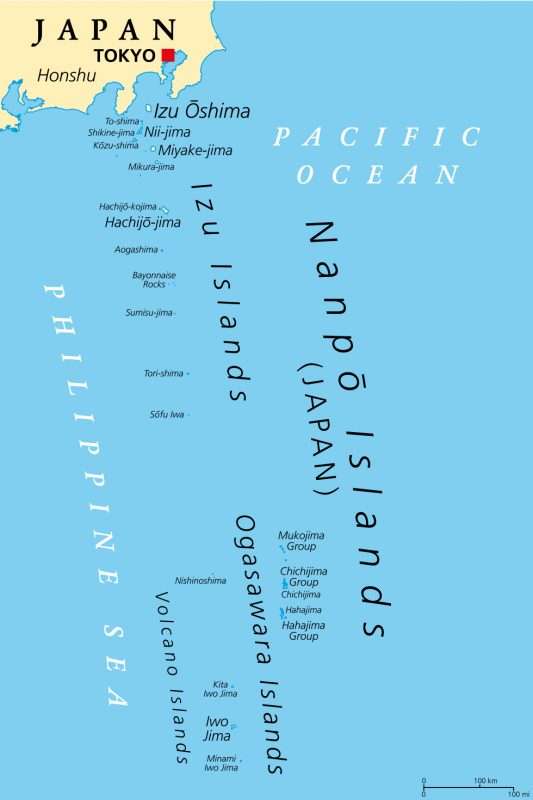
The name Ogasawara has its own complicated story, which is not actually related to the prestigious Ogasawara clan. In the 1700s, a man calling himself Sadato of Ogasawara claimed that his great-grandfather had been granted the islands in the 1500s, and used this to request a voyage permit from the shogunate. He turned out not to be of the Ogasawara clan at all, however, and his great-grandfather may never have existed. The fabrication stuck anyway.
Beyond that initial survey, the shogunate had little practical interest in following up on what it had claimed in the 1600s. 19th-century American and British whalers had a great deal of interest, however, stopping there often while whaling, and hunting sperm whales alone at a rate of around 10,000 a year in the Pacific. Eventually, in 1827, the British Navy visited the islands and claimed them for the British Crown.
A European-American named Nathaniel Savory from Massachusetts, then living in an increasingly Anglo-American-controlled Hawai’i, heard the British plan. Together with Matteo Mazaro, an Italian-British man from present-day Dubrovnik, and other Europeans bringing Polynesians and Micronesians along as laborers, a group of about 30 became the first colonists in 1830.
The settlement continued, joined over the following decades by Japanese (notably from Hachijojima of the Izu islands) and more Pacific Islanders. Savory positioned himself as the island’s leader, and the Western colonists repeatedly requested that the British government make the islands a protectorate. Britain, busy with Hong Kong, and prioritizing diplomacy with the Japanese, did not act on this.
In 1876, the Japanese government formally registered them internationally as Japanese territory, and all residents became Japanese nationals.
The colonists kept many of their cultural markers, including languages. This resulted in the language what linguists call Ogasawara-go, or Bonin English.
Ogasawara-go was built on a base of New England English already influenced by Hawaiian and other Pacific languages on the way in, and then layered with Japanese, particularly the Hachijo dialect. Strictly speaking, Ogasawara-go is described as a creoloid rather than a creole. A creole arises when a contact language is cut off from its source languages; Ogasawara never lost contact with the anglophone world, with the constant wave of British and American whalers.
WWII became a turning point for the islands. As the Pacific became a battlefront, the Japanese government evacuated all islanders. After Japan’s surrender, the United States occupied the islands for more than two decades and made a choice with lasting consequences.
The U.S. only allowed “Caucasian Descendants of Original American and European Settlers” or “Families of American-European Origin” to enter the islands. The other islanders, the ethnic-Japanese majority who had lived there for generations and held the same Japanese nationality, were kept out until 1968.
For those 22 years, the islands functioned as a small American enclave. Schools were run in “pure” English, and Ogasawara-go was treated by them as broken speech to be corrected out of children, a process linguists describe as decreolization.
Once the return of the remaining islanders was allowed, the Japanese mainland influence became stronger. The period right after the return is what produced the recorded mixed speech: sentences using both English and Japanese words at once, which could be labeled as another generation of Ogasawara-go.
What remains on Chichijima and Hahajima today is mostly standardized Japanese, however, with American English used by those who lived through the U.S. occupation.
Also surviving were a scattering of distinctive island names for local fish, plants and weather from the Pacific Islands and Hachijojima.
Despite all of this, the Creole influence has not entirely vanished. Among older islanders, English and Japanese still mix freely in everyday speech; while phrases like mata miru, a calque of “see you again” that would only literally mean “to look repeatedly” in standard Japanese, are still used as goodbyes.