Japan World Cup 2026 Guide: Schedule, Players & Where to Watch in Tokyo
The Samurai Blue are back for their eighth consecutive World Cup—here's how to follow every match from Tokyo
The 2026 FIFA World Cup is underway. Running from June 11 to July 19, the tournament features 48 teams, 104 matches and 16 stadiums spread across the United States, Canada and Mexico—the first edition ever co-hosted by three nations, and the largest in the tournament’s history. For those of us watching from Tokyo, that means one thing above all: a lot of very early mornings.
Japan’s World Cup History: Eight Tournaments and Counting
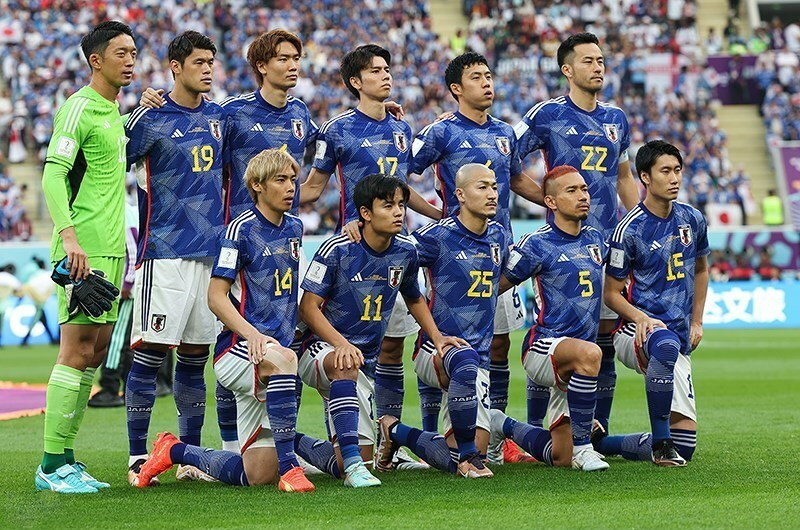
Japan is making its eighth consecutive appearance at the tournament. That number deserves a moment. Eight straight World Cups is not something that happens to countries that treat qualification as an achievement. Since 2022, the Samurai Blue has beaten Germany, Brazil, England and Spain. The bar has moved and this team isn’t turning up to just participate anymore.
Manager Hajime Moriyasu is entering his second World Cup in charge. In March, Japan beat England 1-0 at Wembley, the first time the team had ever beaten England.
The stated goal is to get past the Round of 16. Japan has been there four times and exited all four. A quarterfinal would be the deepest run in the country’s history. Two matches in, nobody is ruling it out.
Japan’s 2026 World Cup Group and Match Schedule
Japan is in Group F with the Netherlands (7th in the world), Tunisia (44th), and Sweden (38th). Japan sits 18th. On paper, the Netherlands is the team to beat. In practice, Japan has been beating teams it isn’t supposed to beat for several years now.
Match times in JST:
Netherlands vs Japan — June 15, 5am JST, AT&T Stadium, Dallas
A 2-2 draw. Van Dijk opened the scoring with a header, Keito Nakamura equalized with a screamer from the edge of the box, Summerville put the Netherlands back ahead, then Koki Ogawa’s 88th-minute flick deflected off Daichi Kamada and snuck in for the dramatic equalizer
Tunisia vs Japan — June 21, 1pm JST, Estadio BBVA, Monterrey
A 4-0 win. Daichi Kamada scored in the 4th minute, Ueda added a second in the 31st, and Japan ran out dominant winners—11 shots to Tunisia’s 2.
Japan vs Sweden — June 26, 8am JST, AT&T Stadium, Dallas
Coming up. Japan enters the final group match with four points, level with the Netherlands at the top of Group F and ahead of Sweden on three. A win or a draw is likely enough to advance to the Round of 32.
Key Players to Know on the Japan World Cup Team
Wataru Endo — Defensive Midfielder, Liverpool
Wataru Endo Is Out of the World Cup, and Japan’s Captain Is Walking Away for Good
Endo withdrew from the squad three days before the opener, when coach Moriyasu ruled him unfit after a foot injury, originally sustained during his club season at Liverpool and managed with surgery in February, flared up again in Japan’s warm-up match against Iceland in late May. He used the announcement to retire from international football entirely. Endo departs with 73 caps, four international goals, and a decade of work building this team into one that genuinely believes it can win the tournament. Ajax defender Ko Itakura has taken the armband.
Takefusa Kubo — Winger, Real Sociedad
The one to watch. The 25-year-old has 48 caps and spent this season establishing himself as one of the more dangerous wide attackers in La Liga, Spain’s top division. Quick, technically sharp and capable of creating something from nothing. With Mitoma and Minamino sidelined through injury, the weight of the attack falls heavily on him.
Ritsu Doan — Winger, Eintracht Frankfurt
Doan operates on the opposite flank to Kubo and has a habit of showing up when it counts. At the 2022 World Cup, he came off the bench to score the equalizers against both Germany and Spain—two of the more celebrated goals in recent Japanese football history, both from a player who started neither game. If Japan needs a goal late against Sweden, Doan is the name you’ll be watching for.
Keito Nakamura — Forward, Reims
He stepped into a bigger role than many expected, and against the Netherlands, he delivered. His equalizer, a strike from outside the box, pulled Japan level against a side ranked seventh in the world and set the stage for the comeback. Nakamura has scored 10 international goals in 24 caps since his debut in 2023. The tournament has already given that number more weight.
Ayase Ueda — Striker, Feyenoord
Japan’s leading scorer, and through two matches, the role is playing out exactly as scripted. Ueda has 16 international goals in 38 caps; he added to that in the 31st minute against Tunisia, finishing with the composure of a player who ended the Dutch league season as its top scorer with 25 goals. Japan builds toward him, and he’s been converting.
Yuto Nagatomo — Left Back, FC Tokyo
At 39, Nagatomo is the oldest player on the team and one of the most decorated in Japanese football history. A left back, the defender who covers the left flank and supports attacking play down that side, he has spent his career at clubs including Inter Milan, Galatasaray and Olympique de Marseille. This is his fifth consecutive World Cup, he’s been at every one since 2010. Whatever happens in North America, this is almost certainly his last.
Junya Ito — Winger, Genk
A right winger with 69 caps and 15 international goals, Ito has been a fixture in the Japan setup for nearly a decade and was part of the 2022 squad that beat Germany and Spain. He plays his club football with Genk in Belgium, and his output in World Cup qualifying was significant—only one player across the entire Asian section provided more assists. Against Tunisia, he capped the rout by getting on the scoresheet in a front line that is starting to look formidable despite the injury absences.
For more on the J-League, check our guide to the J-League for expats and visitors
Where to Watch the World Cup in Tokyo
The tournament’s North American location creates an awkward reality for Tokyo viewers. Most group stage matches land between 4am and 1pm JST. For the Japan vs Sweden match on June 26, that means an 8am alarm.
For those who’d rather watch with a crowd:
HUB is generally the go-to for sports bar viewing in Tokyo, but highly likely to be sold out at this point.
Hobgoblin (Shibuya and Roppongi) is the more atmospheric choice. Hobgoblin has confirmed live screenings and rebroadcasts of all games. Live screenings carry an entry fee of ¥3,000, which includes two drink tickets. Worth booking ahead for the Japan matches.
Sports Bar Fiori is screening all three of Japan’s group stage matches. Tickets range from ¥3,500 to ¥4,000—check their site for the latest reservation details.
3 Hermanas in Asakusa (2F) is showing all Mexico and Japan games with no reservation required.
Beyond dedicated sports bars, many darts bars and karaoke venues are holding special events with large projection screens for the matches. A reservation is still strongly recommended wherever you go.
For a broader list of venues around Tokyo, Fansta covers options across the city. The site is Japanese only, but the browser translation feature gets the job done.
How to Stream the World Cup in Japan
ABEMA and DAZN are streaming all 104 matches live in Japan. Japan’s group stage matches are free on DAZN without a subscription but for everything else, a paid plan is required. NHK and Nippon TV are also broadcasting Japan’s matches on free-to-air television, with NHK+ offering free simultaneous streaming for those matches. Fuji TV has a slate of additional matches, including first-round knockout coverage.
One practical note: compliance rules can prevent some venues from advertising their screenings publicly, so it’s worth dropping in to your local sports bar and checking the window for details even if nothing appears online.
Can Japan Reach the World Cup Quarterfinals in 2026?
Through two group matches, the question has sharpened. After drawing 2-2 with the Netherlands, twice going behind and twice fighting back (the second time with two minutes on the clock) and beating Tunisia 4-0, Japan enters the Sweden match with four points, a goal difference of +4, and proof that the ambitions aren’t borrowed.
A win or draw against Sweden likely puts Japan into the Round of 32. A win could put them top of the group. The expanded 48-team format gives teams more room to build momentum through the knockouts, and Moriyasu’s squad has already demonstrated it can compete with anyone in this field. For a full breakdown of who Japan could face from here, read our piece on Japan’s World Cup knockout path.