Behind the Myth: The Politics of Japan’s Island Creation Story
The eighth-century tale of the islands' divine birth reveals five pragmatic political motives, from legitimizing a new emperor to enforcing gender order.
What does it mean when islands are not founded or created, but “born”?
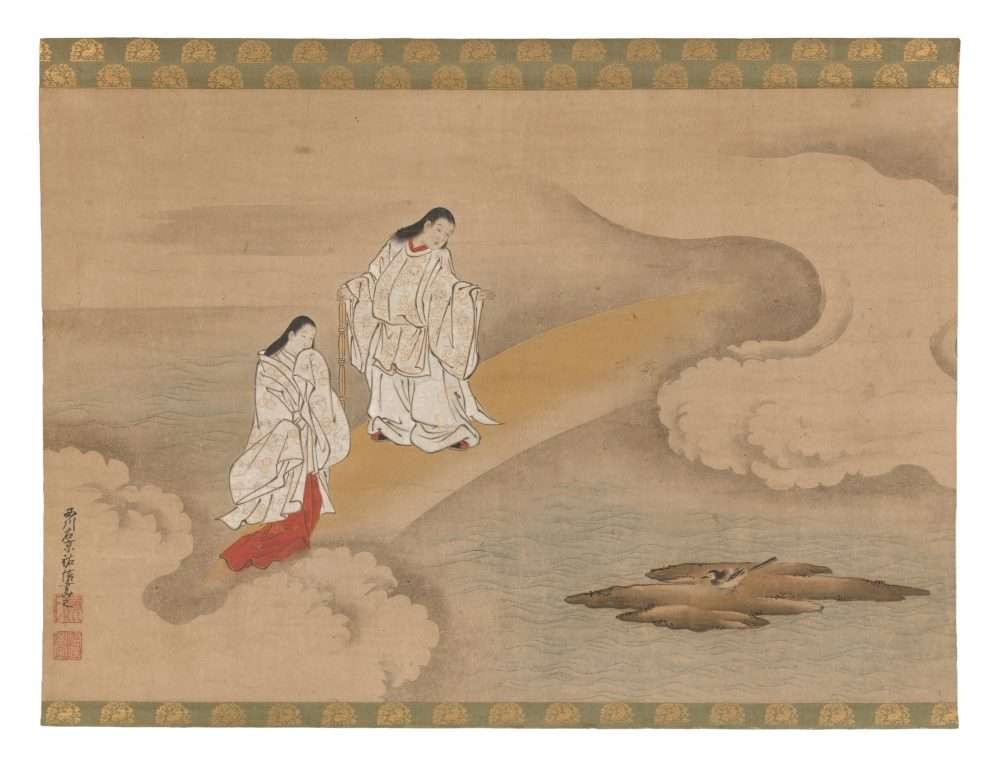
According to the ancient kuniumi (“birth of the land”) myth recorded in the eighth-century chronicles “Kojiki” and “Nihon Shoki”, the gods Izanagi and Izanami marry and literally give birth to the Japanese archipelago. To modern readers, the story may sound purely fantastical. Yet, behind the myth lies a surprisingly pragmatic narrative. Here are five political reasons the island creation myth came to be.
1. To Legitimize a New Regime
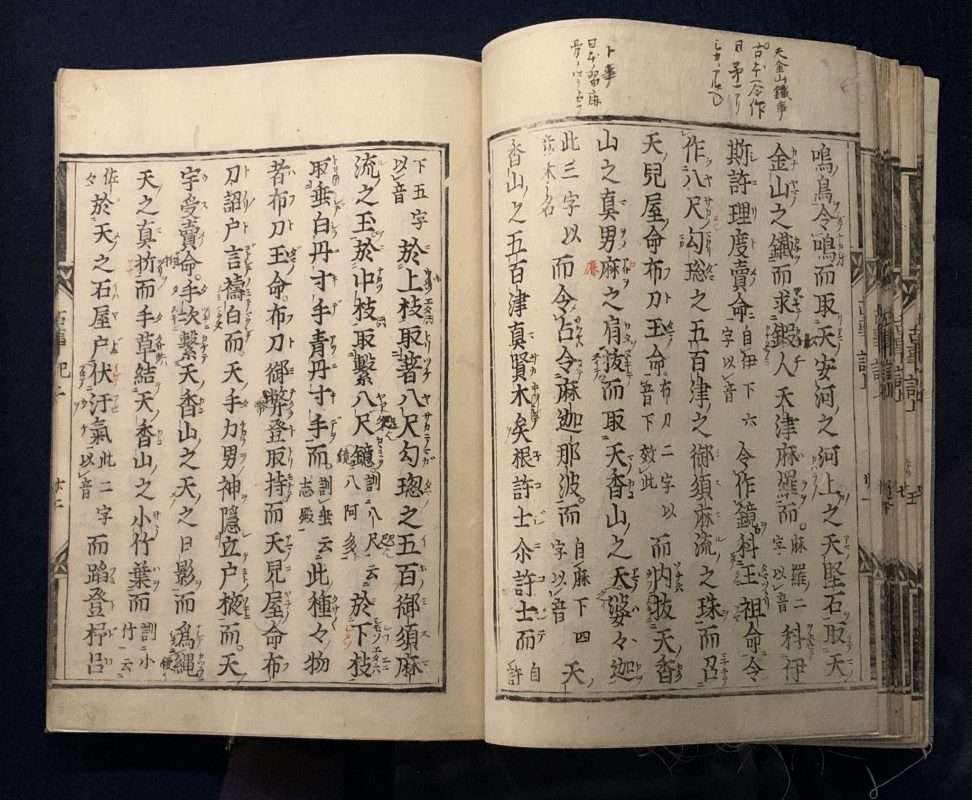
The “Kojiki” (712) and “Nihon Shoki” (720) were compiled shortly after the Jinshin War, a violent succession conflict that brought Emperor Tenmu to power. In the aftermath of the civil war, the Yamato court faced a crucial challenge: how could it legitimize its rule?
One answer was mythology. By tracing the imperial line back to divine creators, the court framed imperial authority as sacred and inevitable rather than political or contested. Emperor Tenmu also helped consolidate the use of the title Tenno (“Heavenly Emperor”), reinforcing a new vision of centralized imperial rule.
2. To Internationally Present Japan
The island creation myth was also aimed outward, not just inward. At the time, Japan was heavily influenced by Tang China and wanted to establish itself as a sophisticated nation within East Asia.
In many ways, the “Nihon Shoki”, written in formal classical Chinese and modeled after official Chinese dynastic histories, worked like an international presentation of Japan, outlining its divine origins, an orderly chronology and sacred rulers.
3. To Create a Shared Identity
Today, we naturally think of Japan as one nation, but ancient Japan consisted of competing regional powers. The island creation myth helped unite these fragmented groups. In the myth, “birth” represents more than physical creation; it transforms land itself into sacred kinship. Geography becomes family.
It also reflects an early worldview in which nature was spiritually alive, each island infused with the same divine vitality. Long before modern nationalism, the ancient myth offered a shared narrative that “imagined” (to borrow Benedict Anderson’s words) the archipelago as a single spiritual whole.
4. To Turn Geography Into a Sacred Political Map
The order of the islands’ births quietly mirrors ancient political realities. Awaji appears first, followed by strategically important western regions such as Shikoku, Kyushu, Iki and Tsushima, before culminating in Honshu—“Great Yamato, the Land of Abundant Reeds” and the symbolic center of the Yamato state. Many of these regions were vital trade and diplomatic hubs, while areas excluded from the myth, like eastern Kanto and northern Tohoku, remained politically marginal. The myth thus mapped the archipelago into a political hierarchy.
5. To Enforce Social and Gender Order
One of the myth’s subtler political dimensions lies in its treatment of gender. It centers on a male-female divine pair, yet the first attempt to create land fails because Izanami, the female god, speaks first during the marriage ritual. The ceremony succeeds only after Izanagi initiates it.
Scholar Liang Jiguo argues that the myth’s line “it is improper for the woman to speak first” (女人先言不良) reflects tensions between older Japanese traditions and imported Chinese ethics. Early Japan appears to have preserved stronger matrilineal elements and spiritually prominent women, but by the eighth century, the state was increasingly adopting Confucian ideals emphasizing male authority.
Importantly, the myth does not erase female power; Izanami remains essential to creation. But authority has been reordered. Creation succeeds only through male precedence, presenting not only an origin of the islands, but an ideal social order within them.
More Than Just “Political Propaganda”
Calling these myths political does not make them less meaningful. If anything, it makes them more revealing.
The “Kojiki” and “Nihon Shoki” show how early Japan imagined land, authority, family and nature as part of the same sacred order. The islands were not merely territory, but living descendants of the gods, an imagination that still echoes in Japan’s seasonal rituals and reverence for nature.
Myths may not record history scientifically, but they reveal how civilizations understand themselves. And in Japan’s creation myth, the land begins with life: two gods, one male and one female, giving “birth” to the islands together.
For a deeper look into the Japanese myths, read our article:
Island of Spirits: How Isolation Shapes Japan’s Ghost Stories